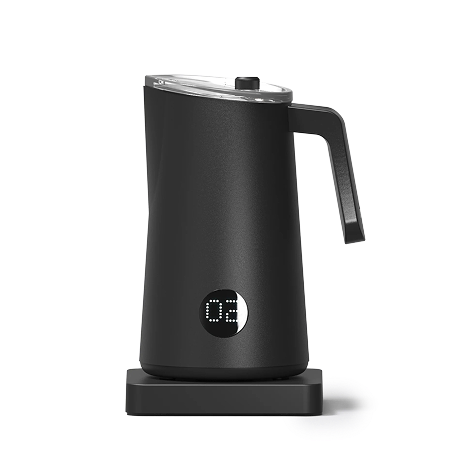
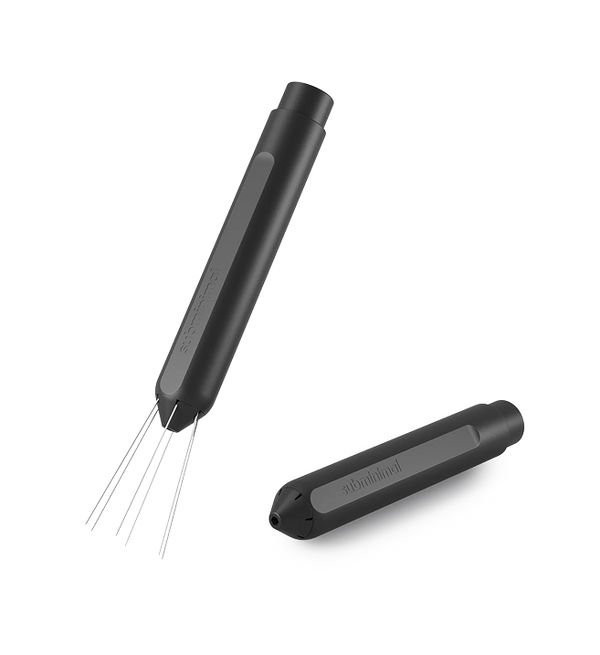
What Is A WDT Tool
A WDT tool is a small handheld device fitted with fine needles that you stir through ground coffee in the portafilter before tamping. It performs the Weiss Distribution Technique, which breaks up clumps and levels the coffee bed so water flows evenly during extraction.
Clumps form easily from static and moisture in most grinders, and they create density variations that cause channeling. That leads to shots that taste both sour and bitter at the same time. The Flick WDT tool and Flux WDT tool in the products for coffee collection handle this step cleanly with retractable needles that pop out on a click and retract with a wrist flick.
See the Subminimal tools built for consistent espresso at home.
What Is a WDT Tool and Where Did It Come From

WDT stands for Weiss Distribution Technique. John Weiss, a home espresso enthusiast and former computer science professor, developed it around 2004 while chasing even extractions with a bottomless portafilter he had made himself. He noticed that surface methods and simple tamping could not fix density problems deep in the basket. In December 2005, he shared the approach on coffee forums, describing how a thin needle stirred the grounds all the way to the bottom to break clumps and even the distribution.
The original retractable WDT tool was often just a dissection needle or similar thin implement. Modern versions use several stainless steel needles mounted in a handle. The goal remains the same: create a uniform bed so pressurized water meets consistent resistance instead of finding loose paths. Daily Coffee News later interviewed Weiss, who explained that good distribution mattered more than many people realized at the time, especially with grinders that produced heavy clumps.
Today the technique is common among home baristas because it is fast once learned and works with almost any basket size. It does not replace a good grinder or proper dose, but it fixes a problem that even high-end grinders can leave behind. Pairing the step with a Subscale dosing cup keeps the amount repeatable before the stir begins.
How a WDT Tool Stops Channeling
Coffee leaves a grinder as more than a neat pile. Static and moisture make particles stick into clumps that range from tiny clusters to larger pieces. When you tamp on top of that uneven bed, the density differences stay locked in. Water under pressure always takes the easiest route, so it races through loose spots and barely touches the dense clumps. That is channeling. The result is a shot with mixed flavors: under-extracted sourness in some areas and over-extracted bitterness in others.
A WDT tool works through the full depth of the bed. The thin needles separate the clumps without pushing large amounts of coffee around. After a short stir in small circles, the grounds sit more evenly from bottom to top. Tamping then creates a level puck that resists water more uniformly. Many people notice the difference right away with a bottomless portafilter: instead of sprays and jets, the stream looks steadier, and the cup tastes clearer and sweeter.
Surface-only tools like spinning levelers or the classic north-south-east-west finger method only move the top layer. They cannot reach clumps buried lower in the basket. A needle tool addresses the whole bed, which is why many baristas use it before any surface leveling step. The art of using a WDT tool covers the practical motions in more detail, and the same collection includes the Flux WDT tool for those who prefer an electric assist.
How to Use a WDT Tool
The process takes only a few seconds once you have the motion down. Start with a clean, dry portafilter basket. A dosing funnel or collar helps keep grounds from spilling while you stir. Grind your dose directly into the basket or transfer it from a digital dosing cup such as the Subscale, which also weighs the beans as you go.
Press or click the tool so the needles extend. Insert them to the bottom of the basket and move in small, slow circles. Work from the center outward, covering the edges, then spiral back in. Finish with a couple of light passes near the surface so the top is level. Gently tap the portafilter on the counter to settle the grounds, then tamp straight and level as usual. Retract the needles before you set the tool down.
A dosing funnel keeps the mess contained. After the stir, remove the funnel, settle the bed, and tamp. Many users find that consistent small circles work better than aggressive stirring, which can create new dense spots. The whole sequence becomes automatic after a few shots. For visual feedback on the extraction that follows, an UpShot espresso mirror lets you watch the bottom of a bottomless portafilter without crouching.
What to Look for in a WDT Tool
Needle diameter matters more than almost anything else. Needles around the thinner end of the common range slide between particles and break clumps without carving paths or compacting the bed. Thicker needles tend to push coffee aside rather than separate it. Most people prefer a set of several needles rather than one, because multiple tips cover more area in each pass.
Length should reach near the bottom of a typical basket without scraping the base. A comfortable handle helps when you make several shots in a row. Storage is practical too: exposed needles can bend or catch on things, so a design that retracts or sits in a stand stays safer and tidier. Replaceable needles extend the life of the tool. Some newer options add a motor for automated stirring, which can reduce the small variations that come from hand technique.
Material should be food-safe and easy to wipe clean. Aluminum or stainless handles feel solid and wipe down quickly. A stand or magnetic mount keeps the tool within reach on the machine or wall so the step does not slow the workflow. The products for coffee collection includes options that meet these points, including the retractable Flick WDT tool.
Why the Subminimal WDT Tool Stands Out
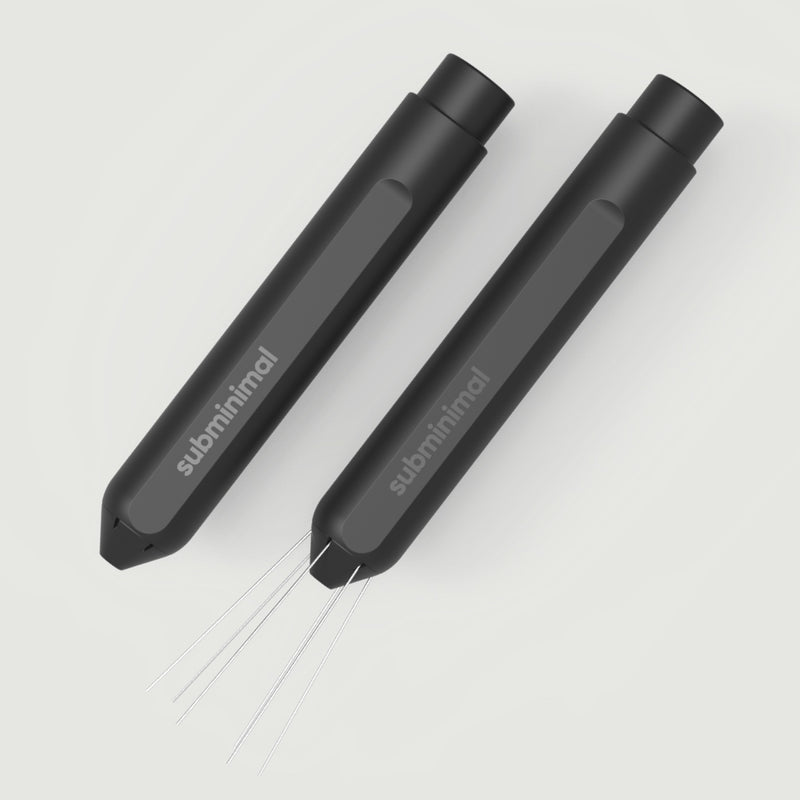
Subminimal designed the Flick as a practical, everyday WDT tool that makes the technique feel natural rather than fussy. One click extends the needles; a quick wrist flick pulls them back inside the matte aluminum body through a magnetic mechanism. That keeps the tips protected between shots and removes the usual storage hassle of exposed needles. The tool ships with a thicker set installed for durability in transit and includes finer replacement sets that most users prefer for actual stirring. An included hex key makes the swap quick.
The body is compact and light, so it sits comfortably in the hand for the short circular motions. A small aluminum stand and an adhesive magnetic mount give options for counter or machine storage. Many people who try it note that the satisfying click and flick turn a routine step into something they do without thinking. Because the needles are replaceable and the mechanism is simple, the tool stays useful for a long time. Free access to a masterclass is included, which covers related puck prep details.
Compared with basic fixed-needle tools, the retractable design reduces the chance of bent tips and keeps the station cleaner. It works with any common basket size because you stir rather than press a fixed pattern. The same site also offers the Flux, an electric version that uses selectable high speeds to break clumps then drops to a slower spin to level the bed, for people who want even less manual variation. Both sit in the same coffee tools collection.
Flick WDT Tool
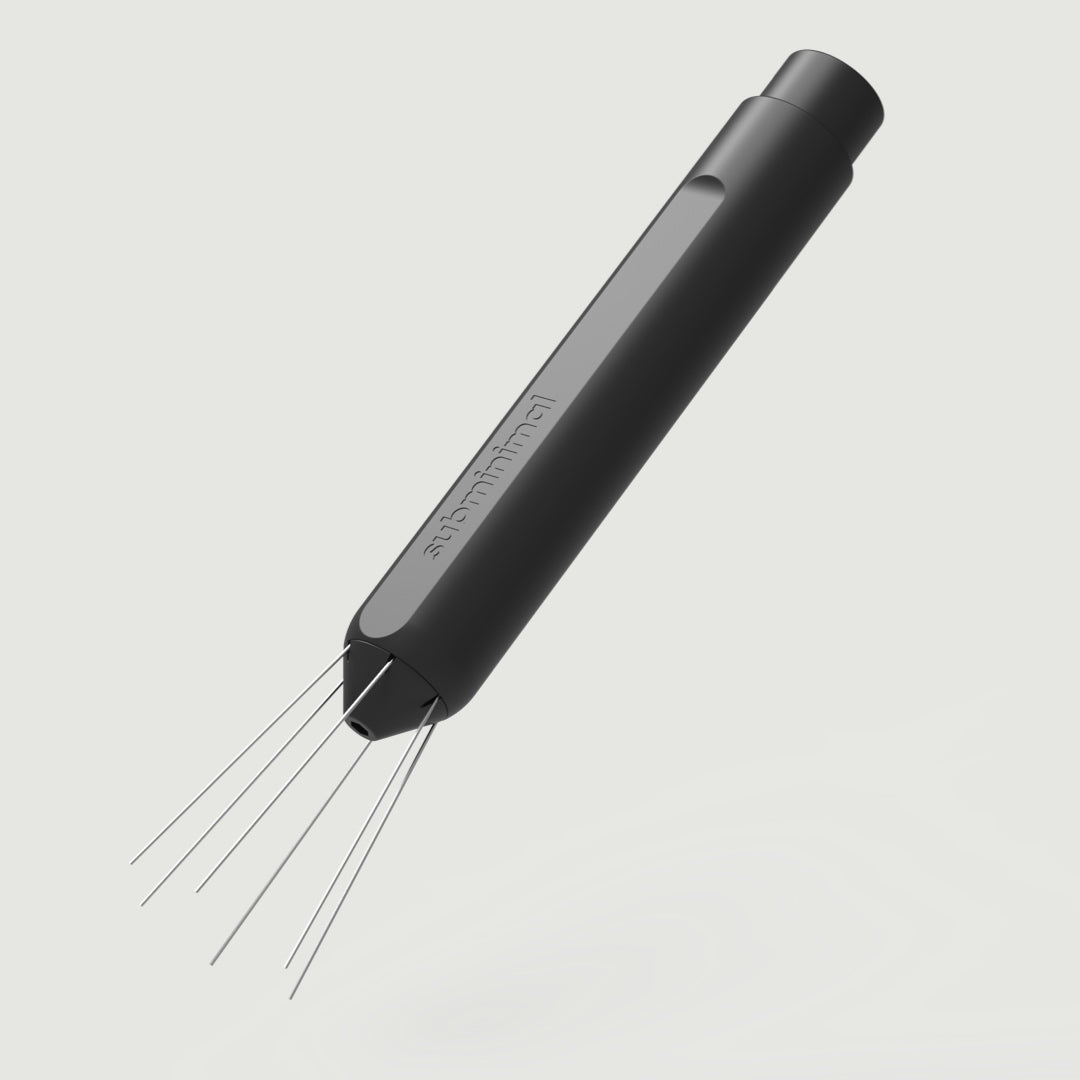
The Subminimal Flick isn’t just another WDT tool, it’s a game-changer for espresso lovers. Designed with an intuitive one-click needle release and flick-to-retract mechanism, this tool makes coffee preparation feel like second nature. No more bent, exposed needles. Just clean, controlled distribution with every shot.
Crafted for those who love both form and function, the Flick’s sleek metal body feels great in your hand, while the magnetic storage keeps it right where you need it, whether on your espresso machine or mounted on your wall.
Whether you're just starting out or pulling pro-level pours, the Flick transforms your workflow into a smooth, satisfying ritual. And yes, it’s as addictive as it is effective.
Subminimal Flick - Retractable WDT Tool
Why You'll Love It:
-
Retractable Needles: Safe, secure, and out of the way when not in use.
-
Magnetic + Stand Storage: Display it your way, upright or mounted.
-
All-Metal Construction: Premium feel, long-lasting durability.
-
Replaceable Needles: Comes with two full extra sets.
-
Compact & Travel-Friendly: Perfectly portable in its custom-fit box.
-
Hyper-Satisfying Use: Like a fidget spinner for baristas, seriously.
What’s in the box:
-
Flick WDT Tool
-
Weighted Aluminium Base
-
Wall/Machine Magnetic Mount
-
Two Sets of Replacement Needles
-
Allen Key Tool
Specs:
-
Weight: 48g / 1.3oz
-
Needle Thickness: 0.5mm
-
Needle Length: 42mm
-
Dimensions: 110 x 18 x 18mm
Ready to upgrade your distribution? Shop Flick WDT
Flux WDT Tool: Electric Distribution for Better Espresso
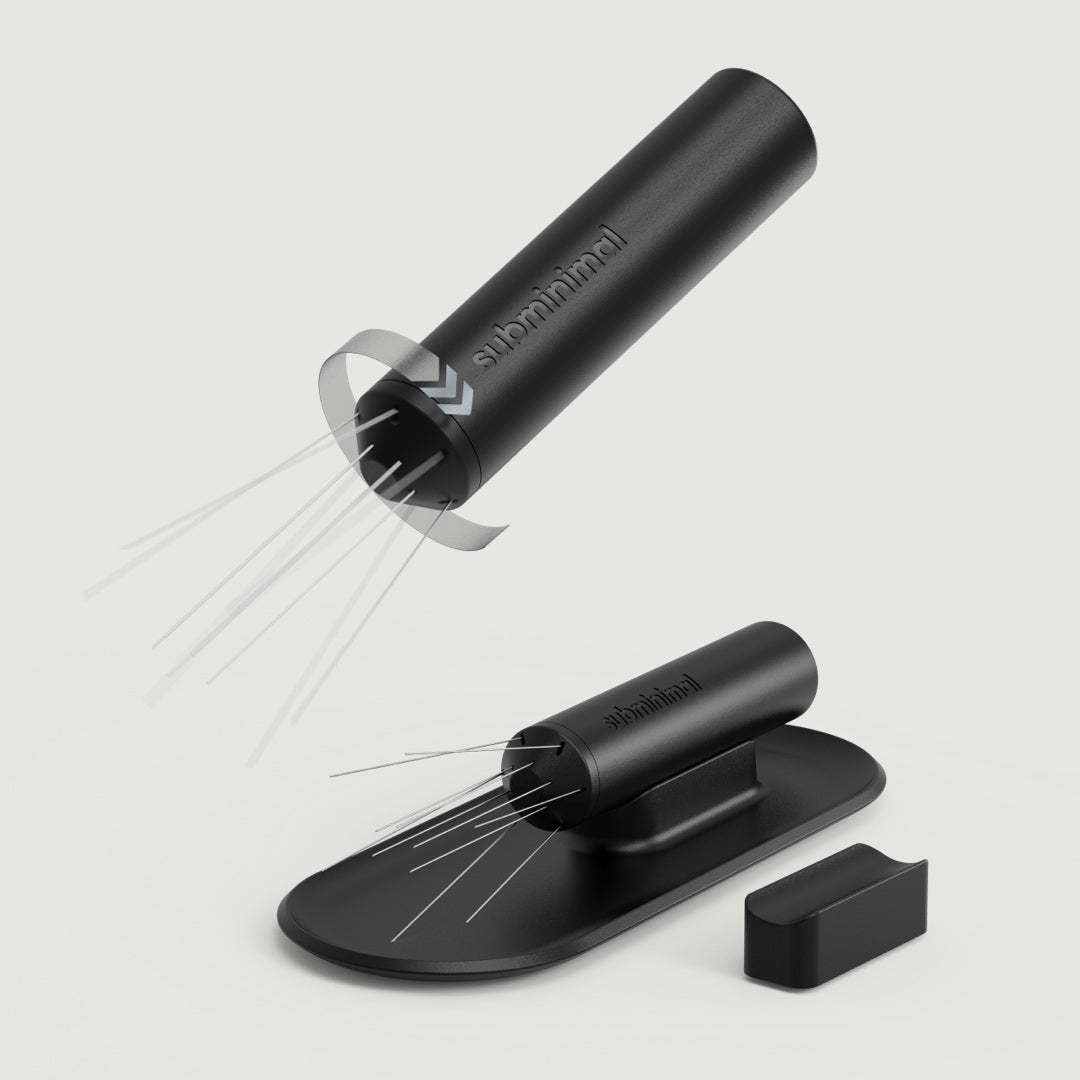
Meet the Flux, the electric WDT tool from Subminimal that turns clump-busting into something fast, consistent, and weirdly satisfying. It spins at 600 or 800 RPM to break up clumps, then automatically finishes with a gentle 4-second slow spin at 350 RPM. The result is a level coffee bed and fewer channels in the cup.
Why it works
-
One-button dual-speed action does the heavy lifting so your wrist does not have to
-
Adjustable needles stay straight for precise circles or fan out for wider coverage
-
Magnetic needle system makes swapping or cleaning quick and tool-free
-
USB-C rechargeable with a long-lasting, replaceable battery
-
Comes with a spare needle set, tray, and wall-mount magnet
-
Available in Black, White, and Terracotta
What’s in the box:
-
Flux Electric WDT tool (main unit)
-
Replacement / Spare Needle Set
-
Tray
-
Magnetic Mount (Wall Magnet)
-
Certificate of Authenticity
-
Instructions / User Manual
Better distribution means more even extraction and cleaner shots, whether you pull light roasts or classic espresso.
Learn more and see the full specs on the Flux WDT product page.
Discover Also:
Putting the Technique into a Full Workflow
A WDT tool works best as one step in a short, consistent sequence. Weigh the dose with a dosing cup tool like the Subscale so the amount is repeatable. Grind into the basket with a funnel in place. Stir with the WDT tool, settle, tamp, and lock in. Watch the shot if you have a bottomless portafilter and UpShot. Small improvements at each stage compound: even dose, even bed, even tamp, and steady flow.
Some people still use a surface leveler after the needle stir if they want an extra-flat top. Others go straight to the tamp. Either approach is fine once the deep clumps are gone. Light roast coffees, which can be denser and more prone to clumping, often show the biggest improvement. Single-dose grinders that empty fully between shots can also produce more static, so the stir helps there too.
Spare needle packs keep the tool performing the same way over months of use. Pairing the distribution step with other pieces from the products for coffee collection, such as the FlowTip jug for milk drinks that follow, keeps the whole station focused on repeatable results rather than extra gadgets.
Common Questions About WDT Tools
What does WDT stand for and why does the name matter?
WDT stands for the Weiss Distribution Technique. The name comes from John Weiss, who shared the needle-stirring method on coffee forums in 2005 after testing it on his own bottomless setup. Knowing the origin helps separate the real technique from other distribution methods. It is specifically about deep stirring with thin needles to fix density problems throughout the coffee bed, not about surface smoothing or tamping pressure. A purpose-built WDT tool from the products for coffee collection makes that full-depth step fast and consistent for daily use.
Do I need a special tool or can I use something else?
A purpose-built tool with the right needle thickness makes the job faster and more consistent, but the technique itself only requires a thin, sturdy implement. Many people started with a single needle or even a straightened paperclip. Dedicated tools with several needles simply cover the basket more evenly in less time and are easier to store safely. The retractable style on the Flick WDT tool reduces the chance of bent tips that force you to stop mid-prep. Once you have the motion, either approach works; the dedicated version just removes small friction from the espresso workflow.
How is a WDT tool different from a distribution tool or leveler?
A WDT tool uses needles that move through the full depth of the coffee bed to break clumps and equalize density from bottom to top. A distribution tool or leveler is usually a flat or spinning disc that sits on the rim and moves only the surface layer to make the top flat before tamping. Both can be useful, but they solve different problems. Needles fix the hidden density variations that cause channeling; a leveler mainly helps you tamp on an even surface. Many workflows use the needle step first with a Flick, then a light surface pass if desired.
Does a WDT tool work with every grinder and basket?
Yes, because the action is stirring rather than a fixed mechanical pattern that matches one basket size. It helps most with grinders that produce noticeable clumps, which includes many single-dose and some hopper models. Larger or smaller baskets are fine as long as the needles reach near the bottom. The technique is especially noticeable with light roasts or when you see sprays on a bottomless portafilter. It does not fix a grind that is far too coarse or fine, but it removes one common source of uneven flow once the grind is in the right range, and dosing cup tools like the Subscale help keep the dose consistent beforehand.
How often should I replace the needles?
Needles last through many uses if you avoid forcing them into a hard surface or bending them during storage. A retractable design protects them between shots. When the tips start to feel less effective or look bent, a spare set restores the original performance. Most tools include extras in the box, and replacement packs are available so you do not have to replace the whole handle. Regular wiping after use keeps grounds from building up and affecting how freely the needles move.
Read Also:
See the Subminimal tools built for consistent espresso at home.
Related to this blog:
The perfect WDT Tool
It works perfect for me. Doesn't use up too much space, always clean setup and does the job well. Couldn't think of anything for improve.