Best Coffee Bean Scale in 2026
A good cup of coffee starts long before the water hits the grounds. The best coffee scale turns guesswork into a recipe, and a recipe into something you can repeat every single morning. Whether you're dialing in an espresso or perfecting a pour-over, a precision coffee scale gives you control that no other tool can offer. Discover the Best Coffee Bean Scale in 2026
Ready to clear the clutter? The Subminimal Subscale replaces two tools with one, and charges just twice a year.
Types of Coffee Scales and What to Look For
Not every coffee scale works the same way. The right type depends entirely on how you brew.
Types of Coffee Scales
-
Compact espresso scales, small footprint, designed to sit on drip trays under a portafilter, fast response time
-
Pour-over scales, flat platform, wide enough for a Chemex or V60, usually include a timer
-
All-in-one dosing scales, like the Subminimal Subscale, where the scale is built directly into a dosing cup, so you weigh and dose in the same tool
-
Bluetooth smart scales connect to apps for shot tracking, flow-rate graphs, and saved brew profiles
Key Features to Look For
Precision level: 0.1g is the practical standard for home coffee. Some scales go to 0.01g, which matters more for dialing in very small espresso doses.
Response time: Faster is better. A slow scale causes you to overshoot your target while pouring. Look for scales that update in under 500ms for pour-over and under 100ms for espresso.
Battery type: USB-C rechargeable scales are far more convenient than AAA battery-powered ones. Some rechargeable scales go months between charges.
Water resistance: IPX4 or better handles splashes without issue. Fully sealed aluminum-body scales offer the highest protection for high-volume setups.
Size and clearance: Espresso scales need to fit under your portafilter. Pour-over scales need a platform wide enough for your brewer. Always check the dimensions before buying.
Subminimal designs coffee tools with exactly these priorities: compact form, reliable performance, and minimal countertop presence.
Coffee Scale vs. Kitchen Scale: What's the Difference?
A standard kitchen scale measures in 1-gram increments, which works fine for baking. But coffee is different. A 1-gram error in your dose can push an espresso from balanced to bitter. That's why coffee-specific scales measure to 0.1g precision, ten times more accurate than the average kitchen scale.
Response time matters just as much. A kitchen scale might take 2–3 seconds to register a weight change. A quality espresso scale updates in milliseconds, some as fast as 20ms. When you're mid-pour or watching a shot extract, that speed is the difference between hitting your target weight and overshooting it.
Coffee scales are also built with brewing in mind:
-
Integrated timers, track brew time and extraction speed without grabbing your phone
-
Low-profile designs, fit under portafilters and drip trays without lifting your brewer
-
Water resistance, handle splashes, drips, and rinse-downs without damage
-
Compact footprints, keep your countertop clean and uncluttered
None of these features show up on a typical kitchen scale, which is exactly why serious home brewers keep a dedicated digital coffee scale on the counter.
Top 23 Best Coffee Bean Scales in 2026
1. Subminimal - Best Coffee Bean Scale in 2026

Description (Subscale):
Award-Winning Digital Dosing Innovation: The Subminimal Subscale is the digital dosing cup that redefines your coffee routine, combining the precision of a scale with the convenience of a cup in one sleek design. Winner of Best New Coffee Product by SCA Geneva 2025, this innovative tool features a minimalist design with an invisible LED display that activates with a simple touch. Dose, Grind, Brew, Done.
Key Features:
-
Hidden LED Display: Invisible display magically lights up with a touch, "unexpected delight"
-
Precision Weighing: Accurate to 0.1g (max 99.9g display)
-
Minimalist Design: Matt black with barely visible capacitive touch on/off switch
-
USB-C Rechargeable: 400mAh battery keeps it always ready and powered
-
IPX-4 Splash Resistant: Safe to wash under running water (not submergible)
-
Food-Safe Tritan Body: Rated for hot liquids up to 100°C for 2 hours
-
Dual Unit Display: Double tap to switch between grams and ounces
-
Auto Shut-Off: 30s if empty, 60s with beans for battery conservation
-
Calibratable: Maintains perfect accuracy for years (calibration weights not included)
-
Compact Design: 80x80x105mm, weighs 122g, holds ~60g beans
-
120ml Cup Capacity: Safe for liquids, pull espresso shots directly in it
-
Low Friction Interior: Beans and grounds empty perfectly every time
Pricing:
-
Price: $49.95 USD
-
Benefits: Same-day shipping, 30-day returns, warranty included, secure checkout
Why Choose Subminimal Subscale:
Discover the coffee tool you never knew you needed and now can't live without. Rated 4.8/5 stars by 996 coffee lovers and awarded Best New Coffee Product by SCA Geneva 2025, the Subscale eliminates the constant shuffling and zeroing of your espresso scale, making your workflow smoother and more enjoyable. The hidden LED display leads to "unexpected delight, the most fun you'll ever have dosing coffee." Customers rave it's the "best coffee scale ever" with "no more need to use a scale and another item, it's more efficient to do it all in one item." Users love the "coolness factor which is hard to describe, the display literally comes out of nowhere. Very slick." The compact design takes up less counter space than traditional scales, while the perfect cup shape makes it "effortless to glide beans directly into your grinder." Very accurate with "good repetition," and the low friction interior means "all your beans or ground beans empties perfectly." The food-safe Tritan construction handles hot or cold, wet or dry, even pull espresso shots directly in it. USB-C rechargeable means it's always ready when you are. Goes from "nice to have" to "can't live without" in under a day.
Discover Also:
2. Acaia Pearl S

The Acaia Pearl S stands out as a professional-grade smart scale tailored for home baristas who want data-driven brewing precision. Its 20ms response time ranks among the fastest available, allowing real-time flow-rate monitoring that helps you refine pour techniques instantly. Bluetooth connectivity links to the Acaia app, where you can track multiple brew modes, view interactive guides, save shot histories, and receive sound notifications for key moments. The high-brightness LED dot matrix display remains readable even in bright kitchens, while the rechargeable battery delivers up to 40 hours of use. Built with a solid 3kg capacity and refined aluminum construction, it suits both pour-over and espresso workflows without feeling bulky. Many users appreciate the auto-tare and auto-start timer functions that streamline routines, though the higher price and app reliance may exceed needs for casual drinkers. Overall, it elevates everyday coffee into a measurable craft, making consistent results more accessible for detail-oriented enthusiasts.
-
Key features: 20ms response time, Bluetooth app connectivity, multiple auto-timed brew modes, premium build and display
-
Pros: Exceptional speed and data depth, strong brand reputation, refined build quality, ideal for detail-oriented brewers
-
Light con: Premium price and app dependency may feel like more than casual setups need
3. Acaia Lunar

Designed specifically for espresso setups, the Acaia Lunar features an ultra-slim profile that slides easily onto drip trays under portafilters without raising the group head. Its 0.1g precision captures shot weights in real time, paired with a fast response that keeps pace with 25 to 30 second extractions. Water-resistant anodized aluminum construction protects against steam and spills common in busy stations, while the compact 105mm square footprint keeps counters clear. Bluetooth integration with the Acaia app enables shot tracking, brew profile storage, and flow-rate graphs for ongoing refinement. Battery life stretches 30 to 40 hours on a single charge, and the inverted scale design enhances durability by sealing internal components. Baristas praise its reliable accuracy and professional build that holds up in wet environments. While less versatile for larger pour-over vessels, it excels as a dedicated espresso tool trusted by both home and commercial users seeking consistency without clutter.
-
Key features: 0.1g precision with fast response, ultra-slim drip-tray profile, Bluetooth app integration, real-time shot tracking
-
Pros: Best-in-class espresso form factor, responsive display, reliable Bluetooth, trusted by home and professional baristas alike
-
Light con: Limited practical use outside espresso-specific setups
4. Timemore Black Mirror Basic 2

The Timemore Black Mirror Basic 2 delivers strong performance at a competitive price, making it a favorite for multi-method brewers. Accurate to 0.1g with a 2kg capacity, it updates quickly enough for espresso shots and pour-over pours alike, while the real-time flow-rate display helps maintain steady streams. USB-C charging and a long-lasting battery eliminate frequent battery swaps, and the clean minimal design with a sturdy rubber mat resists minor spills. Auto-timer functions and simple controls keep the workflow intuitive across French press, AeroPress, or filter methods. Users often highlight its value compared to premium options, noting reliable accuracy and a backlit screen that works well in most lighting. The Bluetooth app option adds advanced tracking for those who want it, though it is not required for core use. Slight display readability issues in direct sunlight exist, yet overall it balances speed, versatility, and affordability for daily home setups.
-
Key features: 0.1g precision, built-in flow-rate tracking, USB-C rechargeable, clean minimal design
-
Pros: Outstanding value, reliable accuracy, fast response, USB-C convenience, versatile across brew methods
-
Light con: Display can be harder to read in very bright ambient light
5. Hario V60 Drip Scale

Built with pour-over lovers in mind, the Hario V60 Drip Scale offers a compact flat platform sized perfectly for V60, Kalita, or similar drippers. The integrated timer and 0.1g precision let you follow recipes exactly without reaching for a phone, while the simple two-button operation keeps things straightforward. Japanese build quality ensures durability and consistent readings up to a 2kg capacity, and recent updates improved water resistance and anti-slip feet for better stability. Auto-off and a clear display make it reliable for daily use, with minimal lag that supports focused brewing. Many appreciate its affordable entry into dedicated coffee tools and the clean aesthetic that fits kitchen counters neatly. Capacity can feel tight for larger batch brews, but for standard single or double servings it performs reliably. It remains a trusted, no-frills choice that prioritizes ease and accuracy for filter coffee enthusiasts.
-
Key features: Integrated timer, compact flat platform for filter brewers, simple one-button operation, trusted Japanese build quality
-
Pros: Easy to use, well-made, excellent footprint for common drip brewers, affordable, strong brand trust
-
Light con: 2kg capacity may feel limited for larger batch brewing
6. Fellow Tally Pro Precision Scale

The Fellow Tally Pro combines sleek design with thoughtful features that simplify brewing. Accurate to 0.1g with a responsive load cell, it includes an auto-start timer and a brew assist mode that calculates target water weight from your chosen ratio, displaying progress as you pour. The matte finish and compact form look at home in modern kitchens, while the 2.5kg capacity handles most home setups. High-quality materials feel premium and clean easily, and the three-mode interface stays intuitive once learned. Users praise the way it anticipates steps, reducing mental load during pour-over or espresso prep. Fast response times register even single beans reliably. The premium cost reflects the polished experience, though some note a short adjustment period for the auto-timer behavior. It appeals especially to design-conscious brewers seeking both beauty and practical workflow improvements.
-
Key features: 0.1g accuracy, auto-start brew timer, clean minimal aesthetic, flat platform for multiple brewers
-
Pros: Beautiful design, easy operation, auto-timer is a genuine workflow improvement, strong brand presence, works well for both pour-over and espresso
-
Light con: Auto-timer behavior takes a little adjustment to get comfortable with
7. OXO Brew Precision Scale with Timer

The OXO Brew Precision Scale with Timer shines through its pull-out display that stays visible even when a portafilter or large brewer sits on the platform. Measuring to 0.1g with a generous 2.7kg capacity, it supports everything from espresso to big-batch pour-overs or even light kitchen tasks. The integrated timer starts easily, and a heat-resistant silicone mat protects against hot vessels. Touch-sensitive buttons and clear digital readout keep operation simple, while auto shut-off helps conserve the AAA batteries. Many value the flexible footprint and solid value for multi-method households. Readability under equipment is a standout advantage over lower-profile competitors. Battery life and occasional button sensitivity can require care, yet overall it delivers dependable accuracy and convenience for everyday coffee routines without unnecessary complexity.
-
Key features: Pull-out display for under-brewer visibility, integrated timer, 6-pound (2.7kg) capacity, wide platform
-
Pros: Excellent readability under portafilters, generous capacity, great for multi-method setups, reliable accuracy, solid value
-
Light con: Slightly larger footprint than compact espresso-specific scales
8. Brewista Smart Scale II

Versatility defines the Brewista Smart Scale II, which includes six automatic brewing modes covering espresso, pour-over, French press, AeroPress, and more. Each mode handles auto-tare and auto-timing tailored to the method, while 0.1g precision and a 2kg capacity keep measurements consistent. USB rechargeable power and a moisture-resistant design suit wet environments, and the straightforward interface becomes second nature after a short learning period. Response times support both fast espresso shots and slower filter pours effectively. Home users who switch methods regularly appreciate how the modes simplify workflow and reduce manual steps. Build quality feels solid for the price point, making it a practical multi-tool rather than a single-purpose device. Those seeking pure simplicity may find the mode options slightly involved at first, but most find the adaptability worthwhile for varied brewing habits.
-
Key features: Six automatic brewing modes, auto-timing per method, 0.1g precision, straightforward interface
-
Pros: Highly versatile across brewing methods, auto-modes simplify workflow, accurate, great for multi-method households
-
Light con: Mode-switching interface has a slight learning curve for first-time users
9. Felicita Arc

The Felicita Arc prioritizes durability with a full aluminum body and high-level waterproofing that exceeds typical splash resistance, ideal for frequent espresso use. Fast 0.1g response and auto-tare plus auto-timer functions streamline shot pulling, while Bluetooth connectivity and memory options expand tracking possibilities. The compact size fits drip trays and portafilters comfortably, and the rechargeable battery supports extended sessions. Professional-grade construction holds up in high-volume or wet conditions better than plastic alternatives. Users often note the responsive display and reliable accuracy that match or exceed more expensive options. A non-slip heat-resistant mat adds stability during extraction. Heavier and priced higher than basic models, it rewards those who value longevity and commercial-level resilience in a home setting.
-
Key features: Full aluminum construction, high-level waterproofing, fast response time, professional-grade build
-
Pros: Exceptional build quality, superior water resistance, fast and accurate readings, trusted by semi-professional setups
-
Light con: Heavier and pricier than plastic-body alternatives at a similar precision level
10. KitchenTour Coffee Scale

As a practical everyday option, the KitchenTour Coffee Scale provides 0.1g precision up to 3kg with a bright backlit LCD that stays readable from various angles. The built-in timer covers core brew needs, and battery power (AAA) keeps it portable without charging cables. Simple controls and a straightforward interface make it approachable for beginners stepping into weighed coffee. Affordable pricing positions it as an accessible entry point that still delivers consistent dosing and water tracking for pour-over or espresso. Many note solid accuracy relative to cost and the convenience of auto shut-off plus low-battery alerts. Lack of USB-C charging is a minor drawback for some, yet the reliable performance and no-fuss design suit casual home baristas who want dependable results without premium extras.
-
Key features: 0.1g precision up to 3kg, backlit LCD display, integrated timer, battery-powered
-
Pros: Very affordable, accurate for the price, built-in timer, straightforward to use, great entry point for beginners
-
Light con: Battery-powered only, no USB-C rechargeable option
11. Coffee Gator Digital Scale

The Coffee Gator Digital Scale focuses on versatility across espresso, drip, and pour-over methods with a large easy-to-read LCD and integrated timer. Precision reaches 0.1g with a broad capacity that accommodates various vessels, while the simple two-button interface requires almost no learning. Solid build quality and accessible pricing make it a household-friendly pick that works for multi-brewer setups. Removable silicone mat protection against heat and spills adds practicality for daily use. Users appreciate the clear display from a distance and straightforward unit switching among grams, ounces, and more. Larger footprint may challenge tight countertops, yet the overall ease and multi-method compatibility appeal to those wanting one scale that covers most home needs without complexity.
-
Key features: Large LCD display, integrated timer, compatible with espresso, drip, and pour-over, simple two-button interface
-
Pros: Easy to read, simple operation, versatile across brew methods, solid build quality, accessible price
-
Light con: Larger footprint may not suit tight countertop setups or compact espresso stations
12. Weightman Espresso Scale

Compact and purpose-built, the Weightman Espresso Scale delivers 0.1g accuracy in a small footprint designed for tight drip trays and portafilter clearance. Integrated timer and simple operation let you start using it immediately, with no menus or learning curve. Affordable pricing and reliable dosing consistency make it popular among home espresso enthusiasts with limited space. Battery power keeps it portable, and the focused design prioritizes the essentials of shot weighing and timing. Many value the immediate usability and solid performance for dialing in recipes. Minimal extra features suit those who prefer core functionality over advanced data or apps, though it may feel basic for multi-method households. Overall it offers excellent value for espresso-focused setups seeking accuracy without bulk.
-
Key features: 0.1g accuracy, compact espresso-focused footprint, integrated timer, simple operation
-
Pros: Excellent footprint for small setups, accurate, affordable, timer included, immediate usability
-
Light con: Minimal features beyond core weighing and timing for those who want more data
13. Acuba Glowgram

The Acuba Glowgram takes a unique approach with a 1000Hz sampling rate that provides near-instantaneous response, paired with an RGB light bar offering real-time visual flow-rate feedback. Instead of watching numbers alone, the light length indicates pour speed, helping train consistent technique during pour-over. 0.1g precision and smart modes support precise brewing, while the design engages users who learn better through visual cues. USB-C charging and solid battery life keep it ready for sessions. Baristas focused on pour consistency praise the memorable feedback system that builds muscle memory faster than numerical displays alone. Those preferring traditional readouts may find the light bar less essential, yet it stands out as an innovative training tool for developing better pouring habits and more even extractions.
-
Key features: 1000Hz response rate, RGB light bar for visual flow-rate feedback, 0.1g precision, designed for pour-over training
-
Pros: Unique visual feedback system, extremely fast response, excellent for building pour consistency, memorable and engaging to use
-
Light con: RGB light bar feedback won't suit brewers who prefer standard numerical readouts
14. Apexstone Coffee Scale

Lightweight and portable, the Apexstone Coffee Scale uses a single-button design that handles weighing and timing with minimal effort. 0.1g resolution, near real-time refresh, and multi-unit options (grams, ounces, and more) cover basic needs, while the 3kg capacity suits most home pours. Battery power and compact build make it easy to travel with or store, and a silicone mat protects against heat and drips. Affordable pricing and zero-setup simplicity appeal to casual brewers or those wanting a secondary scale. Clear LCD with backlight improves readability, and the timer supports consistent recipes. Limited advanced features mean it works best for straightforward daily pour-over rather than high-volume or data-heavy espresso work, yet it delivers reliable core performance without fuss.
-
Key features: Built-in timer, single-button operation, battery-powered and portable, lightweight build
-
Pros: Very easy to use, portable, affordable, good for travel or outdoor brewing, zero setup required
-
Light con: Smaller display than full-size scales, limited for high-volume or complex brewing needs
15. Taylor Kitchen Scale

Rounding out options as an entry-level multi-purpose tool, the Taylor Kitchen Scale offers digital precision with a generous weight capacity suitable for basic coffee measurements or general kitchen tasks. Simple one-button operation and a clear display keep it approachable for casual users who brew occasionally. Broad availability and low cost make it easy to acquire as a starter scale that handles grams and other units reliably enough for rough recipes. It works in a pinch for weighing beans or water when dedicated coffee features are not essential. Lack of a built-in timer and slower response compared to specialized models limit its brewing-specific usefulness, yet the practical design serves households that value one versatile scale for both coffee and cooking needs.
-
Key features: Digital precision display, broad weight capacity, simple one-button operation, multi-purpose kitchen use
-
Pros: Affordable, widely available, easy to use, practical for households that also use scales for cooking
-
Light con: Not designed specifically for coffee, no timer, and response speed is not optimized for brewing workflow
16. BOOKOO Themis Ultra
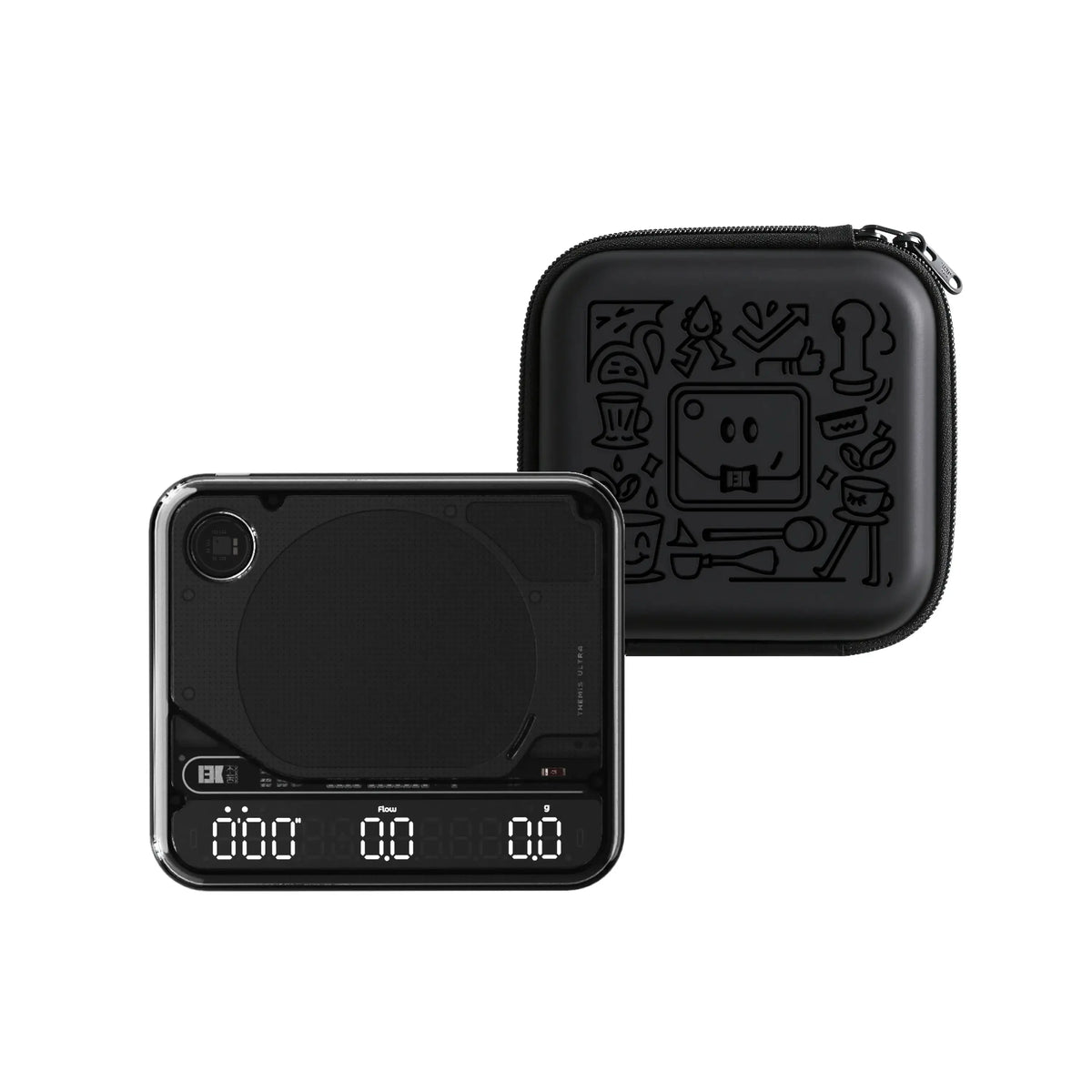
The BOOKOO Themis Ultra is a fully waterproof Bluetooth coffee scale designed for both espresso and pour-over workflows. Headquartered operations support its development of durable tools for serious home and professional use. It measures with 0.1 g precision across a 0.1 to 2000 g range and updates in under 100 ms, allowing real-time flow-rate tracking displayed alongside weight and timer. The IP67 rating means the entire unit can handle full submersion, steam, and rinses without damage. A 2000 mAh battery provides up to 72 hours of continuous operation and recharges via USB-C. The compact 127 by 112 by 18 mm platform fits most drip trays while remaining stable for larger vessels. Bluetooth 5.0 connects to the BOOKOO app plus compatible third-party apps for brew graphing and logging. Three dedicated modes plus an auto setting simplify switching between methods. The aluminum and sealed construction prioritizes longevity in wet environments common to espresso stations.
-
Key features: 0.1 g readability with sub-100 ms response, IP67 full waterproofing, simultaneous weight/timer/flow-rate display, auto and manual modes, USB-C rechargeable 2000 mAh battery, Bluetooth app connectivity for graphing.
-
Accurate data: Capacity 0.1–2000 g, dimensions 127 × 112 × 18 mm, battery life up to 72 hours continuous, response under 100 ms, supports BOOKOO Beanconqueror and Odyssey Espresso apps for real-time logging.
17. Normcore Pocket Coffee Scale V3
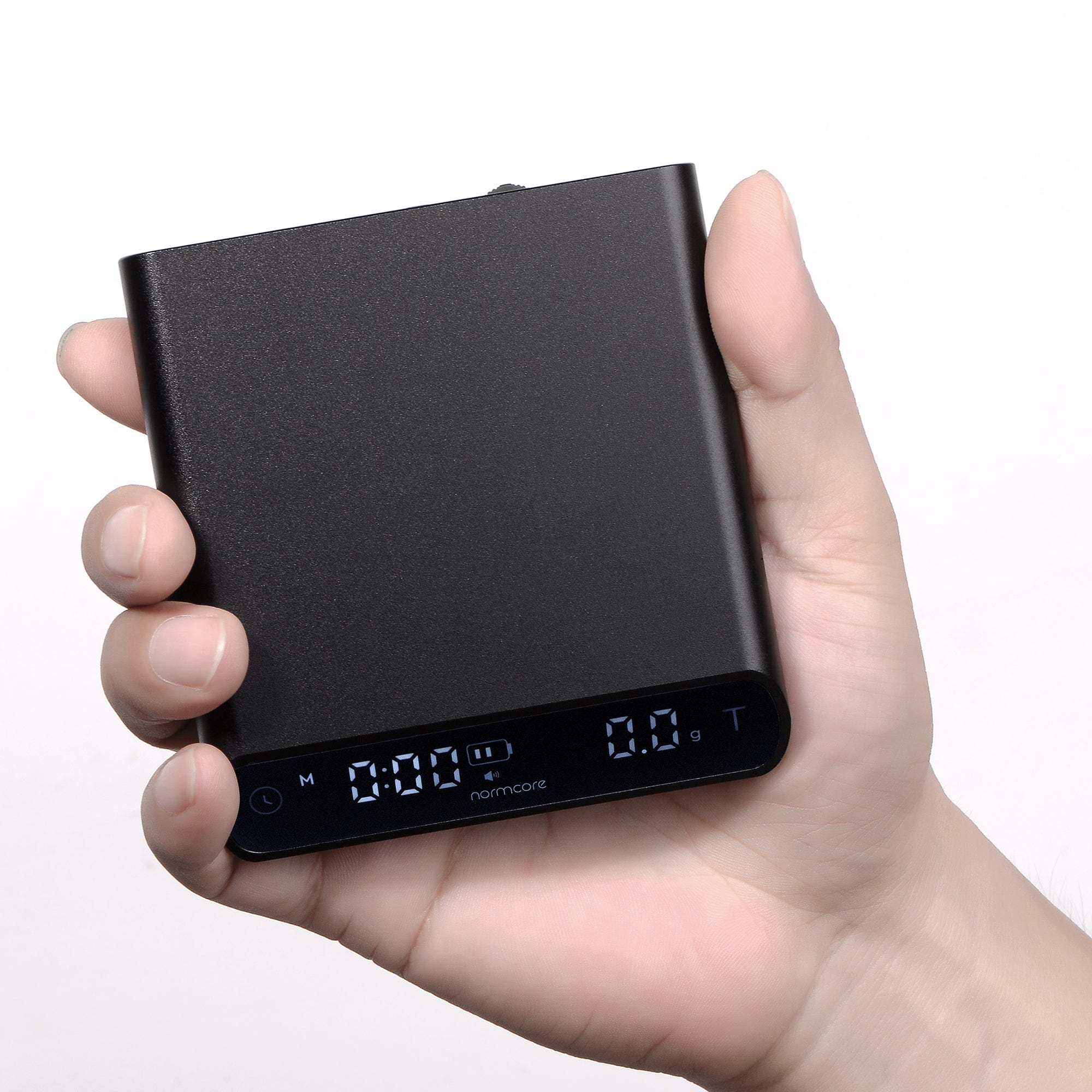
The Normcore Pocket Coffee Scale V3, developed by a Sydney-based team focused on espresso and manual brewing gear, offers a highly portable solution for travelers and compact stations. It delivers 0.1 g accuracy from 0.3 g up to 2000 g capacity with a bright high-contrast LED display and physical buttons that avoid accidental triggers. Four dedicated brewing modes cover manual, espresso auto-timing, pour-over auto-timing, and pour-over ratio calculation. USB-C charging supports up to 15 hours of detached use, and a silent mode option mutes beeps when needed. The roughly 10 by 10 by 2 cm footprint and low profile slide easily under portafilters or into bags. A tactile interface and easy-clean surface suit frequent handling. Response remains quick enough for shot tracking while the ratio mode calculates target water weights automatically. The design emphasizes reliability for both daily home use and on-the-go brewing without relying on complex apps.
-
Key features: 0.1 g precision, four brewing modes including ratio calculation, physical buttons with silent option, USB-C rechargeable, compact pocket-sized body, bright LED display.
-
Accurate data: Capacity up to 2000 g, dimensions approximately 10 × 10 × 2 cm, battery life up to 15 hours, weight resolution starts at 0.3 g, auto-tare and auto-timer functions in espresso and pour-over modes.
18. MHW-3BOMBER Cube Coffee Scale 3.0 Micro
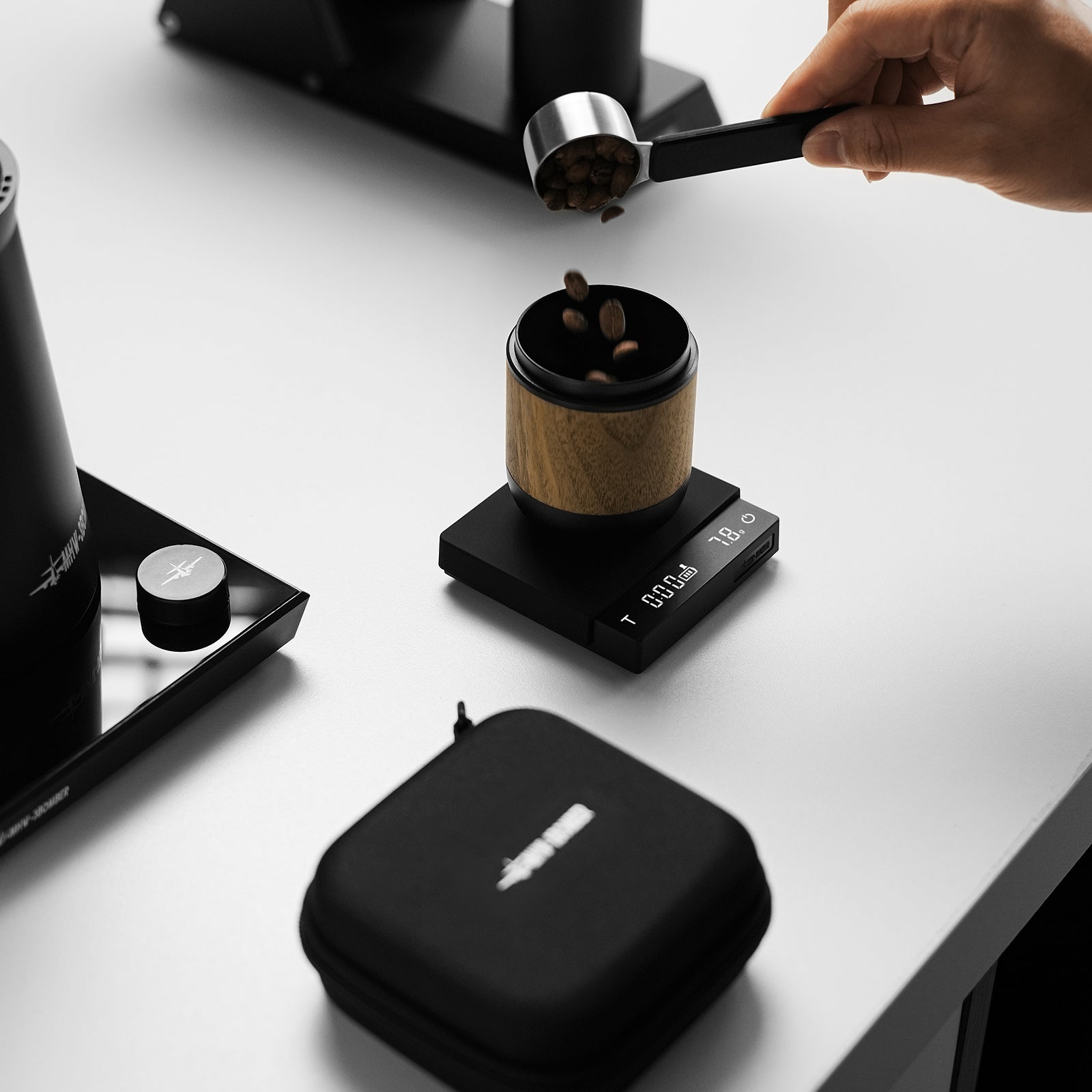
MHW-3BOMBER, based in Zhongshan City, Guangdong Province, China, produces the Cube Coffee Scale 3.0 Micro as an ultra-compact option for espresso and portable setups. Measuring just 85 by 85 mm and weighing 138 g, it still achieves 0.1 g precision with dedicated Manual, Pour-Over, and Espresso modes. Espresso mode uses liquid sensing for automatic tare and timer start when flow begins. Real-time flow-rate display appears on the Pro Max variants, while the Micro prioritizes core accuracy and speed. Battery life reaches multi-day use on a full charge with USB-C support. The small size fits tight drip trays and travel kits without sacrificing stability. Smart memory retains last settings, and the sealed design resists typical kitchen moisture. Users in specialty circles note its balance of portability and functional modes that cover most home brewing scenarios without bulk.
-
Key features: 0.1 g high-sensitivity sensor, three operation modes with liquid-sensing espresso auto functions, real-time flow-rate on higher variants, USB-C charging, ultra-compact 85 × 85 mm body, smart memory.
-
Accurate data: Dimensions 85 × 85 mm, weight 138 g, capacity suitable for single shots and small pours, multi-day battery performance, mode switching via double-tap timer button.
19. Greater Goods Premium Coffee Scale

Greater Goods, headquartered in Saint Louis, Missouri, USA, designs the Premium Coffee Scale for precise home brewing with an almost real-time refresh rate and 0.1 g resolution. The matte black unit includes a removable dishwasher-safe silicone cover that protects against heat and spills while a protective groove channels liquid away from electronics. A dual-color high-contrast display shows weight clearly, and the timer counts both up and down for flexible brew control. Six measurement units cover grams, ounces, and related kitchen needs. Tare function clears vessel weight instantly, and auto shut-off conserves power. The platform size accommodates common drippers and cups. Response speed supports consistent pour-over and light espresso work. Built for everyday American kitchens, it combines straightforward controls with durability features that handle regular rinsing and heat exposure.
-
Key features: 0.1 g precision with near real-time refresh, removable silicone heat-and-spill cover, up/down timer, six measurement units, dual-color high-contrast display, protective liquid groove, tare function.
-
Accurate data: Capacity supports typical home brew vessels, display remains readable in varied lighting, dishwasher-safe silicone component, designed and supported from Saint Louis operations.
20. Escali Versi Coffee Scale

Escali, based in the Minneapolis area of Minnesota, USA, offers the Versi Coffee Scale with four pre-programmed modes tailored to pour-over and related methods. It measures to 0.1 g increments up to a 3000 g (6.6 lb) capacity, providing headroom for larger batches or full carafes. Automatic timer and auto-tare functions activate based on the selected mode, while a bright LED display stays visible during brewing. Rechargeable power eliminates disposable batteries, and the overall form factor balances stability with countertop practicality. Manual mode remains available for custom workflows. The scale registers small weight changes quickly enough for recipe dialing. Construction focuses on reliable kitchen performance with features that simplify multi-step pours. It serves both dedicated coffee users and those who also weigh ingredients for cooking.
-
Key features: 0.1 g accuracy, 3000 g capacity, four brewing modes with auto-timer and auto-tare, bright LED display, rechargeable battery, manual override option.
-
Accurate data: Maximum capacity 6.6 lb / 3000 g, developed by Escali team in Minneapolis region, modes optimized for pour-over control and multi-step recipes.
21. Hario Polaris Coffee Scale
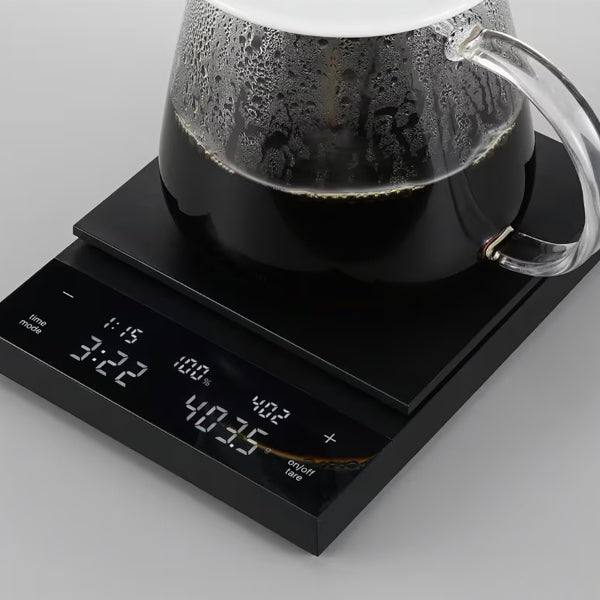
The Hario Polaris Coffee Scale expands the Japanese brand’s lineup with smart ratio assistance and percentage tracking for pour-over. It weighs from 0.1 g to 2000 g and automatically calculates target water volume once the coffee dose and preferred ratio are entered. Percentage display shows progress toward the total water target in real time, reducing mental math mid-pour. Auto-start timer and classic manual modes provide flexibility. Dimensions of approximately 127 by 165 by 28 mm fit standard drippers while remaining portable. Accuracy steps adjust by range for practical readability. Sound settings and auto shut-off complete the interface. The ABS and acrylic construction keeps weight reasonable at around 437 g including packaging. It supports reproducible recipes by guiding pours without constant recalculation.
-
Key features: Polaris ratio mode with automatic water target and percentage display, 0.1 g base accuracy, auto-start timer, classic and manual modes, sound options, compact platform.
-
Accurate data: Capacity 0.1–2000 g with stepped resolution (0.1 g to 300 g, 0.5 g to 1000 g, 1 g above), dimensions W127 × L165 × H28 mm, weight approx. 437 g, Japanese design heritage.
22. MiiR Digital Coffee Scale

MiiR produces the Digital Coffee Scale with an emphasis on sustainable materials and clear usability. Made from 100 percent post-consumer recycled plastic, it delivers 0.1 g precision, a bright white LED display larger than many competitors, and a super-fast response rate. Built-in timer, auto-tare, and USB-C lithium rechargeable battery support daily routines without disposable cells. Multiple measurement units cover grams, milliliters, and ounces. The platform accommodates common home vessels while the overall design stays simple and clean. Auto shut-off and straightforward controls reduce learning time. Environmental focus aligns with MiiR’s broader product philosophy. Response speed and display clarity make it practical for both pour-over timing and espresso dose checks in residential kitchens.
-
Key features: 0.1 g precision, large bright white LED, built-in timer, auto-tare, USB-C rechargeable lithium battery, multi-unit measurement, recycled plastic body.
-
Accurate data: Constructed from 100 percent post-consumer recycled plastic, fast response suitable for brew timing, supports grams milliliters and ounces, designed for home precision brewing.
23. Palm Electronic Scale
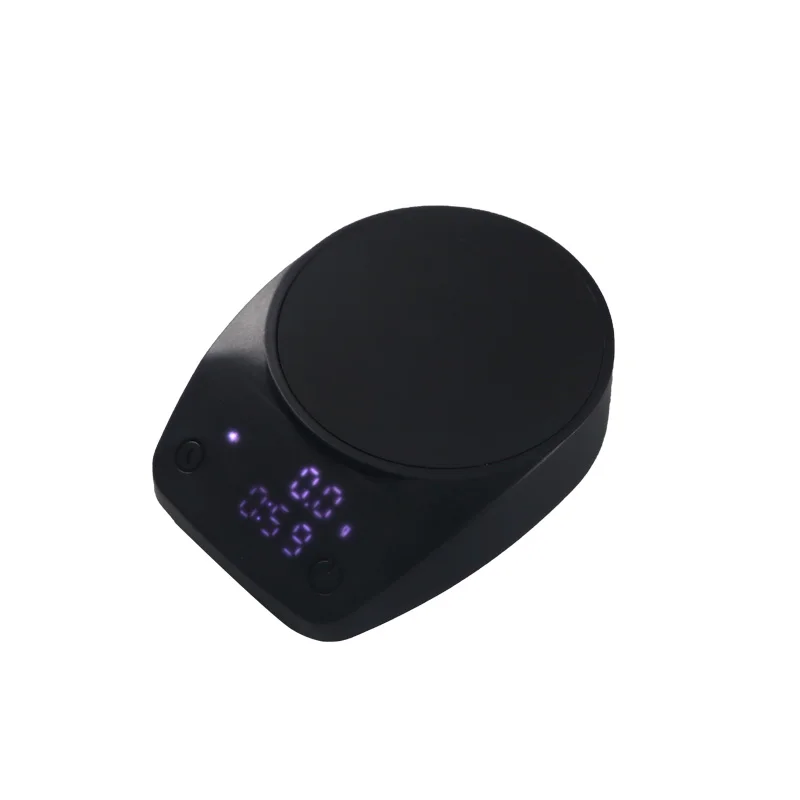
The Palm Electronic Scale focuses on extreme portability for cramped drip trays and travel espresso setups. Its tiny footprint and low weight allow placement on the smallest machines while still offering 0.1 g accuracy suitable for single shots. Two modes include standard manual timer operation and an espresso mode that auto-tares on cup placement then starts and stops timing based on flow detection. USB-C charging and a physical on/off switch provide reliable power control. Accuracy testing with calibration weights shows close agreement to higher-priced units for practical coffee use. The design prioritizes minimal bulk without sacrificing core weighing and timing functions. It suits users with limited counter space or those who brew away from home.
-
Key features: Ultra-compact size for tight drip trays, 0.1 g accuracy, espresso auto-tare and flow-based timer mode, standard manual mode, USB-C charging, physical power switch.
-
Accurate data: Registers approximately 99.9 g on a 100 g calibration weight, lightweight and small enough for travel and mini machines, battery supports regular sessions between charges.
Espresso Scale vs. Pour-Over Scale: What's the Difference?
The core difference comes down to size and speed. An espresso scale needs to fit under a portafilter, a small footprint and a very low profile, sometimes under 10mm in height. Response speed matters more for espresso because you're tracking a fast, high-pressure extraction that hits your target weight in 25–30 seconds.
A pour-over scale works differently. The platform needs to be wide enough to hold a V60, Kalita, or Chemex directly above the scale. Timer accuracy becomes more important than raw response speed, since you're tracking a longer, slower brew, typically 3–4 minutes total. You want a clear display you can read from above while you pour.
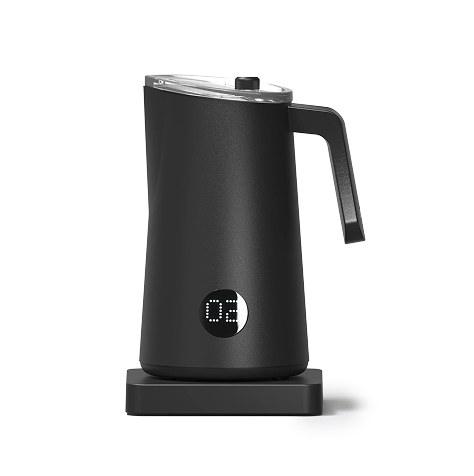
Some scales handle both jobs well. The Timemore Black Mirror Basic 2, for example, has a flat platform and fast enough response for both methods. But if you're buying for one specific method, match the scale to the job. The Subminimal Subscale takes a completely different approach, it's a dosing-focused tool that lets you weigh beans directly in the cup before grinding. Pair it with the Subminimal NanoFoamer Pro, and you've got precision covered from dose to drink.
How to Use a Coffee Scale for Better Brew Ratios
A brew ratio is the relationship between the weight of your coffee and the weight of your water. For espresso, a common starting ratio is 1:2, 18g of coffee in, 36g of liquid out. For pour-over, most recipes land between 1:15 and 1:17. Getting these numbers right every single time is what separates a good cup from a great one.
Here's a simple process for using a digital coffee scale during brew:
-
Zero your scale with your empty brewer or portafilter on top
-
Add your ground coffee and note the exact weight
-
Calculate your target water weight based on your chosen ratio
-
Tare again and pour water until you hit that target
-
Note your brew time and adjust grind size if the results were off
The Subminimal Subscale from Subminimal simplifies the dosing step entirely, you weigh your beans directly in the cup before grinding, so there's no extra bowl to tare, no transferring, and nothing extra to wash afterward. Once you start using a scale with intention, your coffee consistency improves almost immediately.
Dosing Cup vs. Standard Scale: Which Setup Works Best?
A standard coffee scale sits flat on your counter. You place a container on it, tare the weight, and add beans or water until you hit your target. It works well and covers most brewing needs, especially pour-over, where you need a wide, flat surface under your brewer.
A dosing scale like the Subminimal Subscale combines the cup and the scale into one unit. You weigh beans inside the cup, grind directly into it, and transfer straight to your portafilter, no separate containers, less mess, and a tighter workflow from start to finish.
Which setup works best depends on how you brew:
-
For espresso-focused setups: A dosing scale like the Subscale makes your workflow cleaner and faster, weigh, grind, and dose in one motion
-
For pour-over and filter coffee: A flat-platform scale gives you more flexibility, place your dripper directly on top and track water weight in real time
-
For both methods: Keep a flat scale for pour-over and the Subscale for espresso prep, together, they cover every method
Is Buying a Coffee Scale Worth It? (And Why Consistency Changes Everything)
A good cup of coffee starts with control. Without a coffee scale, every brew becomes a guess. One morning the coffee tastes bright. The next day, it turns bitter or weak. The difference often comes down to a few grams of beans or water that no scoop can catch.
Consistency is the real prize. When the same weight of coffee meets the same weight of water every time, the flavors stay steady. Baristas rely on this for dialing in recipes. Home brewers notice the same shift once they stop eyeballing. A precise scale turns trial and error into a clear process. You can tweak one variable at a time and taste the change.
Many people who care about their morning ritual choose a digital dosing cup like the Subscale because it removes the extra bowl and the extra step. Beans go straight into the cup. The weight appears. Then the grounds move to the grinder with almost no mess. That simple workflow keeps the focus on the coffee itself.
The value shows up in daily use. Recipes become repeatable. New beans become easier to test. Extraction stays in the sweet spot more often. A kitchen scale for coffee can work in a pinch, yet it usually lacks the speed and the 0.1 g steps that coffee needs. Once the habit forms, most people find they never want to go back to scooping by volume.
Why Response Time and Accuracy Matter More Than You Think
Speed and precision decide whether a pour stays on target. A slow scale forces the hand to stop and wait. Water keeps flowing. The final weight overshoots. In espresso, the window is tight. A shot that runs two seconds long can taste harsh. In pour-over, the bloom or the main pour can stretch past the sweet range if the numbers lag.
Accuracy to 0.1 g is the practical standard for home brewing. That tenth of a gram keeps the brew ratio honest. Smaller changes still show up in the cup. Faster response times let the display settle almost as soon as the grounds or water hit the platform. The pourer can watch the number climb and stop at the exact mark without overshooting.
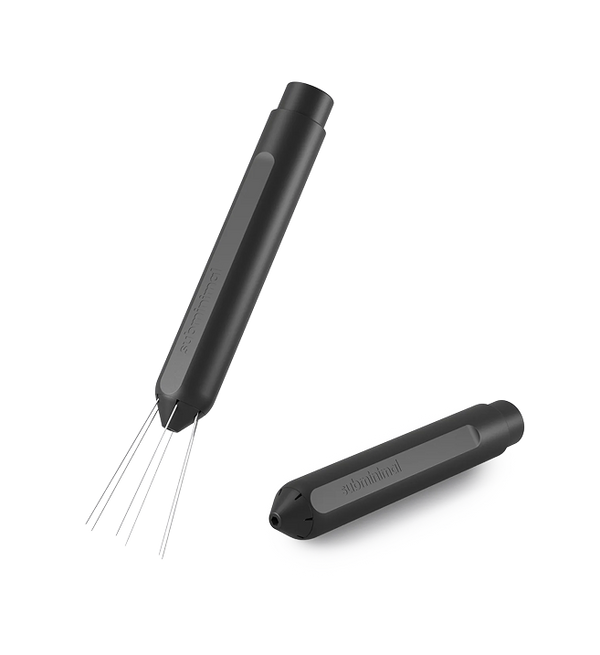
Some setups add live flow-rate feedback. Others keep the display clean so the eye stays on the kettle. Both styles work when the scale itself reacts quickly. A dosing cup that weighs beans before they reach the grinder removes one more source of delay. The weight is locked in early. The rest of the process runs smoother. Pairing a responsive scale with other precision tools, such as a Flick WDT tool for even distribution or a NanoFoamer PRO for milk, keeps every step under control. The result is coffee that tastes the same on Monday as it does on Friday.
Latest News In 2026
Coffee tools continue to get smarter and cleaner. Digital dosing cups with hidden displays now handle both dry beans and hot liquids without fuss. Splash resistance has improved so cleanup takes only a quick rinse under the tap. Battery life on many models lasts through weeks of daily use on a single charge.
New collections of barista gear focus on compact stations. A full set can now fit on a small counter: dosing, distribution, milk texturing, and shot viewing. The products for coffee lineup include tools that work together without extra clutter.
Latte art training also moved forward. Owners of milk tools receive free access to a short masterclass that covers milk physics and basic patterns. The class pairs well with a FlowTip milk jug and a reliable milk frother. Together, they turn home milk into cafe-style texture.
Design trends favor matte finishes and capacitive touch controls. Screens stay dark until needed. The whole station looks calmer. These small shifts make precision brewing feel less like a lab and more like a simple daily habit.
FAQ:
What's the difference between a coffee scale and a kitchen scale?
A coffee scale is built for precision at small weights, typically measuring to 0.1g, sometimes 0.01g. A kitchen scale usually measures to the nearest gram, which is close enough for cooking but too rough for consistent coffee. Coffee scales also respond faster to weight changes, include timers, and have low-profile designs built to fit under brewers and portafilters. A kitchen scale can measure coffee in a pinch, but it won't give you the consistency a real coffee scale delivers.
How precise does a coffee scale need to be for espresso?
For home espresso, 0.1g precision is the practical standard. At that level, you can hit consistent doses and shot weights without overthinking it. Some scales go to 0.01g, which is useful for very specific recipes or very small dose sizes, but 0.1g is where most home baristas get excellent, repeatable results. Response time matters just as much as decimal places: a fast-responding 0.1g scale will outperform a slow 0.01g scale in real-world espresso workflow.
Do I really need a scale for pour-over coffee?
If you want repeatable results, yes. Pour-over coffee is ratio-driven, the flavor shifts based on how much coffee and water you use. Without a scale, small inconsistencies in dose and water weight add up to big swings in flavor from cup to cup. A scale gives you a fixed starting point every time, so when a cup comes out exactly right, you can reproduce it. Even a simple entry-level scale with a timer makes a noticeable difference for regular pour-over brewing.
What's the best coffee bean scale for espresso in 2026?
It depends on what you're after. If you want the cleanest all-in-one workflow, where your dosing cup and your scale are the same tool, the Subminimal Subscale is the most original option on the market. If you want a flat-platform scale with app connectivity and shot-tracking data, the Acaia Pearl S or Acaia Lunar are the top choices. For strong performance at a fair price, the Timemore Black Mirror Basic 2 is the best value espresso scale. The right pick comes down to your setup, your budget, and how much of your workflow you want to simplify.
How does a coffee scale improve flavor day after day?
A coffee scale turns every brew into a fixed recipe rather than a daily experiment. When the exact weight of beans meets the exact weight of water, extraction stays even and the same flavor notes appear each morning. Small changes in dose or water volume no longer create random sour or bitter cups. Over weeks of use the scale builds a personal library of ratios that match different beans and roast levels. Many people pair this precision with a digital dosing cup so the numbers stay locked from the moment the beans leave the bag.
Can a dosing cup replace a flat scale for most home setups?
For single-dose espresso and small-batch pour-over, the dosing cup often becomes the only scale needed. Beans are weighed inside the cup, ground directly, and transferred without an extra vessel or second tare step. Larger drip brewers or Chemex-style vessels still prefer a flat platform wide enough for the full dripper. The two styles complement each other when a kitchen holds more than one brew method.
What battery life should a daily coffee scale offer?
A rechargeable coffee scale that holds power through several weeks of normal use fits most home routines. USB-C charging removes the need for spare batteries and keeps the tool ready without interruption. Auto-off functions further protect the charge when the scale sits idle between brews. Models designed for daily barista work usually return to full power after a short overnight charge. This reliability means the scale stays part of the morning flow rather than a device that needs constant attention.
Does water resistance matter for a coffee scale?
Water resistance protects the electronics from the inevitable splashes, steam, and rinse water that come with coffee preparation. A splash-rated scale can sit under a portafilter or dripper and still survive the occasional overflow. Cleanup becomes simple: a quick rinse under the tap followed by a wipe restores the surface. Without that protection, moisture can creep into seams and shorten the life of the display or sensors. Tools built with IPX-4 or higher ratings handle the wet side of brewing as part of normal kitchen life.
How often should a coffee scale be calibrated?
Factory-calibrated scales keep accurate readings for months under ordinary home conditions. A quick check with a known reference weight every few months confirms the numbers have not drifted. Temperature swings, heavy use, or accidental knocks can slowly affect sensors, so a periodic test keeps trust high. Most modern coffee scales include a simple calibration mode that takes only seconds once the reference weight is placed. Consistent accuracy supports the same brew ratios week after week without surprise changes in the cup.
Is a built-in timer necessary for better coffee?
A built-in timer removes the need to watch a separate phone or kitchen clock while pouring. Bloom length, total brew time, and shot duration all become easy to track without breaking focus. Many scales start the timer automatically when the first weight change is sensed, so the pourer can stay hands-on with the kettle. The combination of weight and time data makes it simple to refine technique across different recipes. When paired with tools such as a NanoFoamer PRO or Flick WDT tool, the full workflow stays timed and measured from dose to finished drink.
Ready to clear the clutter? The Subminimal Subscale replaces two tools with one, and charges just twice a year. Explore the full range of home coffee tools at subminimal.com, and pair the Subscale with the NanoFoamer Pro for precision from bean to cup.
Related to this blog:
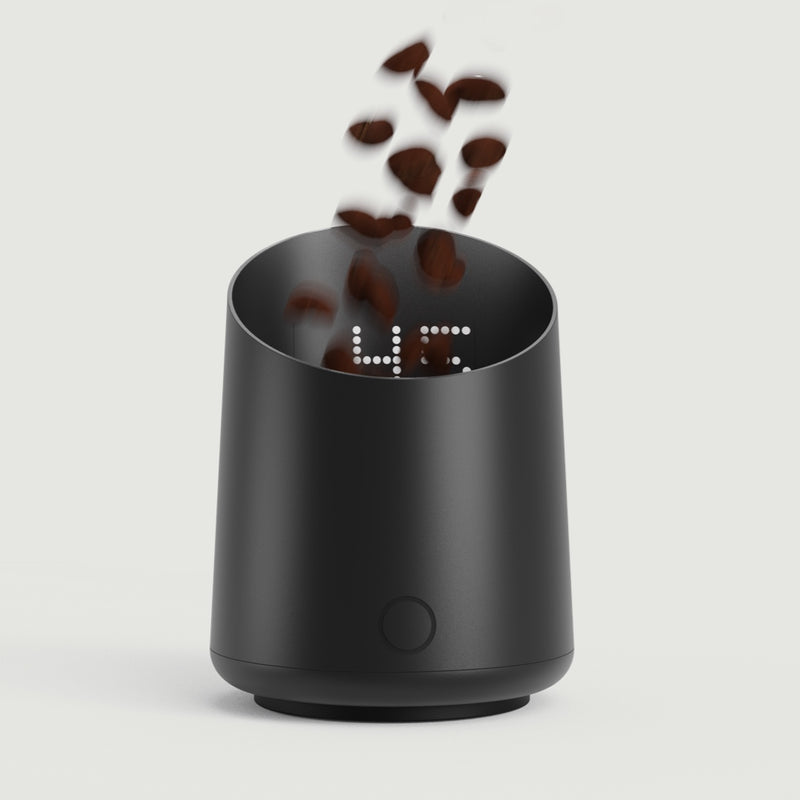
This thing is a game-changer. Do you need a dosing cup and scale in one? No. Does it streamline the brewing process and allowing you to enjoy your delicious shot faster, and with less mess? Absolutely. 10/10 would buy again.