What Is a Milk Frother Used For
A milk frother is used to whip air into milk so you get foam, not just warm milk. That foam tops a cappuccino, mixes into a latte, and sits on iced coffee as cold foam. People also use a milk frother for matcha, hot chocolate, and kitchen jobs like vinaigrette and whipped cream.
A handheld milk frother is the tool most homes start with, since it is small, fast, and simple to rinse after one cup. This guide covers what a milk frother is used for, how hot foam differs from microfoam, and when a separate frother beats a coffee machine with a built-in milk system.
A milk frother built for café texture at home starts with Subminimal products.
What a Milk Frother Is Used For in Coffee Drinks

A milk frother has one main job. It pulls air into milk and breaks that air into bubbles. Proteins in the milk stretch around those bubbles and hold them. Fat makes the foam feel soft instead of dry and chalky. Heat, when you want a hot drink, helps the foam stay put.
That is why the same tool can serve very different cups.
-
Cappuccino: more air, a thicker cap, still fine bubbles if you stop before the foam turns stiff.
-
Latte: less air, foam mixed through the milk, a glossy pour.
-
Flat white: a short burst of air, then a long spin so the milk looks like wet paint.
-
Macchiato: a small spoon of fine foam on a short shot.
-
Mocha and hot chocolate: warm milk with foam, so cocoa tastes rounder.
-
Matcha latte: frothed milk poured over whisked matcha, or cold foam on an iced matcha.
Whole milk is the easy starting point. It has enough protein to hold bubbles and enough fat to taste rich. Barista oat milk is the plant milk that usually behaves closest to dairy. Almond milk is thinner, so it needs a fresher carton and a bit more care. Soy can foam well, but it can taste stronger once heated.
If the drink is hot, warm the milk first when your frother does not heat. Stop around the point where the jug feels hot in your hand and a light steam rises. Boiled milk tastes cooked and foams worse. A FlowTip milk jug gives you a narrow body for the spin and a sharp spout for the pour.
Hot Foam, Cold Foam, and Microfoam
Not all foam is the same. The use changes with the texture. Hot foam is warm milk with air in it. You heat the milk, then froth, or you use a jug that heats and spins at once. Sweetness peaks before the milk gets too hot. Many home baristas aim for a warm, not scalding, jug.
Cold foam is fridge-cold milk spun with no heat. It is denser. It sits on iced coffee, cold brew, and iced matcha instead of blending in. Use it right away. Cold foam does not hold as long as warm foam, and it will not pour latte art. A cold milk frother is simply a frother you can run on cold milk with control over speed and depth.
Microfoam is the texture cafés use for modern lattes and flat whites. The bubbles are so small the milk looks shiny, almost like wet paint. It pours in one stream. A basic coil whisk often makes dry foam: big bubbles that rise and sit as a stiff cap. That cap is fine on an old-style cappuccino. It is a poor fit for latte art.
A screen-style wand shears milk through a fine mesh, which is how you get smaller bubbles. Wand position still matters. A short pass near the surface adds air. A longer spin deeper in the jug polishes the bubbles. How to use a milk frother wand walks through that two-step motion by drink.
|
Texture |
Milk temp |
What it is for |
Look in the jug |
|
Dry foam |
Warm |
Thick cappuccino cap |
Stiff, big bubbles on top |
|
Microfoam |
Warm, not boiling |
Latte, flat white, latte art |
Glossy, like wet paint |
|
Cold foam |
Fridge-cold |
Iced latte, cold brew, iced matcha |
Dense cap that floats |
|
Warm milk, light foam |
Warm |
Hot chocolate, mocha |
Soft foam, easy to sip |
Milk Frother vs a Coffee Machine with a Built-In Milk System
Both tools put foam on coffee. They do not work the same way. A machine with a built-in milk system, such as a steam wand or an automatic milk carafe, ties foam to that machine. You pick a recipe, and the machine heats and textures for you. That is handy if you want the same cappuccino every morning and you do not want to learn a motion. The tradeoff is less control. The foam follows the machine’s setting. Cleaning often means rinsing a tube, a carafe, or a steam tip after every milky drink. The machine also costs more, and the milk system only helps drinks made on that machine.
A standalone milk frother is separate. You set the texture, then use the foam on anything: espresso from a small machine, filter coffee, matcha, cocoa, or even a dessert. You can make one thick cap or a thin silky layer. You can froth cold. You are not locked to one recipe button. A steam wand still has a place. It heats and aerates in one step, which is what café bars use. It also adds a little water from the steam, so the milk is slightly thinner. A spinning frother uses force only, so the milk stays at full strength. For home use, that often tastes richer.
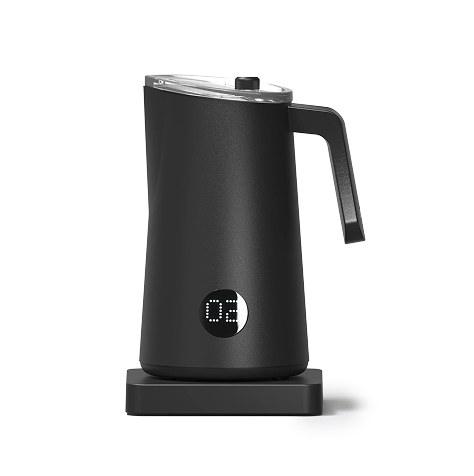
If you already own an espresso machine and still want better milk, a separate frother is the lighter upgrade. The NanoFoamer Pro heats and textures in one jug, hands-free, without a steam wand. If you like the motion of a wand, a handheld foamer keeps the control and skips the machine’s milk plumbing. An electric milk frother covers both styles: a countertop jug, or a powered wand.
Manual vs Automatic Milk Frothers
Manual and automatic frothers both add air. The difference is who does the work. Manual frothers include a pump jug, like a small French press, and a handheld wand you move yourself. A pump is cheap and needs no battery. The foam is usually looser. A handheld milk frother wand is light, easy to store, and good for one cup. You choose how much air goes in. The downside is practice. Big bubbles show up if the tip sits too high, or if the cup is too wide. Doing many drinks in a row can tire your wrist.
Automatic frothers are countertop jugs. You pour milk, pick hot foam, cold foam, or warm milk, and press start. Some heat while they spin. They suit people who want the same result without watching the surface. They take more counter space. A basic jug often makes a thicker cap than true microfoam, because the whisk is a simple disk, not a screen built to shear tiny bubbles.
A good split looks like this:
-
Pick a handheld wand if you want one drink, latte art practice, travel, or cold foam you control by hand.
-
Pick an automatic microfoam jug if you want heat and texture in one step, with little technique.
-
Skip a pump-only frother if shiny, pourable milk is the goal. It can top a drink. It rarely makes microfoam.
The NanoFoamer GO sits on the handheld side, with mix, foam, and whisk tips so one tool covers drinks and kitchen jobs. For a rechargeable wand with dual speed, the buying notes in the best USB rechargeable milk frother compare power that stays steady as the charge drops.
How Subminimal Tools Cover These Jobs
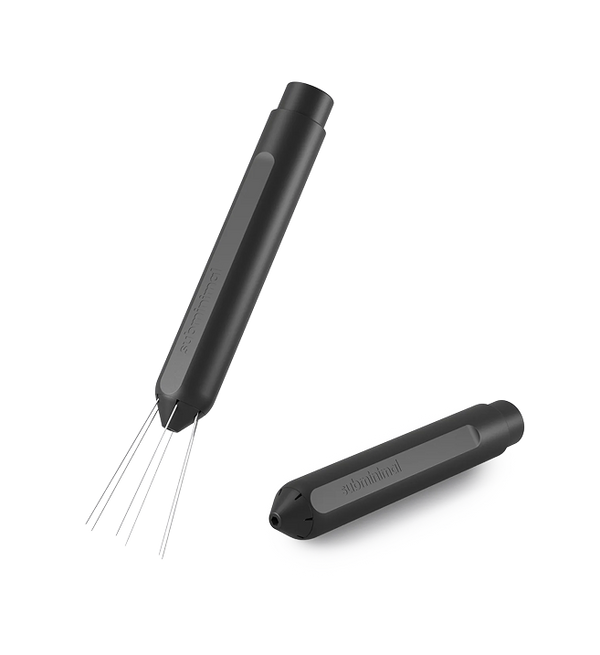
Subminimal builds milk tools around microfoam, not stiff suds. The difference matters if a milk frother is used for latte art, not only a cap of bubbles. The NanoFoamer is a handheld foamer with a fine screen. Milk is forced through that mesh at high speed, so bubbles stay small. The V2 runs on AA batteries. The Lithium version charges by USB-C and has two speeds, which helps on thinner plant milk. Both are shaped to rinse under a tap.
The NanoFoamer GO is the smaller wand. It is light, comes with a case, and uses three tips: foam for coffee, mix for shakes and matcha, whisk for cream, eggs, and sauces. That is the tool that matches the wider uses later in this guide. High and low speed let you ease off when a liquid splashes. A compact setup like this is also what people mean by a mini milk frother. The NanoFoamer Pro is the hands-free jug. It heats and textures together, with flow controllers for dairy and plant milk, and a temperature range aimed at sweetness and stable foam. It fits people who want automatic convenience without giving up microfoam.
NanoFoamer Go

Description (NanoFoamer Go):
The compact handheld milk foamer built for real results. We took the world’s best handheld milk foamer, made it smaller, more powerful, and even more versatile. The NanoFoamer GO delivers silky, latte art quality microfoam that rivals commercial espresso machines.
What it does
-
Creates professional microfoam for coffee
-
Mixes protein shakes and matcha
-
Whisks cream, eggs, sauces, and desserts
Three interchangeable impellers give you Mix, Foam, and Whisk modes. Two speeds let you fine tune texture every time.
Power and performance
-
Up to 5,300 RPM high speed
-
4,200 RPM low speed
-
Patented NanoScreen technology
-
Silky liquid velvet microfoam in seconds
Built for everyday and travel
-
Ultra compact at just 76g
-
USB-C rechargeable
-
IPX-4 water resistant for easy rinsing
-
Matching travel case included
-
Available in 10 colours
Every purchase also unlocks exclusive access to the Subminimal latte art masterclass. Whether you want café style flat whites at home, cold foam for iced drinks, or a versatile tool for mixing and whisking, the NanoFoamer GO is designed to perform without the bulk or complexity of traditional gear.
NanoFoamer PRO

Description (NanoFoamer PRO):
Unlock the secret to velvety-smooth, café-style microfoam—without the espresso machine. The NanoFoamer PRO GEN-2 is the ultimate hands-free microfoam maker, designed for coffee lovers who want professional results at home, fast and effortlessly. Whether you're using dairy or plant-based milk, this precision-engineered device transforms your morning routine into a café-quality experience.
Why You’ll Love It
✅ Automatic & Hands-Free – Heat and foam your milk at the same time you're pulling your shot.
✅ Barista-Level Microfoam – Create rich, silky microfoam perfect for latte art.
✅ Works with All Milks – Dairy, oat, almond, soy—thanks to 3 optimized flow controllers.
✅ 5 Custom Programs – Tailor foam thickness and temperature to your drink of choice.
✅ Whisper-Quiet – Smooth operation with magnetic impeller height adjustment for perfect vortex control.
✅ Easy to Clean – IPX-5 water-resistant. Rinse it under the tap—no fuss.
✅ Portable & Sleek – Compact design that fits any kitchen setup.
What’s Included
- NanoFoamer PRO GEN-2 (EU Plug - 220V)
- 3 Flow Controllers (Black for dairy, Blue/Green for plant-based milks)
- Impeller height adjuster
- Free Latte Art MasterClass
- 30-Day Guarantee
- 1-Year Limited Warranty
Product Specs
- Dimensions: 12 × 12 × 20 cm
- Weight: 800g
- Power: 400W
-
Voltage: 220V (EU Plug)
-
Capacity: 100–220 ml
-
Water Resistance: IPX-5
-
Cord Length: 70 cm
The NanoFoamer PRO Gen-2 is engineered for perfectionists, busy mornings, and passionate home baristas alike. Ditch the noisy steam wands and inconsistent frothers—Subminimal brings you microfoam that rivals your favorite café, right at home.
NanoFoamer

Description (NanoFoamer):
Create silky, café-style microfoam in seconds with the Subminimal NanoFoamer – the world’s best handheld milk foamer designed for serious home baristas. Whether you’re perfecting a cappuccino, crafting a creamy flat white, or elevating your matcha latte, the NanoFoamer delivers superfine microfoam worthy of any coffeehouse.
Why NanoFoamer?
-
True Microfoam Technology – Unlike standard frothers, the NanoFoamer creates invisible microbubbles that result in smooth, velvet-like milk – perfect for latte art.
-
Battery or Rechargeable Options – Choose between the V2 (AA battery-powered) or the upgraded Lithium (USB-C rechargeable) model with dual-speed settings.
-
Compatible with Dairy & Milk Alternatives – Designed to work beautifully with barista-style oat, almond, soy, or dairy milks.
-
Easy to Use, Easier to Clean – Waterproof and intuitive, with upgraded clip-on NanoScreens and a replaceable polycarbonate impeller for durability and performance.
What’s Included:
-
NanoFoamer (V2 or Lithium)
-
2 NanoScreens: Fine & Superfine
-
Protective Hood
-
Wall Mount
-
Free Latte Art Masterclass
Technical Specs:
|
Feature |
V2 |
Lithium |
|
Power |
2 × AA Batteries |
USB-C Rechargeable (1300mAh) |
|
Speed |
3,000 RPM |
Dual Speed: 3,000 & 4,000 RPM |
|
Weight |
104g |
135g |
|
Waterproof |
✅ |
✅ |
|
NanoScreens |
Fine & Superfine |
Fine & Superfine |
|
Impeller |
Replaceable Polycarbonate |
Replaceable Polycarbonate |
Discover Subminimal products and elevate every drink.
Discover Also:
How to Emulsify Salad Dressings with a Milk Frother
A milk frother is used for more than coffee. One of the best side jobs is a vinaigrette that stays mixed. Oil and vinegar split unless you break the oil into tiny drops and give those drops something to cling to. Mustard or an egg yolk does that clinging. Speed does the breaking. A jar shake works. A frother is faster, and the result feels smoother.
Use a narrow cup, not a wide bowl. Add vinegar, salt, pepper, and mustard. Start the frother. Pour the oil in a thin stream while the whisk spins. If you dump all the oil in at once, it can still mix, but the slow pour holds together longer. Stop when the dressing looks thick and even. Taste, then adjust acid or salt.
This is a handheld job. A sealed automatic jug is a poor fit for oil, and it is harder to rinse. A whisk tip, like the one on the NanoFoamer GO, reaches more of the liquid than a large mixer beater in a tiny batch.
How to Make Fluffier Scrambled Eggs with a Milk Frother
Air is what makes scrambled eggs light. A fork works. A milk frother spins faster, so you get more small bubbles in less time. Crack the eggs into a narrow jug or a deep cup. Add a pinch of salt. A splash of milk or water helps. That liquid turns to steam in the pan and lifts the curds. Spin until the yolks and whites are one color and a little foam sits on top. Do not overdo it into a dry froth.
Cook low and slow, and fold rather than stir hard. The foam you built is wasted if the pan is screaming hot. This trick is for one or two servings. A big family batch is still easier with a whisk, because the wand cannot reach a wide bowl.
How to Make Single-Serve Whipped Cream with a Milk Frother
A stand mixer is clumsy for one spoon of cream. The beaters miss a small pool. A handheld frother stays in the liquid. Pour cold heavy cream into a narrow jar. Add a little powdered sugar, or skip it if the cream is going on a sweet coffee. Spin with the whisk tip. Move up and down so the whole batch sees the whisk. Soft peaks come first. Stiff peaks come if you keep going. Stop before the cream looks grainy. That grain is the start of butter.
Cold cream whips. Warm cream does not. If the kitchen is hot, chill the jar for a few minutes. Use the cream the same day. This is the same motion as milk foam, but cream has more fat, so it sets into peaks instead of a pourable gloss. A chargeable milk frother stays useful here, because a fading battery dies before stiff peaks form.
How to Decorate Iced Coffee with Syrup Rings
Baristas often stripe caramel or chocolate inside a cup before the coffee goes in. A milk frother can lay those rings faster than a spoon. Dip only the whisk into syrup. Hold it inside a clear glass, close to the wall, and pulse the power for a short moment. The spin throws a thin ring of sauce. Dip again for a second ring, or switch sauces. Then add ice and coffee. The rings stay visible and melt into the drink as you sip.
Thick syrup works better than a watery sauce. Caramel, chocolate, and a thick berry sauce all hold a line. Wipe the whisk before it goes back into the milk. Sugar left on the tip makes the next foam sticky and dull. Cold foam still has a place on top. Rings are the decoration on the glass. Foam is the texture on the drink. The best coffee milk frother notes are useful if the same tool has to do both the stripe and the cap.
Cappuccino Crème Brûlée with a Milk Frother
This is a small dessert drink, not a full custard. It uses the frother for the cap, then a kitchen torch for the sugar crust.
You need:
-
60 ml milk, low-fat works, about 1.5 percent
-
10 ml caramel syrup
-
25 ml espresso or a strong short coffee
-
1 teaspoon raw sugar
-
A cappuccino cup, a frother, and a kitchen torch
Steps:
-
Froth the milk on the hot foam setting, or warm it and spin it until the cap is thick.
-
Put the caramel syrup in the cup. Brew the coffee over it and stir.
-
Spoon the foam on top. Do not stir it in.
-
Sprinkle raw sugar in an even layer.
-
Torch the sugar until it spots amber. Let it set for a few seconds before you sip.
Keep the flame moving. A still torch burns one spot and leaves the rest pale. If you have no torch, this is still a caramel cappuccino. The crust is the extra step, not the drink itself. A thick cap is easier to sugar if the milk was textured in a milk jug deep enough for a real vortex.
Which Foam Fits Which Drink
Use this as a quick match after the methods above. It does not repeat the texture lesson. It only ties a drink to a motion.
-
Flat white: warm milk, tiny air burst, long polish, pour thin.
-
Latte: warm milk, medium air, glossy finish, heart or tulip if you want art.
-
Cappuccino: warm milk, longer air time, spoon the cap.
-
Iced latte: cold milk, dense foam, spoon it over ice.
-
Matcha: whisk the tea first, then add frothed dairy or oat. A mix tip helps the powder. Notes on tools sit in the best milk frother for matcha.
-
Dressing, eggs, cream: whisk tip, narrow cup, no heat.
Travel changes the setup, not the goal. A hotel mug still needs depth, or the wand throws bubbles instead of foam.
FAQ
What is a milk frother used for besides coffee?
A milk frother is used to mix oil into vinegar for a stable dressing, to beat eggs until they look foamy before scrambling, and to whip a single serving of cream. It can also stripe syrup inside an iced coffee glass, then sit a cap of cold foam on top. Those jobs want a handheld whisk in a narrow cup, because a wide bowl lets the tip miss most of the liquid. A sealed heating jug is better kept for milk, since oil and egg are harder to rinse from a closed carafe. The whisk tip on a NanoFoamer GO is the shape that reaches a small batch of dressing, eggs, or cream.
Can a milk frother make latte art?
Yes, if the foam is microfoam. The milk should look shiny and pour in one stream, with bubbles too small to see as a dry cap. A basic coil often makes stiff foam that sits on espresso and will not draw a heart or tulip. You still need a jug with a defined spout, a short pour, and espresso with crema. Cold foam is for iced drinks, not art, because it is dense and does not blend into the shot. Screen-style tools such as the NanoFoamer shear milk finer than an open coil, which is what makes the pour possible.
Do you need a milk frother if your machine steams milk?
Only if you want texture the steam wand is not giving you, or drinks away from that machine. A wand can make excellent microfoam once the motion is learned, but it also adds a little water and ties you to that machine. A separate frother helps with cold foam, matcha, cocoa, and nights when you do not want to start the espresso machine. It also skips the steam tip purge after every milky cup. A hands-free jug such as the NanoFoamer Pro heats and textures without a steam wand, while a handheld still lets you set the air by feel.
What milk should you use in a milk frother?
Fresh whole milk is the simplest for hot microfoam, because protein holds the bubbles and fat keeps them soft. Barista oat is the plant milk many people find closest to dairy. Almond needs a fuller carton and a gentler spin, or the foam collapses sooner. Shake plant milk first so the solids are not stuck at the bottom. Old milk, dairy or not, foams weakly and can smell off once warm. Temperature still matters: warm milk for latte art, fridge-cold milk for the dense cap on an iced drink from a cold milk frother.
How do you clean a milk frother after foam?
Rinse the whisk or screen under warm water right after pouring, while the milk is still wet. Spin it in a cup of clean water if film remains, then dry it before you put it away. Leave milk on a warm tip, and the next cup tastes sour, and the mesh clogs so the next foam comes out as large bubbles. Heating jugs need the impeller lifted and the jug wiped, not just a quick swirl. Sugar from a syrup ring should come off before the tip goes back into milk.
Read Also:
A milk frother built for café texture at home starts with Subminimal products.
Related to this blog:
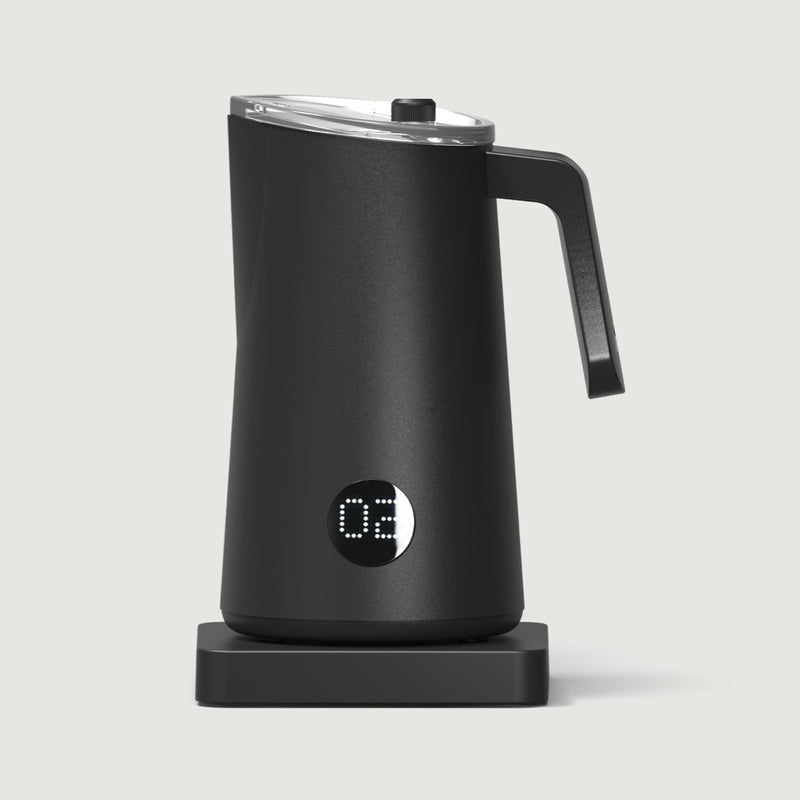
The milk is frothed perfectly! This is an ultimate barista, and the temperature is exactly right! Any other devices that we tried cannot warm up the milk to more than 60 degrees, which makes the coffee average, but this one is mixing the foam and it is perfect for busy mornings! Looooove it!