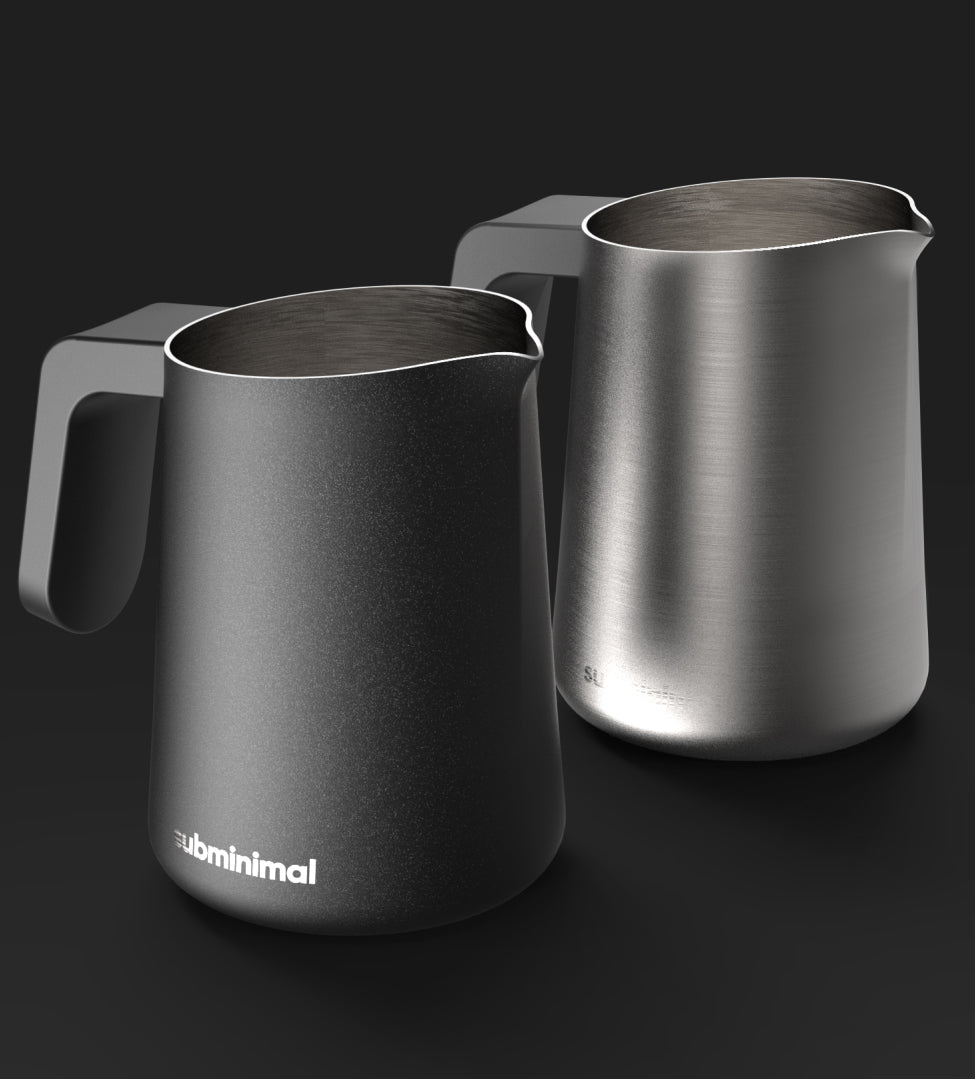
The Best milk pitcher in 2026 starts with precise geometry. The spout profile sets your line accuracy and fill speed, whether you prefer a tulip or a sharper beak. The body’s taper should build a stable vortex for even microfoam. Wall thickness tunes heat feedback to your hand, and 304 stainless steel adds durability and easy cleaning.
Explore the FlowTip Milk Jug to upgrade your pour control.
What Makes a Great Milk Frothing Pitcher
We design Milk Frothing pitchers for predictable, repeatable foam. Look for a body that moves from smooth roll to controlled turbulence so microfoam distributes evenly. A precise spout draws crisp lines for rosettas, hearts, and contrast fills. Balance matters: a secure handle angle or thumb rest stabilizes the wrist during slow passes. Wall thickness should deliver heat feedback without scorching your fingers. Interior finish should be smooth, with clear measurement lines for consistency. Dishwasher safety helps in busy routines, and dent resistance protects alignment. Some prefer nonstick interiors for easier rinsing; verify food-grade coatings. Choose 304 stainless or better for corrosion resistance and long service.
See how we shape control on the FlowTip Milk Jug.
Key Features to Look for in 2026
Pour Control: Pick a spout style for your patterns. Sharp beaks draw fine hairlines. Tulip spouts favor fills and soft edges. Hybrids bridge both. A polished lip and stiff rim help drip resistance and aim.
Ergonomics & Build: Handle geometry should align with your wrist. If you prefer a handleless hold, check body taper and texture for grip. Weight should feel planted yet agile. 304 or 18-8 stainless resists corrosion. Interior markings support repeatable recipes.
Use Cases: For one or two cappuccinos, smaller volumes reduce waste and keep foam fresh. For larger lattes, a bigger jug preserves swirl space. Barista-style alt milk often needs tighter aeration and precise heat feel. Home users want easy cleaning. Cafés need dent-resistant builds.
Top 20 Milk Frothing Pitchers for 2026
1. Subminimal - Best FlowTip Milk Jug

We shaped FlowTip Milk Jug for precise lines and clean fills, with a hybrid spout that shifts from wide fill to needle-fine control. The balanced body promotes a steady vortex, and the wall thickness gives clear heat feedback without hot spots. We offer sizes to match common drinks, with interior markings for quick recipes. The satin interior finish rinses easily, and 304 stainless stands up to daily use. We back the product with support, parts, and guides so you keep pouring better patterns week after week.
Key Highlights:
-
Hybrid spout geometry for lines and fills
-
Balanced handle and body taper for steady control
-
304 stainless construction with interior markings
-
Sizes matched to daily drinks
-
Easy cleaning and responsive support
Standout Features:
-
Hybrid spout control: fine lines without losing fill speed
-
Heat feedback walls: feel 55–65 C without guessing
-
Vortex-friendly taper: stable whirl for even microfoam
-
Service and parts: keep your pitcher working longer
Shop FlowTip in all sizes: FlowTip Milk Jug.
2. Fellow Eddy Steaming Pitcher

A narrow body and pronounced flared spout create quick, accurate pours suited to contrast-heavy lines and tidy hearts. Capacity options cover single drinks and small rounds without excess waste. The 304 stainless build and medium wall thickness feel responsive in the hand while maintaining rigidity at the rim. Measurement marks inside assist repeatability, and the handle sits high enough for a neutral wrist. Brushed or polished finishes resist staining and wipe clean. It suits home baristas refining definition and cafés that value precise latte art with fast flow. The spout’s profile favors sharper edges, which helps fine etching passes and consistent stacks.
-
Key features: spout type, material, capacity options, markings/finish
-
Useful stats & info: moderate weight, dishwasher safe, sizing fits 1–2 drinks, standard warranty
-
Pros: crisp lines, rigid rim, clear marks, easy cleanup
-
Cons: narrower body reduces swirl room for thick foam
3. De'Longhi Milk Frothing Jug DLSC060

This pitcher pairs a classic tulip spout with a rounded shoulder that rolls milk smoothly, giving beginners an easy path to glossy microfoam. Typical 350 ml and 500 ml capacities suit cappuccinos or larger lattes, and the 304 stainless shell handles daily warming and rinsing without pitting. Wall thickness trends mid-light, so heat cues reach your fingers quickly while the rim stays stable. Interior lines are simple and legible for quick dosing. The handle sits slightly open, accommodating different grips. Satin finish inside and out keeps glare low and cleans fast. It fits home users who value forgiving geometry and consistent results when practicing foundational patterns.
-
Key features: tulip spout, 304 stainless, 350–500 ml, satin with interior marks
-
Useful stats & info: light-medium feel, dishwasher friendly, compact sizes, standard brand warranty
-
Pros: easy roll, readable lines, quick heat feedback, approachable for learners
-
Cons: tulip favors fills over ultra-fine hairlines
4. MHW-3BOMBER Milk Frothing Pitcher

A sharp beak spout and tapered cylinder body emphasize precision and fast breaks, useful for detailed leaves and stacked tulips. Offered in multiple capacities for single to double drinks, the 304 stainless steel construction resists corrosion, and the thicker rim maintains shape after knocks. Interior measurement marks aid dosing, while the brushed finish reduces milk cling. The handle is squared for a firm hold and consistent angle, helping slow passes near the surface. Wall thickness trends medium, balancing heat feel with hand comfort. Suits home baristas pushing fine lines and cafés that want reliable geometry across stations. The narrow cone increases speed, so practice governs flow rates during etching moments.
-
Key features: sharp beak spout, 304 stainless, multiple sizes, brushed with markings
-
Useful stats & info: medium weight, dishwasher safe, compact footprint, typical limited warranty
-
Pros: crisp edges, rigid rim, low-cling interior, accurate marks
-
Cons: faster flow can overwhelm beginners
5. Crate & Barrel Stainless Steel Frothing Pitcher

This retailer model leans on a rounded tulip spout and generous shoulder for smooth, forgiving pours. Common capacities match single and two-drink routines, while 304 stainless offers solid corrosion resistance. Wall thickness sits mid pack, transmitting temperature clearly without feeling too hot. Interior volume lines support repeatable recipes, and the satin interior wipes clean. The handle has an open loop, allowing both index-over and thumb-inside grips. A simple silhouette suits home counters and break rooms. Finish options vary by run, typically brushed for reduced fingerprints. It excels for learning latte art and everyday lattes where soft transitions are preferred over needle-fine hairlines.
-
Key features: tulip spout, 304 stainless, common sizes, satin finish with marks
-
Useful stats & info:
-
moderate weight, dishwasher safe, easy storage, retail return policies
-
Pros: forgiving roll, clear lines, comfortable handle, hassle-free cleaning
-
Cons: less suited to ultra-fine detailing
6. Breville Latte Art Milk Jug

Breville’s jug uses a pointed spout blended from a gentle curve into a tighter tip, enabling both broad fills and defined stems. Usual 480 ml to 600 ml capacities cover one or two drinks comfortably. 304 stainless resists staining, and the rim is stiff enough to keep shape after daily use. Mid thickness walls give immediate heat feedback. Interior measurement cues support dosing, while a smooth finish improves whirl and rinsing. The handle angle tracks wrist alignment for steady low-height pours. Good for home machines and café training programs that want consistent geometry across teams. It favors baristas who combine wider fills with a clean final pass for contrast.
-
Key features: hybrid spout, 304 stainless, 480–600 ml, smooth finish with markings
-
Useful stats & info: medium weight, dishwasher friendly, compact height, standard manufacturer support
-
Pros: versatile spout, reliable heat feel, stable rim, easy to clean
-
Cons: larger sizes can increase waste for single drinks
7. Wirsh Milk Frothing Pitcher

Wirsh pairs a moderate tulip spout with a slightly tapered body, building a steady vortex for even microfoam. Common capacities span 350 ml and 600 ml, covering cappuccinos through larger lattes. 304 stainless construction resists rust, and the walls are medium light for faster temperature cues. Interior measurement marks help new baristas repeat volumes. The handle is straightforward, leaving room for different grips without crowding fingers. Brushed finishes reduce smudges and make post-shift cleanup quick. This pitcher supports home baristas learning consistent texture and cafés needing a practical backup on bar. It favors smooth fills, clear hearts, and simple leaves rather than ultra-fine lines.
-
Key features: tulip spout, 304 stainless, 350–600 ml, brushed with markings
-
Useful stats & info: light-medium feel, dishwasher safe, stackable, basic warranty
-
Pros: easy to learn, readable marks, quick cleaning, stable pour
-
Cons: less precision for intricate etching
8. Williams Sonoma Coffee Milk Frothing Pitcher

This store brand emphasizes a balanced tulip spout and roomy shoulder that supports a wide, stable whirl. Sizes typically include smaller and mid volumes for home routines. 304 stainless resists corrosion, with mid thickness walls that pass heat cues without burning fingers. Interior lines guide recipes. The handle offers a relaxed angle for steady pours and a secure thumb perch. Finishes are usually satin to keep glare low and cleanups simple. Good choice for households that want a sturdy, versatile pitcher. Its geometry prioritizes smooth fills and centered hearts, helping new pourers scaffold toward more complex patterns without frustration.
-
Key features: tulip spout, 304 stainless, small to mid sizes, satin with interior lines
-
Useful stats & info: moderate weight, dishwasher safe, cabinet friendly, retailer service options
-
Pros: stable vortex, comfortable grip, easy marks, forgiving spout
-
Cons: less suited to ultra-thin lines and stacks
9. Cuisinart Frothing Pitcher

Cuisinart’s pitcher blends a rounded body with a modestly pointed spout, offering both soft fills and decent drop control. Capacity options cover single and two-drink batches. 304 stainless holds up to daily rinsing and temperature cycling, while the rim maintains stiffness. Wall thickness leans medium for heat feel. Interior measurement marks aid consistency, and a satin finish helps milk release. The handle has a classic loop for varied grips. It fits home setups and small offices seeking reliable foam and predictable pours. The geometry favors approachable latte art while still allowing controlled stems in rosettas or tulips when technique improves.
-
Key features: hybrid spout, 304 stainless, common café sizes, satin interior with marks
-
Useful stats & info: medium weight, dishwasher safe, compact footprint, brand warranty
-
Pros: balanced pour, readable lines, durable rim, easy cleaning
-
Cons: not specialized for very fine detailing
10. Barista Basics Stainless Steel Milk Frothing Pitcher

This training-friendly pitcher uses a clear tulip spout and cylindrical body that promotes a stable whirl. Capacities often range from small practice sizes to mid volumes, supporting single or paired drinks. 304 stainless provides corrosion resistance, and the rim is reinforced to reduce warping. Mid thickness walls give consistent heat feedback. Interior graduation marks are crisp for repeatability. The satin finish is practical for fast cleanup. It’s a dependable choice for classes and busy stations where consistency matters. The spout geometry supports clean hearts and stacked tulips while remaining forgiving for learners.
-
Key features: tulip spout, 304 stainless, multiple practice sizes, satin with graduation marks Useful stats & info: moderate weight, dishwasher ready, height fits most wands, training warranties vary
-
Pros: consistent geometry, clear marks, rugged rim, easy maintenance
-
Cons: less agile for ultra-sharp etching
11. MiiR New Standard Milk Pitcher

MiiR’s New Standard pairs a tapered body with a defined yet rounded spout that balances fill speed and line control. Capacities suit one to two drinks without excess milk. 304 stainless construction resists corrosion, and the interior polishing improves milk movement and rinsing. Wall thickness sits at a comfortable middle, sending reliable temperature cues. Simple interior markings support dosing. The handle is shaped for neutral wrist alignment and easy grip. Matte or brushed finishes keep fingerprints in check. It fits design-minded home users and cafés that prefer a modern look with functional control for everyday patterns.
-
Key features: rounded hybrid spout, 304 stainless, practical volumes, polished interior with marks
-
Useful stats & info: medium weight, dishwasher safe, balanced height, brand support
-
Pros: good balance, smooth interior, consistent pours, clean styling
-
Cons: rounded tip limits ultra-fine hairlines
12. Kaffe Products Milk Frothing Pitcher

This pitcher offers a classic tulip spout and a slightly conical body that helps create a controlled vortex for even foam. Common capacities cover everyday drinks at home. 304 stainless construction and mid-light walls provide quick heat feedback, and the rim stays firm under regular use. Interior measurement marks aid repeatability. Satin interior reduces cling for faster rinsing. The handle leaves room for different grips, supporting stable pours during slow passes. It suits learners and households that want simple, reliable performance and straightforward cleaning routines without specialized features.
-
Key features: tulip spout, 304 stainless, common home sizes, satin with interior marks
-
Useful stats & info: light-medium feel, dishwasher compatible, easy storage, basic warranty
-
Pros: approachable geometry, quick heat feel, clear lines, simple upkeep
-
Cons: not tuned for high-precision detailing
13. Seattle Coffee Gear Milk Frothing Pitcher

The retailer collection pitcher uses a hybrid spout that transitions from a rounded lip to a defined tip, balancing fills with finer passes. Capacities support one to two drinks. 304 stainless resists rusting in daily wash cycles, and the rim is robust. Medium wall thickness offers readable heat feedback. Interior measurement lines assist dosing. The handle is comfortably spaced for gloves or larger hands. Brushed finishes minimize glare and simplify cleanup. It’s a practical pick for home baristas who want dependable control and straightforward maintenance.
-
Key features: hybrid spout, 304 stainless, 12–20 oz class, brushed interior with marks
-
Useful stats & info: medium weight, dishwasher safe, stackable design, store warranty
-
Pros: versatile spout, durable rim, easy cleaning, readable markings
-
Cons: hybrid shape may require practice for ultra-fine lines
14. Zulay Kitchen Frothing Pitcher

Zulay’s pitcher features a pronounced tulip spout and a wider shoulder that encourages a smooth roll, ideal for creamy cappuccinos and soft latte fills. Capacities generally range from small to mid volumes. 304 stainless construction keeps corrosion at bay, and the rim holds shape over time. Mid thickness walls provide heat feel and comfort. Interior marks support consistent dosing, while a satin finish helps milk release. The handle’s open loop supports various grips. It’s a budget-friendly option for households focusing on texture and simple art without chasing razor-thin lines.
-
Key features: tulip spout, 304 stainless, small to mid sizes, satin finish with marks
-
Useful stats & info: moderate weight, dishwasher friendly, compact storage, standard retailer coverage
-
Pros: smooth foam roll, comfortable grip, easy cleanup, consistent markings
-
Cons: less precise for intricate etching and stacks
15. Lastaforest Advanced Milk Frothing Pitcher

This collection model combines a hybrid spout with a tapered body that accelerates flow when you raise height and settles nicely for low passes. Capacity options cover typical home and light café volumes. 304 stainless construction resists corrosion. The rim is firm for shape retention, and mid-light wall thickness gives distinct heat cues. Interior measurement lines support recipe accuracy, while a smooth interior helps microfoam move cleanly. The handle offers a relaxed angle for control. A solid pick for baristas who want a versatile profile for hearts, tulips, and simple leaves.
-
Key features: hybrid spout, 304 stainless, practical sizes, smooth interior with markings
-
Useful stats & info: light-medium feel, dishwasher safe, compact height, limited warranty
-
Pros: versatile control, readable marks, quick rinse, stable rim
-
Cons: hybrid tip may need practice for ultra-thin lines
16. Rattleware

Rattleware has been a go-to pitcher brand in American specialty coffee for over two decades, and their pitchers remain a fixture behind the bar at serious independent cafés. The roll spout design, one of the most copied profiles in the category, creates a smooth, fast transition from wide fill to controlled stem that suits baristas who pour multiple drink styles across a single shift. For home baristas who train seriously and want professional-grade geometry at a price that doesn't rival the espresso machine, Rattleware delivers one of the most dependable setups available.
-
Key features: Roll spout design, 304 stainless steel construction, multiple capacity options from single-serve to batch sizes, reinforced rim, smooth interior finish with measurement marks
-
Pros: Proven geometry used in café training programs worldwide, roll spout handles both wide fills and defined stems reliably, rigid rim holds alignment after daily knocks, excellent heat feedback for tracking the 55–65°C sweet spot, widely available through specialty coffee retailers
-
Cons: Roll spout favors smooth transitions over needle-fine hairlines, sharper beak pitchers edge it out for ultra-precise etching
17. Rhino Coffee Gear

Rhino Coffee Gear built its reputation in the Australian and New Zealand specialty coffee scene before expanding globally, and their stealth pitcher has become one of the most recognised shapes in the independent café world. The stealth spout, a subtly curved hybrid that narrows into a clean, stiff tip, sits comfortably between aggressive beak designs and soft tulips, giving it genuine versatility across hearts, rosettas, and tulip stacks. The brand's specialty coffee roots show in the attention to rim stiffness and interior finish, both of which directly affect line quality during slow, close passes.
-
Key features: Stealth hybrid spout, 304 stainless steel, multiple capacities including 350ml, 450ml, and 600ml, reinforced rim, brushed interior finish with volume markings
-
Pros: Stealth spout handles a wider range of patterns than most single-style pitchers, rigid rim resists denting under café conditions, brushed interior reduces milk cling for faster rinsing, strong reputation in specialty coffee communities globally
-
Cons: Stealth geometry requires practice to master both its fill speed and its fine-line capability, beginners may find it less immediately forgiving than a straight tulip
18. Motta Europa

The Motta Europa is an Italian classic that has been used in espresso bars across Europe since long before latte art became a global discipline. The simple, clean cylindrical body and modest tulip spout prioritise durability and reliable foam movement over specialist features, and the thin 304 stainless walls deliver some of the clearest heat feedback of any pitcher at this price point. For baristas who learned to steam milk by hand-feel rather than thermometer, the Motta's wall responsiveness is a genuine advantage, your palm reads the temperature shift in real time. See Subminimal's guide on choosing the perfect milk pitcher for latte art for more on how wall thickness affects temperature reading.
-
Key features: Classic cylindrical body, tulip spout, thin-wall 304 stainless construction, simple interior measurement marks, lightweight design
-
Pros: Exceptional heat feedback through thin walls, one of the most responsive pitchers for hand-temperature reading, lightweight and agile during long pouring sessions, Italian build quality with decades of proven café reliability, very affordable entry point for a professional-origin pitcher
-
Cons: Thinner walls dent more easily than heavier-gauge competitors, tulip spout limits ultra-fine line capability for advanced etching
19. Espro Toroid

The Espro Toroid takes a fundamentally different approach to spout design, the toroidal ring geometry at the spout tip creates a rolling pour that resists drips and produces a self-guiding flow stream that many baristas describe as forgiving in a way standard spout shapes aren't. This makes it particularly interesting for home baristas who struggle with drip control and unwanted splashing during slow, low-height passes near the espresso surface. The 304 stainless construction and interior markings meet the same standard as other premium pitchers on this list, and the ergonomic handle sits at an angle that reduces wrist rotation during extended pouring.
-
Key features: Toroidal ring spout geometry, 304 stainless steel, ergonomic angled handle, multiple capacity options, smooth interior with measurement marks, drip-resistant pour
-
Pros: Toroidal spout significantly reduces drip issues that frustrate developing home baristas, self-guiding flow makes slow surface passes easier to control, ergonomic handle reduces wrist fatigue during practice sessions, strong choice for learners transitioning from basic to intermediate patterns
-
Cons: Toroid geometry produces a distinct pour feel that takes adjustment if you're used to standard beak or tulip spouts, less widely available than mainstream brands
20. Acaia Dosing Pitcher

Acaia is best known in the specialty coffee world for precision scales, and their dosing pitcher carries the same measurement-first philosophy into milk preparation. The interior graduation markings are more detailed and clearly printed than most competitors, making this pitcher a strong choice for baristas who dial recipes by volume and want to match milk portions to espresso output with the same accuracy they apply to their coffee scale workflow. The clean minimal aesthetic and quality 304 stainless construction reflect the brand's precision-tool identity throughout.
-
Key features: High-detail interior volume markings, 304 stainless steel, clean minimal aesthetic, balanced handle design, compatible with Acaia's precision brewing workflow
-
Pros: Most detailed and legible interior markings of any pitcher on this list, ideal for recipe-driven baristas, premium build quality consistent with the Acaia brand standard, clean minimal design suits modern kitchen and café setups, pairs naturally with precision scales for a calibrated workflow
-
Cons: Premium pricing reflects brand positioning more than specialist frothing geometry, spout profile is functional rather than competition-tuned for ultra-fine lines
How Spout Design Actually Affects Your Latte Art
Spout shape is the single most discussed variable among baristas choosing a pitcher, but the conversation often stays surface-level. Understanding exactly what each geometry does, and why it matters for specific patterns, helps you choose based on what you actually pour rather than what looks impressive on a shelf. For a deeper breakdown of technique, Subminimal's guide on perfecting your latte art with milk steaming techniques covers how pitcher choice and steaming method work together.
Sharp beak spouts accelerate flow through a narrow exit point, creating a fast, precise stream that draws thin stems and fine hairlines. This is the preferred geometry for competition-style rosettas and stacked tulips where definition and contrast matter most. The trade-off is that fast flow punches through the crema aggressively at height, so the pouring hand needs to compensate by staying lower and moving more slowly during the fill phase. Beginners often find sharp beaks harder to control because there's less margin for error between a clean line and a jagged one.
Tulip spouts use a wider, rounder exit that spreads the flow and slows the stream naturally, creating softer transitions and fuller fills. Hearts and basic rosettas pour more forgivingly through a tulip because the wider stream is more tolerant of slight height and speed variations. The limitation is that the wider exit makes ultra-fine hairlines and crisp stems harder to achieve, the stream doesn't narrow down enough for competition-level definition.
Hybrid spouts, including the FlowTip Milk Jug's design, bridge both styles by using a geometry that produces a fuller stream at height for fills and narrows progressively as you lower the pitcher for line work. This versatility suits home baristas who pour multiple pattern styles rather than drilling one specific design. The practical advantage is that one pitcher handles your full repertoire rather than needing separate jugs for fill work and detail passes.
What to match to your current skill level:
-
Beginner: Tulip or rounded hybrid, the forgiving stream lets you focus on texture and timing before worrying about fine line control
-
Intermediate: Hybrid spout, wide enough for confident fills, narrow enough to start developing defined stems and contrast
-
Advanced: Sharp beak or well-tuned hybrid, precision geometry rewards the muscle memory you've built and supports competition-style pattern definition
-
Multi-style pourer: Hybrid every time, the FlowTip or Rattleware roll spout covers the full range without compromise
Caring for Your Milk Frothing Pitcher Long-Term
A quality 304 stainless pitcher should last years of daily use, but how you clean and store it directly determines whether the rim stays true, the markings remain legible, and the interior finish continues to move microfoam cleanly. Most pitcher damage is preventable, it comes from a handful of habits that are easy to change once you know what to avoid. Subminimal's milk frothing pitcher guide covers long-term care alongside selection advice.
Rinse immediately after every use. Milk proteins begin bonding to stainless steel within minutes of frothing, and dried milk residue is significantly harder to remove than fresh residue. A quick rinse under warm running water immediately after pouring removes the vast majority of milk before it sets. If you froth back-to-back drinks, keep a container of warm water nearby to drop the pitcher into between pours. This single habit extends the life of both the interior finish and any non-stick coating more than any cleaning product.
Protect the rim above everything else. The spout rim is the most structurally critical part of the pitcher, even minor dents or warping change the flow stream and ruin line precision. Never stack pitchers rim-to-body in a way that puts weight on the spout, and avoid clattering the rim against hard surfaces during cleanup. In dishwashers, place pitchers upright in the lower rack away from other metal items that can impact the spout during the wash cycle.
Preserve interior markings. Volume markings are typically etched or laser-marked into the steel rather than painted, so they're more durable than they look, but abrasive cleaning pads can still wear them down over time. Use a soft sponge or cloth for interior cleaning. For stubborn milk residue or light mineral buildup, a small amount of white vinegar on a soft cloth removes deposits without scratching.
Practical long-term care habits:
-
Dry pitchers completely before storage, water spots from tap mineral deposits build up slowly but affect interior finish over months
-
Store upright rather than inverted to prevent rim contact with hard surfaces
-
Check the rim weekly for micro-dents that can develop gradually from counter placement, catch them early before they affect pour line
-
Use a contactless thermometer rather than a probe thermometer inserted into the pitcher, probe thermometers can scratch interior finishes and disturb microfoam during the frothing cycle
-
If your pitcher develops milk odour despite regular rinsing, soak in a baking soda and warm water solution for 15 minutes, then rinse thoroughly
Barista Trends & Pouring Science
Current training emphasizes milk at about 55–65 C for sweetness and stable microfoam, with many guides warning that texture suffers above 70 C. This aligns with specialty coffee references and education pieces that baristas use every day. Competition frameworks continue to influence spout choice and flow control, as patterns are judged for symmetry, definition, and contrast. For materials, 304 stainless remains a common food-grade pick for corrosion resistance and easy sanitation. Use these cues when buying: choose spout shape for your target patterns, pick capacity for swirl headroom, aim for consistent heat ranges, and keep rims unwarped for clean lines. Build a simple cleaning routine that preserves finish and markings.
FAQ
Can I use a milk frothing pitcher without a steam wand?
Yes, a frothing pitcher is primarily a pouring and control tool rather than a heating device, so it works with any milk texturing method. Pair it with a NanoFoamer handheld or a NanoFoamer PRO to texture your milk, then transfer the microfoam into the pitcher for pouring. Many home baristas use this exact setup, texture milk in one vessel, transfer to a FlowTip Milk Jug for the pour, because the FlowTip's hybrid spout gives significantly more line control than the frothing vessel itself. The transfer also lets you tap and swirl to refine texture before pouring, which is standard practice for latte art regardless of how the milk was textured.
What's the ideal pitcher capacity for single espresso drinks vs. larger lattes?
For a single cappuccino or small flat white (150–180ml finished drink), a 300–350ml pitcher gives you enough headroom for the milk to expand during steaming without overflow, while keeping the volume tight enough for a controlled pour. For larger lattes (250–300ml), step up to a 450–500ml pitcher, too little headroom compresses the foam and reduces swirl space, which directly affects the vortex quality that creates even microfoam. Going too large wastes milk and reduces the density of the foam layer. If you regularly make drinks at different sizes, keep a smaller pitcher for practice and single drinks and a mid-size for batch work. The FlowTip Milk Jug is available in multiple sizes specifically matched to these use cases.
How do I remove milk stains and discolouration from a stainless steel pitcher?
Light discolouration inside a 304 stainless pitcher typically comes from mineral deposits in water or milk protein buildup rather than corrosion. Fill the pitcher with a solution of one part white vinegar to two parts warm water, let it sit for 10–15 minutes, then scrub gently with a soft cloth and rinse thoroughly. For more stubborn staining, a paste of baking soda and water applied with a soft sponge works without scratching the interior finish. Avoid steel wool, abrasive pads, or bleach-based cleaners, these scratch the surface and create micro-grooves where milk proteins bond more aggressively in future. Monitoring your frothing temperature with a contactless thermometer and staying below 70°C also reduces protein scorching on the interior walls, which is the most common cause of stubborn residue.
Does pitcher material matter beyond 304 stainless steel?
For most home and café use, 304 stainless steel is the practical standard, it resists corrosion, handles daily temperature cycling, cleans easily, and provides the heat feedback needed to track your target frothing range. Some professional pitchers use 18-10 stainless (a slightly higher nickel content variant) for marginally better corrosion resistance, but the difference is negligible in normal use. Copper-lined pitchers exist in the premium market and offer faster heat transfer, but they require more careful maintenance to prevent patina buildup affecting milk flavour. Avoid pitchers with painted or powder-coated exteriors for daily frothing, the coating chips over time and can contaminate milk. Pair any pitcher material with a contactless thermometer for consistent temperature reading, since wall thickness variation across materials changes how reliably you can track 55–65°C by hand feel alone. For a full breakdown of what to look for, see Subminimal's best milk frothing pitcher guide.
Which pitcher size is best for latte art?
For one cappuccino, a smaller jug gives better control and less waste. For two drinks or larger lattes, step up a size so you keep swirl space. Match capacity to your typical drink volume, leaving headroom for aeration and rolling. If you pour many single drinks, pick a compact size with clear interior marks. For practice, keep one small and one mid jug so you train both flows.
What spout is best for fine lines?
Sharp beaks or well-tuned hybrids produce hairlines and crisp stems. They change from fast fills at height to slow, controlled passes close to the surface. If you mostly pour soft rosettas and hearts, a tulip spout is forgiving. For competition-style stacks and contrast, use a sharper tip with a polished lip and stiff rim to prevent drips.
Do I need measurement marks?
Interior markings help repeat recipes and reduce waste. They speed up dialing milk volume for different cups and support training. If your pitcher lacks marks, use a scale and note typical fill points. Over time you’ll pour by feel, but marks remain useful when switching drinks, milks, or sharing tools across a team.
How thick should the walls be?
Medium thickness gives readable heat feel without hot spots. Too thin, and the jug overheats your hand. Too thick, and you lose temperature cues. Pair mid walls with a stiff rim to keep shape after knocks. The goal is consistent feedback while you track 55–65 C by hand or thermometer.
Hand-wash or dishwasher?
Hand-washing preserves finishes and keeps rims straight, especially in busy cafés. Most 304 stainless pitchers handle dishwashers, but avoid overcrowding or high-impact cycles that can bend the lip. Rinse milk immediately, then wash and dry to prevent residue. If your jug has a coating, follow the brand’s care guidance.
Ready to pour cleaner lines and smoother fills? Check out FlowTip Milk Jug.