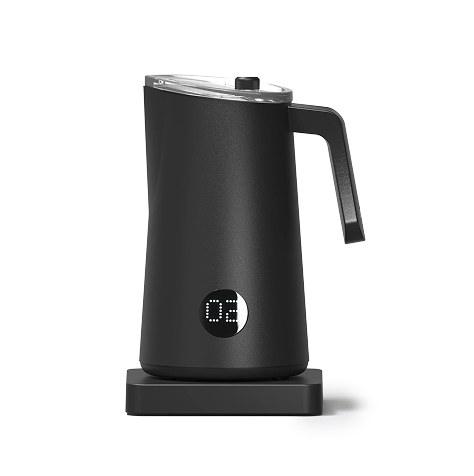
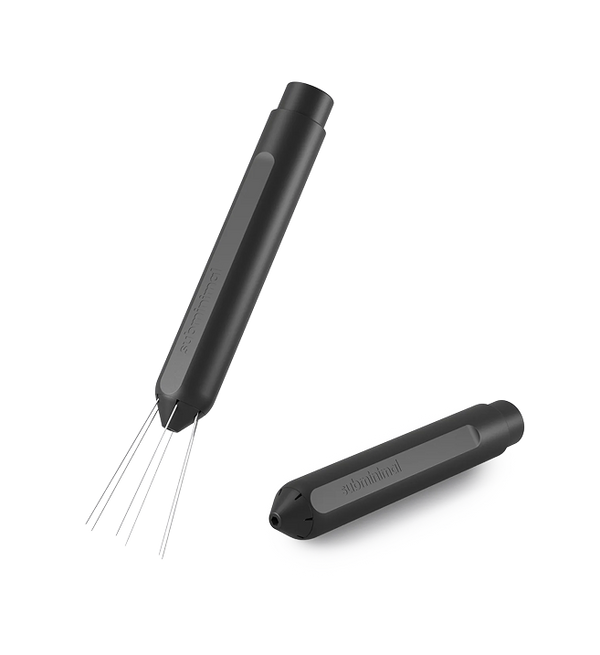
Best Milk Frothing Pitcher in 2026
The Best milk pitcher in 2026 starts with precise geometry. The spout profile sets your line accuracy and fill speed, whether you prefer a tulip or a sharper beak. The body’s taper should build a stable vortex for even microfoam. Wall thickness tunes heat feedback to your hand, and 304 stainless steel adds durability and easy cleaning.
Baristas and home brewers alike often compare the best milk frothing pitchers based on spout precision, handle ergonomics, and pouring control for latte art. Regional guides such as the best milk frothing pitchers in Germany also showcase how different pitcher designs support various steaming techniques and coffee styles. For deeper insights into workflow and milk texturing, many coffee enthusiasts explore resources on choosing the perfect milk pitcher for latte art and mastering foamed milk at home, alongside curated collections featuring the best milk frothing pitcher options for modern espresso setups.
Explore the FlowTip Milk Jug to upgrade your pour control.
What Makes a Great Milk Frothing Pitcher?
We design Milk Frothing pitchers for predictable, repeatable foam. Look for a body that moves from smooth roll to controlled turbulence so microfoam distributes evenly. A precise spout draws crisp lines for rosettas, hearts, and contrast fills. Balance matters: a secure handle angle or thumb rest stabilizes the wrist during slow passes. Wall thickness should deliver heat feedback without scorching your fingers. Interior finish should be smooth, with clear measurement lines for consistency. Dishwasher safety helps in busy routines, and dent resistance protects alignment. Some prefer nonstick interiors for easier rinsing; verify food-grade coatings. Choose 304 stainless or better for corrosion resistance and long service.
See how we shape control on the FlowTip Milk Jug.
Key Features to Look for in 2026
Pour Control: Pick a spout style for your patterns. Sharp beaks draw fine hairlines. Tulip spouts favor fills and soft edges. Hybrids bridge both. A polished lip and stiff rim help drip resistance and aim.
Ergonomics & Build: Handle geometry should align with your wrist. If you prefer a handleless hold, check body taper and texture for grip. Weight should feel planted yet agile. 304 or 18-8 stainless resists corrosion. Interior markings support repeatable recipes.
Use Cases: For one or two cappuccinos, smaller volumes reduce waste and keep foam fresh. For larger lattes, a bigger jug preserves swirl space. Barista-style alt milk often needs tighter aeration and precise heat feel. Home users want easy cleaning. Cafés need dent-resistant builds.
Top 25 Milk Frothing Pitchers for 2026
1. Subminimal - Best FlowTip Milk Jug

We shaped FlowTip Milk Jug for precise lines and clean fills, with a hybrid spout that shifts from wide fill to needle-fine control. The balanced body promotes a steady vortex, and the wall thickness gives clear heat feedback without hot spots. We offer sizes to match common drinks, with interior markings for quick recipes. The satin interior finish rinses easily, and 304 stainless stands up to daily use. We back the product with support, parts, and guides so you keep pouring better patterns week after week.
Key Highlights:
-
Hybrid spout geometry for lines and fills
-
Balanced handle and body taper for steady control
-
304 stainless construction with interior markings
-
Sizes matched to daily drinks
-
Easy cleaning and responsive support
Standout Features:
-
Hybrid spout control: fine lines without losing fill speed
-
Heat feedback walls: feel 55–65 C without guessing
-
Vortex-friendly taper: stable whirl for even microfoam
-
Service and parts: keep your pitcher working longer
Shop FlowTip in all sizes: FlowTip Milk Jug.
2. Fellow Eddy Steaming Pitcher

The Fellow Eddy Steaming Pitcher brings a modern twist to milk frothing with its innovative folded spout design that ends in a fluted tip. This unique geometry delivers a controlled and narrow stream of microfoam, enabling baristas to execute intricate latte art patterns with greater accuracy and confidence. The wider base tapering upwards promotes efficient milk swirling and aeration, resulting in silky textures that many find ideal for a variety of drinks. Crafted with attention to ergonomics, the pitcher feels balanced in the hand and supports natural wrist positions during pouring. Professionals and dedicated home users often praise its ability to enhance contrast in designs and produce clean lines without excessive effort. The durable construction and easy-to-maintain surface make it a practical choice for frequent use, fitting seamlessly into both casual kitchens and more demanding café setups where precision matters most.
-
Key features: spout type, material, capacity options, markings/finish
-
Useful stats & info: moderate weight, dishwasher safe, sizing fits 1–2 drinks, standard warranty
-
Pros: crisp lines, rigid rim, clear marks, easy cleanup
-
Cons: narrower body reduces swirl room for thick foam
3. De'Longhi Milk Frothing Jug DLSC060

The De'Longhi Milk Frothing Jug DLSC060 offers a timeless tulip spout paired with a gently rounded shoulder that guides milk into a smooth, consistent roll for glossy microfoam. Its classic proportions suit beginners exploring foundational latte art while still delivering reliable results for everyday cappuccinos and lattes. The stainless steel body transmits temperature cues effectively, helping users stay within the ideal range by feel alone during steaming. A straightforward handle design accommodates various grips, making it comfortable for repeated pours throughout the day. Many appreciate the satin finish that minimizes glare and simplifies rinsing, while the legible interior markings support repeatable volumes without guesswork. This jug serves as an approachable entry point for home enthusiasts refining their technique and for small setups seeking dependable performance without complexity.
-
Key features: tulip spout, 304 stainless, 350–500 ml, satin with interior marks
-
Useful stats & info: light-medium feel, dishwasher friendly, compact sizes, standard brand warranty
-
Pros: easy roll, readable lines, quick heat feedback, approachable for learners
-
Cons: tulip favors fills over ultra-fine hairlines
4. MHW-3BOMBER Milk Frothing Pitcher

The MHW-3BOMBER Milk Frothing Pitcher features a sharp beak spout and tapered cylindrical body that emphasize speed and precision for detailed leaves and stacked tulips. Its design encourages fast breaks in the pour stream, giving experienced users the edge when creating intricate patterns with crisp edges. The squared handle provides a firm, consistent hold that aids slow, controlled passes near the milk surface. Many baristas value the brushed finish that reduces milk cling and the reinforced rim that maintains shape through daily handling. This pitcher suits home creators pushing their skills toward finer lines as well as café environments needing reliable geometry that performs consistently across multiple stations. The narrow cone shape accelerates flow in a way that rewards practiced technique and delivers professional-level definition.
-
Key features: sharp beak spout, 304 stainless, multiple sizes, brushed with markings
-
Useful stats & info: medium weight, dishwasher safe, compact footprint, typical limited warranty
-
Pros: crisp edges, rigid rim, low-cling interior, accurate marks
-
Cons: faster flow can overwhelm beginners
5. Crate & Barrel Stainless Steel Frothing Pitcher

The Crate & Barrel Stainless Steel Frothing Pitcher relies on a rounded tulip spout and generous shoulder for forgiving, smooth pours that build stable microfoam with minimal effort. Its balanced proportions create a comfortable workflow for learning basic hearts and rosettas while still supporting everyday lattes. The open-loop handle allows flexible grips that suit different hand sizes and pouring styles. Users often highlight the satin interior that wipes clean quickly and the clear volume lines that keep recipes consistent. This pitcher fits neatly into home counters and shared spaces where simplicity and reliability take priority over specialized features. Its geometry prioritizes soft transitions and centered designs, helping new pourers build confidence before advancing to more complex patterns.
-
Key features: tulip spout, 304 stainless, common sizes, satin finish with marks
-
Useful stats & info:
-
moderate weight, dishwasher safe, easy storage, retail return policies
-
Pros: forgiving roll, clear lines, comfortable handle, hassle-free cleaning
-
Cons: less suited to ultra-fine detailing
6. Breville Latte Art Milk Jug

The Breville Latte Art Milk Jug combines a pointed spout that blends gentle curves into a tighter tip, allowing seamless shifts between broad fills and defined stems. This versatility makes it well-suited for baristas who mix wider pours with precise final passes for strong contrast. The handle angle aligns naturally with wrist movement, supporting steady low-height work that many find essential for clean latte art. The smooth interior encourages even milk movement and quick rinsing after each use. Many home machine owners and café trainers choose this jug for its consistent performance across teams and its ability to handle a range of drink sizes comfortably. The construction keeps the rim stable through regular use, preserving flow quality over time.
-
Key features: hybrid spout, 304 stainless, 480–600 ml, smooth finish with markings
-
Useful stats & info: medium weight, dishwasher friendly, compact height, standard manufacturer support
-
Pros: versatile spout, reliable heat feel, stable rim, easy to clean
-
Cons: larger sizes can increase waste for single drinks
7. Wirsh Milk Frothing Pitcher

The Wirsh Milk Frothing Pitcher pairs a moderate tulip spout with a slightly tapered body that builds a steady vortex for even microfoam distribution. Its proportions support everything from cappuccinos to larger lattes while maintaining control during the pour. The straightforward handle leaves plenty of room for comfortable grips without crowding fingers. Many learners appreciate how the design encourages consistent texture and simple patterns such as hearts and basic leaves. The brushed finish helps reduce smudges and speeds up post-shift cleanup in busy routines. This pitcher serves as a practical backup on café bars or a reliable daily driver for home baristas focusing on foundational skills rather than ultra-fine detailing.
-
Key features: tulip spout, 304 stainless, 350–600 ml, brushed with markings
-
Useful stats & info: light-medium feel, dishwasher safe, stackable, basic warranty
-
Pros: easy to learn, readable marks, quick cleaning, stable pour
-
Cons: less precision for intricate etching
8. Williams Sonoma Coffee Milk Frothing Pitcher

The Williams Sonoma Coffee Milk Frothing Pitcher emphasizes a balanced tulip spout and roomy shoulder that create a wide, stable whirl for creamy foam. Its relaxed handle angle offers a secure thumb perch and steady pours during extended sessions. The satin finish keeps glare low while simplifying maintenance for households that value straightforward tools. Many users find the interior lines guide recipes reliably, supporting smooth fills and centered hearts that build toward more advanced designs. This jug suits kitchens where versatility and comfort matter most, providing forgiving geometry that helps new pourers progress without frustration. The overall silhouette feels sturdy yet approachable for daily coffee rituals.
-
Key features: tulip spout, 304 stainless, small to mid sizes, satin with interior lines
-
Useful stats & info: moderate weight, dishwasher safe, cabinet friendly, retailer service options
-
Pros: stable vortex, comfortable grip, easy marks, forgiving spout
-
Cons: less suited to ultra-thin lines and stacks
9. Cuisinart Frothing Pitcher

The Cuisinart Frothing Pitcher blends a rounded body with a modestly pointed spout that offers both soft fills and decent drop control. Its classic loop handle supports varied grips that many find intuitive across different pouring techniques. The satin finish promotes easy milk release and quick cleanup after each drink. Users often note how the balanced proportions deliver predictable foam and controlled stems in rosettas or tulips as technique improves. This pitcher fits comfortably into home setups and small office environments seeking reliable results without specialized features. The construction maintains rim stiffness through daily temperature cycling, ensuring consistent flow for approachable latte art.
-
Key features: hybrid spout, 304 stainless, common café sizes, satin interior with marks
-
Useful stats & info: medium weight, dishwasher safe, compact footprint, brand warranty
-
Pros: balanced pour, readable lines, durable rim, easy cleaning
-
Cons: not specialized for very fine detailing
10. Barista Basics Stainless Steel Milk Frothing Pitcher

The Barista Basics Stainless Steel Milk Frothing Pitcher uses a clear tulip spout and cylindrical body that promote a stable whirl for consistent microfoam. Its reinforced rim helps maintain shape even in training environments or busy stations. Many educators recommend this jug for classes because the geometry remains forgiving while still supporting clean hearts and stacked tulips. The crisp graduation marks inside aid repeatability for learners practicing volume control. The satin finish proves practical for fast maintenance between drinks. This dependable choice suits both practice sessions and active service where consistency across multiple users matters most.
-
Key features: tulip spout, 304 stainless, multiple practice sizes, satin with graduation marks Useful stats & info: moderate weight, dishwasher ready, height fits most wands, training warranties vary
-
Pros: consistent geometry, clear marks, rugged rim, easy maintenance
-
Cons: less agile for ultra-sharp etching
11. MiiR New Standard Milk Pitcher

The MiiR New Standard Milk Pitcher pairs a tapered body with a defined yet rounded spout that balances fill speed and line control. Its polished interior improves milk movement and simplifies rinsing after use. The shaped handle promotes neutral wrist alignment and easy grip during extended pouring. Many design-minded users appreciate the modern aesthetic paired with functional performance for everyday patterns. The brushed finishes help keep fingerprints minimal while the overall balance feels agile yet planted. This pitcher integrates well into contemporary kitchens and cafés seeking clean styling alongside practical control.
-
Key features: rounded hybrid spout, 304 stainless, practical volumes, polished interior with marks
-
Useful stats & info: medium weight, dishwasher safe, balanced height, brand support
-
Pros: good balance, smooth interior, consistent pours, clean styling
-
Cons: rounded tip limits ultra-fine hairlines
12. Kaffe Products Milk Frothing Pitcher

The Kaffe Products Milk Frothing Pitcher offers a classic tulip spout and slightly conical body that help create a controlled vortex for even foam. Its mid-light walls provide quick temperature feedback that many users rely on during steaming. The satin interior reduces cling for faster rinsing and the handle design accommodates different grips comfortably. This straightforward pitcher supports learners and households seeking simple, reliable performance without extra features. Many appreciate how it delivers consistent results for smooth fills and basic patterns in daily routines.
-
Key features: tulip spout, 304 stainless, common home sizes, satin with interior marks
-
Useful stats & info: light-medium feel, dishwasher compatible, easy storage, basic warranty
-
Pros: approachable geometry, quick heat feel, clear lines, simple upkeep
-
Cons: not tuned for high-precision detailing
13. Seattle Coffee Gear Milk Frothing Pitcher

The Seattle Coffee Gear Milk Frothing Pitcher features a hybrid spout that transitions smoothly from rounded lip to defined tip, balancing fills with finer passes. The robust rim and medium wall thickness offer readable heat feedback and shape retention. Its comfortably spaced handle works well for larger hands or gloved use in professional settings. Many home baristas choose this jug for dependable control and straightforward maintenance that fits busy schedules. The brushed finishes minimize glare while keeping cleanup simple across repeated uses.
-
Key features: hybrid spout, 304 stainless, 12–20 oz class, brushed interior with marks
-
Useful stats & info: medium weight, dishwasher safe, stackable design, store warranty
-
Pros: versatile spout, durable rim, easy cleaning, readable markings
-
Cons: hybrid shape may require practice for ultra-fine lines
14. Zulay Kitchen Frothing Pitcher

The Zulay Kitchen Frothing Pitcher features a pronounced tulip spout and wider shoulder that encourage a smooth roll ideal for creamy cappuccinos and soft latte fills. Its open-loop handle supports various grips that many find comfortable for regular use. The satin finish helps milk release easily while the interior marks maintain consistent dosing. This budget-friendly option suits households focusing on texture and simple art without pursuing razor-thin lines. Many users value its forgiving geometry for everyday enjoyment.
-
Key features: tulip spout, 304 stainless, small to mid sizes, satin finish with marks
-
Useful stats & info: moderate weight, dishwasher friendly, compact storage, standard retailer coverage
-
Pros: smooth foam roll, comfortable grip, easy cleanup, consistent markings
-
Cons: less precise for intricate etching and stacks
15. Lastaforest Advanced Milk Frothing Pitcher

This collection model combines a hybrid spout with a tapered body that accelerates flow when you raise height and settles nicely for low passes. Capacity options cover typical home and light café volumes. 304 stainless construction resists corrosion. The rim is firm for shape retention, and mid-light wall thickness gives distinct heat cues. Interior measurement lines support recipe accuracy, while a smooth interior helps microfoam move cleanly. The handle offers a relaxed angle for control. A solid pick for baristas who want a versatile profile for hearts, tulips, and simple leaves.
-
Key features: hybrid spout, 304 stainless, practical sizes, smooth interior with markings
-
Useful stats & info: light-medium feel, dishwasher safe, compact height, limited warranty
-
Pros: versatile control, readable marks, quick rinse, stable rim
-
Cons: hybrid tip may need practice for ultra-thin lines
16. Rattleware

Rattleware has been a go-to pitcher brand in American specialty coffee for over two decades, and their pitchers remain a fixture behind the bar at serious independent cafés. The roll spout design, one of the most copied profiles in the category, creates a smooth, fast transition from wide fill to controlled stem that suits baristas who pour multiple drink styles across a single shift. For home baristas who train seriously and want professional-grade geometry at a price that doesn't rival the espresso machine, Rattleware delivers one of the most dependable setups available.
-
Key features: Roll spout design, 304 stainless steel construction, multiple capacity options from single-serve to batch sizes, reinforced rim, smooth interior finish with measurement marks
-
Pros: Proven geometry used in café training programs worldwide, roll spout handles both wide fills and defined stems reliably, rigid rim holds alignment after daily knocks, excellent heat feedback for tracking the 55–65°C sweet spot, widely available through specialty coffee retailers
-
Cons: Roll spout favors smooth transitions over needle-fine hairlines, sharper beak pitchers edge it out for ultra-precise etching
17. Rhino Coffee Gear

Rhino Coffee Gear built its reputation in the Australian and New Zealand specialty coffee scene before expanding globally, and their stealth pitcher has become one of the most recognised shapes in the independent café world. The stealth spout, a subtly curved hybrid that narrows into a clean, stiff tip, sits comfortably between aggressive beak designs and soft tulips, giving it genuine versatility across hearts, rosettas, and tulip stacks. The brand's specialty coffee roots show in the attention to rim stiffness and interior finish, both of which directly affect line quality during slow, close passes.
-
Key features: Stealth hybrid spout, 304 stainless steel, multiple capacities including 350ml, 450ml, and 600ml, reinforced rim, brushed interior finish with volume markings
-
Pros: Stealth spout handles a wider range of patterns than most single-style pitchers, rigid rim resists denting under café conditions, brushed interior reduces milk cling for faster rinsing, strong reputation in specialty coffee communities globally
-
Cons: Stealth geometry requires practice to master both its fill speed and its fine-line capability, beginners may find it less immediately forgiving than a straight tulip
18. Motta Europa

The Motta Europa is an Italian classic that has been used in espresso bars across Europe since long before latte art became a global discipline. The simple, clean cylindrical body and modest tulip spout prioritise durability and reliable foam movement over specialist features, and the thin 304 stainless walls deliver some of the clearest heat feedback of any pitcher at this price point. For baristas who learned to steam milk by hand-feel rather than thermometer, the Motta's wall responsiveness is a genuine advantage, your palm reads the temperature shift in real time. See Subminimal's guide on choosing the perfect milk pitcher for latte art for more on how wall thickness affects temperature reading.
-
Key features: Classic cylindrical body, tulip spout, thin-wall 304 stainless construction, simple interior measurement marks, lightweight design
-
Pros: Exceptional heat feedback through thin walls, one of the most responsive pitchers for hand-temperature reading, lightweight and agile during long pouring sessions, Italian build quality with decades of proven café reliability, very affordable entry point for a professional-origin pitcher
-
Cons: Thinner walls dent more easily than heavier-gauge competitors, tulip spout limits ultra-fine line capability for advanced etching
19. Espro Toroid
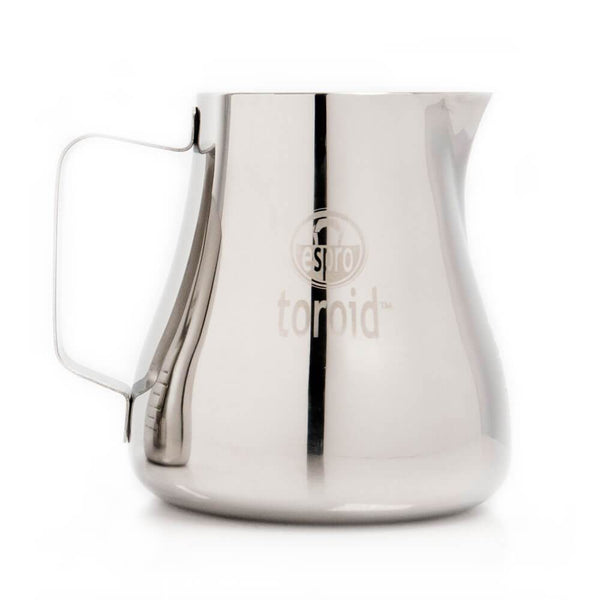
The Espro Toroid takes a fundamentally different approach to spout design, the toroidal ring geometry at the spout tip creates a rolling pour that resists drips and produces a self-guiding flow stream that many baristas describe as forgiving in a way standard spout shapes aren't. This makes it particularly interesting for home baristas who struggle with drip control and unwanted splashing during slow, low-height passes near the espresso surface. The 304 stainless construction and interior markings meet the same standard as other premium pitchers on this list, and the ergonomic handle sits at an angle that reduces wrist rotation during extended pouring.
-
Key features: Toroidal ring spout geometry, 304 stainless steel, ergonomic angled handle, multiple capacity options, smooth interior with measurement marks, drip-resistant pour
-
Pros: Toroidal spout significantly reduces drip issues that frustrate developing home baristas, self-guiding flow makes slow surface passes easier to control, ergonomic handle reduces wrist fatigue during practice sessions, strong choice for learners transitioning from basic to intermediate patterns
-
Cons: Toroid geometry produces a distinct pour feel that takes adjustment if you're used to standard beak or tulip spouts, less widely available than mainstream brands
20. Acaia Dosing Pitcher
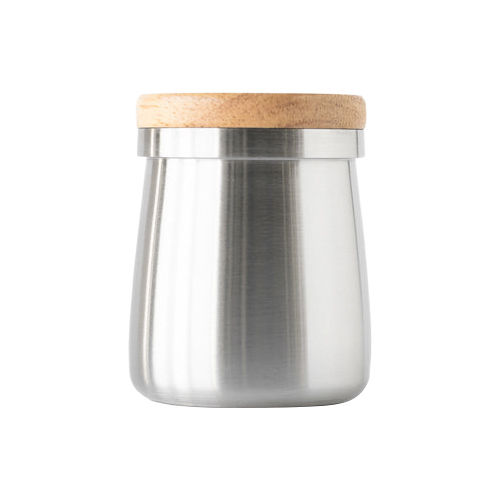
Acaia is best known in the specialty coffee world for precision scales, and their dosing pitcher carries the same measurement-first philosophy into milk preparation. The interior graduation markings are more detailed and clearly printed than most competitors, making this pitcher a strong choice for baristas who dial recipes by volume and want to match milk portions to espresso output with the same accuracy they apply to their coffee scale workflow. The clean minimal aesthetic and quality 304 stainless construction reflect the brand's precision-tool identity throughout.
-
Key features: High-detail interior volume markings, 304 stainless steel, clean minimal aesthetic, balanced handle design, compatible with Acaia's precision brewing workflow
-
Pros: Most detailed and legible interior markings of any pitcher on this list, ideal for recipe-driven baristas, premium build quality consistent with the Acaia brand standard, clean minimal design suits modern kitchen and café setups, pairs naturally with precision scales for a calibrated workflow
-
Cons: Premium pricing reflects brand positioning more than specialist frothing geometry, spout profile is functional rather than competition-tuned for ultra-fine lines
21. WPM Competition Milk Pitcher
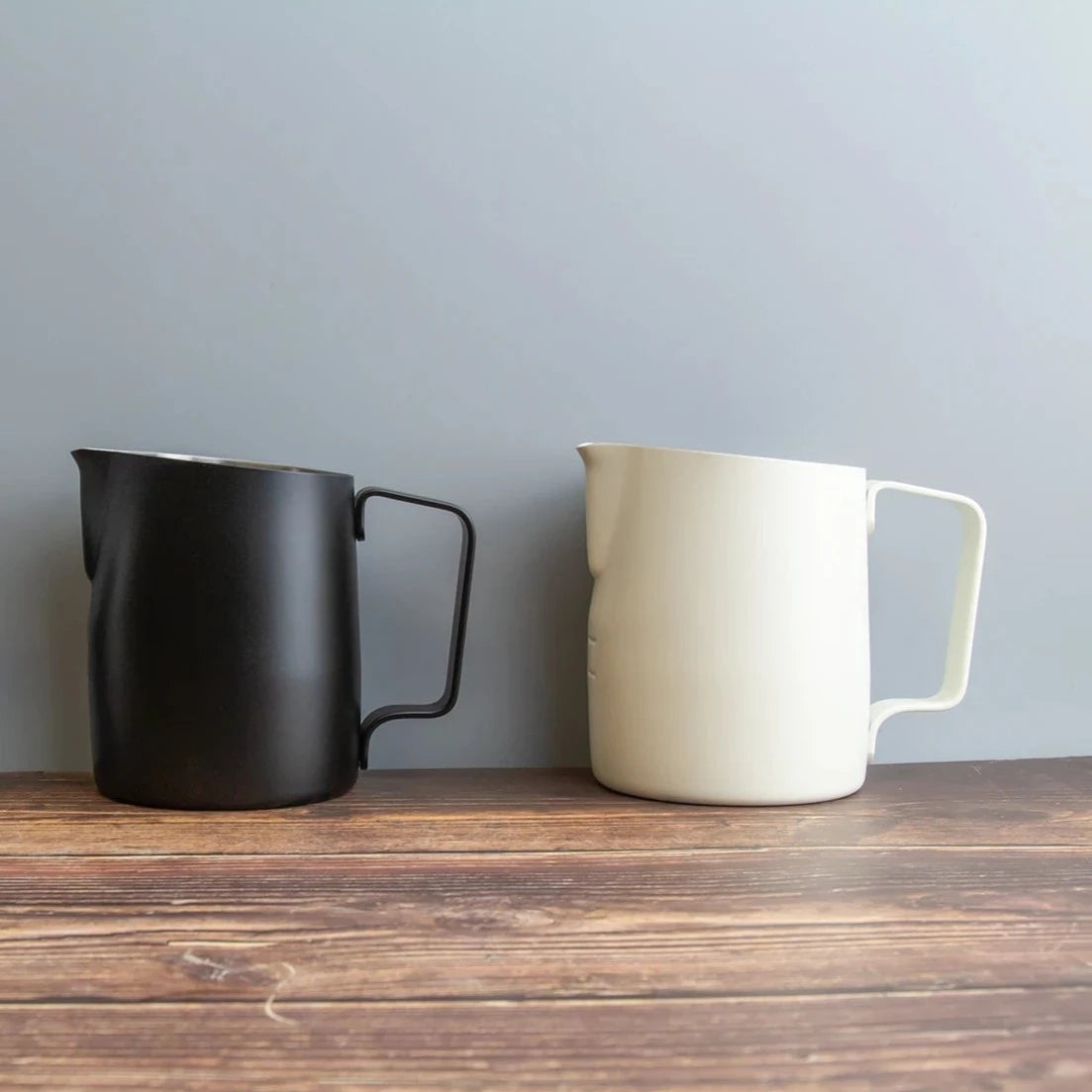
The WPM Competition Milk Pitcher features an innovative arc-shaped bottom that creates a larger vortex during the frothing process, leading to smoother milk rollover and more consistent microfoam texture. This design replaces the conventional flat base and pairs with a widened diameter to enhance mixing across different milk types. The lengthened spout allows for precise drawing and controlled flow, making it ideal for intricate free pour patterns and combination latte art. A flat top incorporates volume indicators for accurate dosing, while the full handle design supports multiple gripping styles for comfort during extended pouring sessions. Made from high-grade 304 stainless steel, the pitcher maintains structural integrity and heat transfer characteristics that many baristas rely on in competitive and high-volume café environments.
-
Key features: Arc-shaped bottom for enhanced vortex, lengthened competition spout, flat top with volume indicators, full ergonomic handle, 304 18/8 stainless steel construction, available in 500ml and 600ml capacities.
-
Accurate data and information: The 600ml size excels with combination patterns while the 500ml version suits both wave and hybrid designs, with the widened diameter promoting consistent foam quality.
22. BaristaSpace Milk Frothing Pitcher
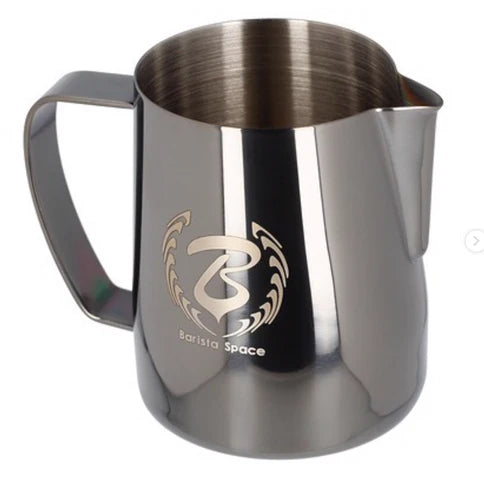
BaristaSpace Milk Frothing Pitchers are crafted from high-class 304 stainless steel and come in a variety of distinctive finishes including titanium, polished, and colorful options such as matte black or sandy rainbow. Their smartly designed spouts feature narrow draining ends that produce a fine stream of milk, supporting detailed latte art and precise line work. The pitchers are engineered with comfortable handles sized for control when pouring into smaller cups, and the overall shape helps contain milk effectively during steaming without spills. Multiple capacities like 350ml and 600ml cater to single drinks or multiple servings, making them popular among home baristas and café professionals who appreciate both functionality and aesthetic appeal in their tools.
-
Key features: High-quality 304 stainless steel with premium finishes, sharp narrow spout for fine streams, ergonomic handle design, spill-resistant shape, available in multiple sizes and color variants.
-
Accurate data and information: Designed for fine line latte art and professional use, with models featuring titanium coating for enhanced durability and easy cleaning in daily routines.
23. Decent Espresso Milk Jug
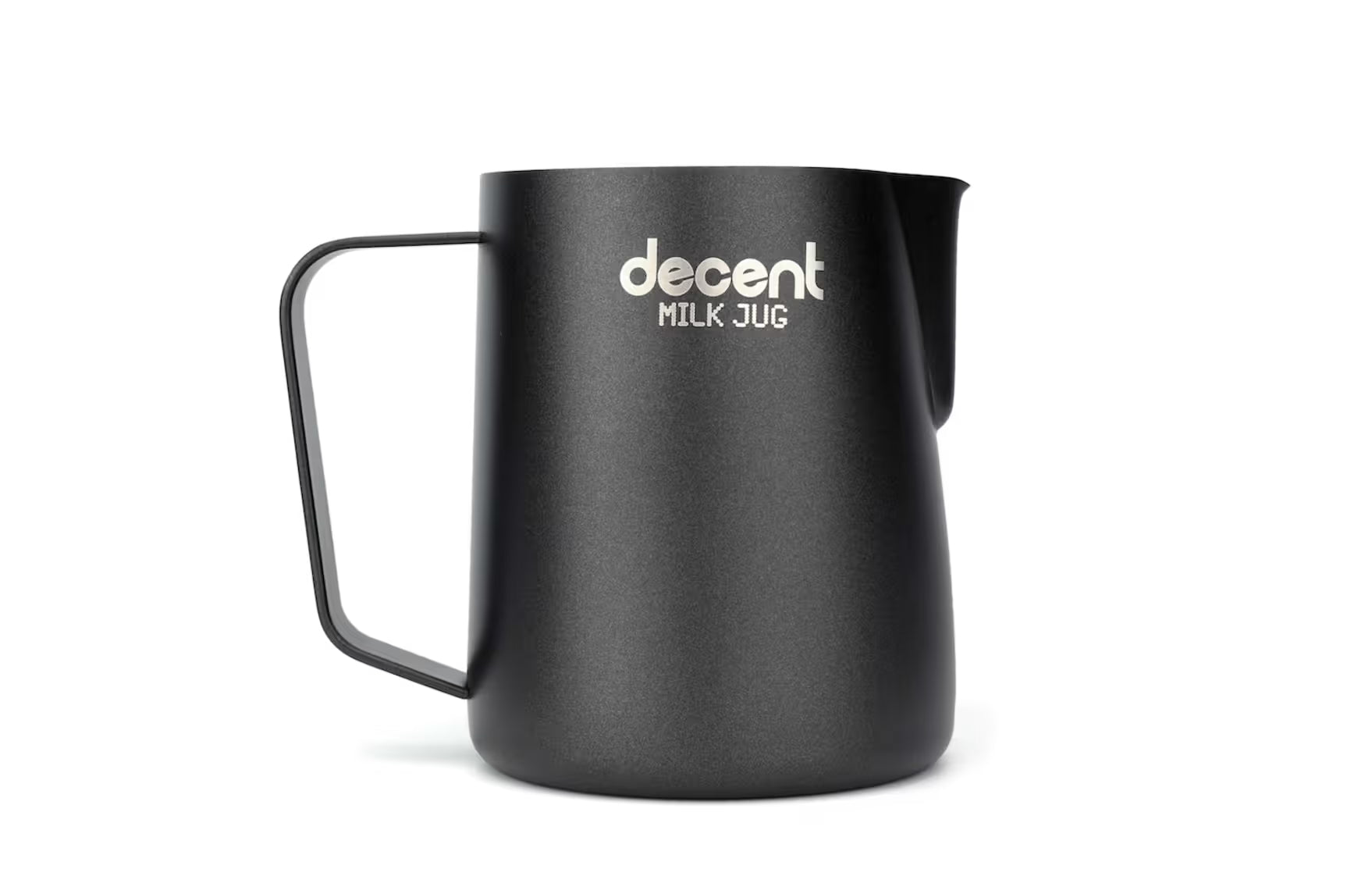
The Decent Espresso Milk Jug incorporates precise internal measurement lines that indicate both starting cold milk volume and the risen foam level, helping baristas minimize waste and achieve consistent results. Available in two spout options—wide for beginners and competition/narrow for advanced control—the jugs come in 350ml and 600ml sizes to suit single drinks or larger batches. Some models include a dedicated thermometer port for accurate temperature monitoring. The design focuses on straight, precise pouring that many experienced latte artists praise for improving line quality and symmetry in patterns. Based in part out of Seattle, the company brings engineering precision to this essential tool.
-
Key features: Internal measurement lines in ml and oz, choice of wide or competition spouts, thermometer port on select models, 350ml and 600ml capacities, precision engineered pour stream.
-
Accurate data and information: The measurement lines allow baristas to steam exact volumes, reducing milk waste significantly while supporting repeatable recipes across different drink sizes.
24. Flair Milk Pitcher

The Flair Milk Pitcher offers a versatile design with a removable handle and heat-resistant silicone grip, allowing users to switch between handled and handleless configurations based on preference. The 400ml capacity includes precision measurement markings and an integrated thermometer slot for monitoring steaming temperatures. Its fluted spout delivers controlled pours suitable for detailed latte art on cappuccinos, cortados, and lattes. This adaptability makes it a flexible option for home setups and mobile barista work where pouring style may vary. The overall construction prioritizes comfort and control during the critical pouring phase after texturing milk.
-
Key features: Removable handle with silicone grip, 400ml capacity, precision measurement markings, integrated thermometer slot, fluted spout for controlled flow.
-
Accurate data and information: Designed to pair with Flair espresso systems but compatible with any steaming method, offering flexibility in grip and temperature control for consistent latte art results.
25. JibbiJug Milk Pitcher

JibbiJug Milk Pitchers are known for their sharp spout designs optimized for high-definition latte art, featuring narrow tips that produce clean, fine lines and crisp stems. Founder Jibbi developed the line to address challenges with small hands and precise control, resulting in lightweight yet balanced pitchers available in models like the Ronin, Kung Fu, and Warrior series. Capacities typically range around 380ml to 420ml for single to double drinks. The pitchers emphasize ergonomic balance and spout geometry tailored for everything from basic hearts to complex swans and rosettas. Their distinctive shapes have gained recognition among dedicated pourers seeking specialized tools for advanced techniques.
-
Key features: Sharp precision spouts for fine line work, lightweight ergonomic design, multiple specialized models, balanced weight distribution, optimized for detailed latte art patterns.
-
Accurate data and information: Models such as the Ronin and Warrior are engineered for versatile pouring styles, with the sharp spout geometry supporting both thick fills and ultra-fine detailing in competition-level work.
How Spout Design Actually Affects Your Latte Art?
Spout shape is the single most discussed variable among baristas choosing a pitcher, but the conversation often stays surface-level. Understanding exactly what each geometry does, and why it matters for specific patterns, helps you choose based on what you actually pour rather than what looks impressive on a shelf. For a deeper breakdown of technique, Subminimal's guide on perfecting your latte art with milk steaming techniques covers how pitcher choice and steaming method work together.
Sharp beak spouts accelerate flow through a narrow exit point, creating a fast, precise stream that draws thin stems and fine hairlines. This is the preferred geometry for competition-style rosettas and stacked tulips where definition and contrast matter most. The trade-off is that fast flow punches through the crema aggressively at height, so the pouring hand needs to compensate by staying lower and moving more slowly during the fill phase. Beginners often find sharp beaks harder to control because there's less margin for error between a clean line and a jagged one.
Tulip spouts use a wider, rounder exit that spreads the flow and slows the stream naturally, creating softer transitions and fuller fills. Hearts and basic rosettas pour more forgivingly through a tulip because the wider stream is more tolerant of slight height and speed variations. The limitation is that the wider exit makes ultra-fine hairlines and crisp stems harder to achieve, the stream doesn't narrow down enough for competition-level definition.
Hybrid spouts, including the FlowTip Milk Jug's design, bridge both styles by using a geometry that produces a fuller stream at height for fills and narrows progressively as you lower the pitcher for line work. This versatility suits home baristas who pour multiple pattern styles rather than drilling one specific design. The practical advantage is that one pitcher handles your full repertoire rather than needing separate jugs for fill work and detail passes.
What to match to your current skill level:
-
Beginner: Tulip or rounded hybrid, the forgiving stream lets you focus on texture and timing before worrying about fine line control
-
Intermediate: Hybrid spout, wide enough for confident fills, narrow enough to start developing defined stems and contrast
-
Advanced: Sharp beak or well-tuned hybrid, precision geometry rewards the muscle memory you've built and supports competition-style pattern definition
-
Multi-style pourer: Hybrid every time, the FlowTip or Rattleware roll spout covers the full range without compromise
Caring for Your Milk Frothing Pitcher Long-Term
A quality 304 stainless pitcher should last years of daily use, but how you clean and store it directly determines whether the rim stays true, the markings remain legible, and the interior finish continues to move microfoam cleanly. Most pitcher damage is preventable, it comes from a handful of habits that are easy to change once you know what to avoid. Subminimal's milk frothing pitcher guide covers long-term care alongside selection advice.
Rinse immediately after every use. Milk proteins begin bonding to stainless steel within minutes of frothing, and dried milk residue is significantly harder to remove than fresh residue. A quick rinse under warm running water immediately after pouring removes the vast majority of milk before it sets. If you froth back-to-back drinks, keep a container of warm water nearby to drop the pitcher into between pours. This single habit extends the life of both the interior finish and any non-stick coating more than any cleaning product.
Protect the rim above everything else. The spout rim is the most structurally critical part of the pitcher, even minor dents or warping change the flow stream and ruin line precision. Never stack pitchers rim-to-body in a way that puts weight on the spout, and avoid clattering the rim against hard surfaces during cleanup. In dishwashers, place pitchers upright in the lower rack away from other metal items that can impact the spout during the wash cycle.
Preserve interior markings. Volume markings are typically etched or laser-marked into the steel rather than painted, so they're more durable than they look, but abrasive cleaning pads can still wear them down over time. Use a soft sponge or cloth for interior cleaning. For stubborn milk residue or light mineral buildup, a small amount of white vinegar on a soft cloth removes deposits without scratching.
Practical long-term care habits:
-
Dry pitchers completely before storage, water spots from tap mineral deposits build up slowly but affect interior finish over months
-
Store upright rather than inverted to prevent rim contact with hard surfaces
-
Check the rim weekly for micro-dents that can develop gradually from counter placement, catch them early before they affect pour line
-
Use a contactless thermometer rather than a probe thermometer inserted into the pitcher, probe thermometers can scratch interior finishes and disturb microfoam during the frothing cycle
-
If your pitcher develops milk odour despite regular rinsing, soak in a baking soda and warm water solution for 15 minutes, then rinse thoroughly
Barista Trends & Pouring Science
Current training emphasizes milk at about 55–65 C for sweetness and stable microfoam, with many guides warning that texture suffers above 70 C. This aligns with specialty coffee references and education pieces that baristas use every day. Competition frameworks continue to influence spout choice and flow control, as patterns are judged for symmetry, definition, and contrast. For materials, 304 stainless remains a common food-grade pick for corrosion resistance and easy sanitation. Use these cues when buying: choose spout shape for your target patterns, pick capacity for swirl headroom, aim for consistent heat ranges, and keep rims unwarped for clean lines. Build a simple cleaning routine that preserves finish and markings.
How to Choose the Best Milk Frothing Pitcher in 2026?
Picking the right milk frothing pitcher comes down to how the tool feels during use and how well it supports steady pours. The shape of the spout plays a big role in whether the milk flows wide for fills or narrows for fine lines in latte art. Body taper affects the vortex that blends the microfoam evenly. Wall thickness changes how quickly heat reaches the hand while the handle angle keeps the wrist in a natural position through longer sessions.
Many home setups pair pitchers with devices like the NanoFoamer for creating consistent microfoam before the pour step. Material choice often centers on 304 stainless steel because it holds up well and cleans without much effort. Interior markings help keep volumes repeatable across different drinks when working with the Subscale for precise dosing.
Best Milk Frothing Pitchers for Beginners in 2026
Beginners benefit from pitchers that offer some forgiveness while they build basic skills. A smoother flow from the spout makes it easier to practice hearts and simple rosettas without the stream breaking too quickly. Balanced weight gives better control when the pitcher tilts during the pour.
Some newer options feature clearer heat feedback so users can stop steaming at the right moment. Straightforward designs reduce frustration while technique improves over time. Pairing the pitcher with good milk texturing tools like the NanoFoamer PRO helps new users focus more on the art than on fighting texture issues. Structured practice grows faster when combined with the Latte Art Masterclass.
Latest News In 2026
Designs continue to move toward better balance between fill speed and line precision in milk frothing pitchers. Hybrid geometries appear more often as makers respond to baristas who switch between different patterns in one session. Heat responsive walls gain attention because they support the common temperature target range without extra tools every time.
Integration with precision accessories grows as well. Some pitchers now work more smoothly alongside dosing tools like the Subscale. Overall the category shows steady refinement rather than big leaps with focus on durability and daily usability when used alongside tools like the Flick WDT.
FAQ
Can I use a milk frothing pitcher without a steam wand?
Yes, a frothing pitcher is primarily a pouring and control tool rather than a heating device, so it works with any milk texturing method. Pair it with a NanoFoamer handheld or a NanoFoamer PRO to texture your milk, then transfer the microfoam into the pitcher for pouring. Many home baristas use this exact setup, texture milk in one vessel, transfer to a FlowTip Milk Jug for the pour, because the FlowTip's hybrid spout gives significantly more line control than the frothing vessel itself. The transfer also lets you tap and swirl to refine texture before pouring, which is standard practice for latte art regardless of how the milk was textured.
What's the ideal pitcher capacity for single espresso drinks vs. larger lattes?
For a single cappuccino or small flat white (150–180ml finished drink), a 300–350ml pitcher gives you enough headroom for the milk to expand during steaming without overflow, while keeping the volume tight enough for a controlled pour. For larger lattes (250–300ml), step up to a 450–500ml pitcher, too little headroom compresses the foam and reduces swirl space, which directly affects the vortex quality that creates even microfoam. Going too large wastes milk and reduces the density of the foam layer. If you regularly make drinks at different sizes, keep a smaller pitcher for practice and single drinks and a mid-size for batch work. The FlowTip Milk Jug is available in multiple sizes specifically matched to these use cases.
How do I remove milk stains and discolouration from a stainless steel pitcher?
Light discolouration inside a 304 stainless pitcher typically comes from mineral deposits in water or milk protein buildup rather than corrosion. Fill the pitcher with a solution of one part white vinegar to two parts warm water, let it sit for 10–15 minutes, then scrub gently with a soft cloth and rinse thoroughly. For more stubborn staining, a paste of baking soda and water applied with a soft sponge works without scratching the interior finish. Avoid steel wool, abrasive pads, or bleach-based cleaners, these scratch the surface and create micro-grooves where milk proteins bond more aggressively in future. Monitoring your frothing temperature with a contactless thermometer and staying below 70°C also reduces protein scorching on the interior walls, which is the most common cause of stubborn residue.
Does pitcher material matter beyond 304 stainless steel?
For most home and café use, 304 stainless steel is the practical standard, it resists corrosion, handles daily temperature cycling, cleans easily, and provides the heat feedback needed to track your target frothing range. Some professional pitchers use 18-10 stainless (a slightly higher nickel content variant) for marginally better corrosion resistance, but the difference is negligible in normal use. Copper-lined pitchers exist in the premium market and offer faster heat transfer, but they require more careful maintenance to prevent patina buildup affecting milk flavour. Avoid pitchers with painted or powder-coated exteriors for daily frothing, the coating chips over time and can contaminate milk. Pair any pitcher material with a contactless thermometer for consistent temperature reading, since wall thickness variation across materials changes how reliably you can track 55–65°C by hand feel alone. For a full breakdown of what to look for, see Subminimal's best milk frothing pitcher guide.
Which pitcher size is best for latte art?
For one cappuccino, a smaller jug gives better control and less waste. For two drinks or larger lattes, step up a size so you keep swirl space. Match capacity to your typical drink volume, leaving headroom for aeration and rolling. If you pour many single drinks, pick a compact size with clear interior marks. For practice, keep one small and one mid jug so you train both flows.
What spout is best for fine lines?
Sharp beaks or well-tuned hybrids produce hairlines and crisp stems. They change from fast fills at height to slow, controlled passes close to the surface. If you mostly pour soft rosettas and hearts, a tulip spout is forgiving. For competition-style stacks and contrast, use a sharper tip with a polished lip and stiff rim to prevent drips.
Do I need measurement marks?
Interior markings help repeat recipes and reduce waste. They speed up dialing milk volume for different cups and support training. If your pitcher lacks marks, use a scale and note typical fill points. Over time you’ll pour by feel, but marks remain useful when switching drinks, milks, or sharing tools across a team.
How thick should the walls be?
Medium thickness gives readable heat feel without hot spots. Too thin, and the jug overheats your hand. Too thick, and you lose temperature cues. Pair mid walls with a stiff rim to keep shape after knocks. The goal is consistent feedback while you track 55–65 C by hand or thermometer.
Hand-wash or dishwasher?
Hand-washing preserves finishes and keeps rims straight, especially in busy cafés. Most 304 stainless pitchers handle dishwashers, but avoid overcrowding or high-impact cycles that can bend the lip. Rinse milk immediately, then wash and dry to prevent residue. If your jug has a coating, follow the brand’s care guidance.
What features should I look for first in a milk frothing pitcher?
The spout shape stands out as the primary feature because it directly controls how milk behaves at different pouring heights. Handle design and overall balance affect comfort during extended use and help maintain steady movements. Wall thickness also deserves early attention as it determines how clearly temperature changes transmit to the hand. These elements together create a tool that feels natural rather than something that fights the user. Finding the right combination depends on the types of drinks made most often and the preferred pouring style.
Does pitcher size change the quality of microfoam?
Pitcher size influences how freely the milk can move and develop texture during the swirling phase. Smaller capacities often create tighter vortices that help incorporate air more evenly throughout the liquid. Larger sizes provide extra room that prevents overflow when working with bigger drink volumes. The available headspace inside the pitcher plays a quiet but important role in achieving silky results. Matching capacity to typical drink sizes avoids both cramped movement and excess liquid that cools too fast.
How does spout shape influence latte art results?
Spout shape governs the width and speed of the milk stream as it leaves the pitcher. Different profiles produce varying levels of control when drawing lines versus filling backgrounds. The transition between these behaviors determines how easily patterns come together on the surface. A well-designed spout reduces the amount of adjustment needed mid-pour. This consistency helps patterns appear more intentional and symmetrical.
Can pitchers work with alternative milk texturing methods?
Pitchers serve primarily as the vessel for final pouring control after milk reaches the desired texture. Any method that produces stable microfoam works well before transferring into the pitcher. The geometry of the pitcher then takes over to deliver that foam accurately onto the drink. This separation of texturing and pouring steps offers flexibility for different home setups. It keeps the focus on pour technique once the milk is ready.
What makes cleaning and care easier over time?
Smooth interior surfaces allow milk residues to release with minimal scrubbing after each use. Sturdy construction around the rim helps the pitcher keep its original shape through repeated handling. Immediate rinsing prevents proteins from bonding strongly to the steel. Proper drying and storage further protect both appearance and performance. These simple habits extend the useful life of the pitcher while maintaining its pouring qualities.
Ready to pour cleaner lines and smoother fills? Check out FlowTip Milk Jug.
Related to this blog:
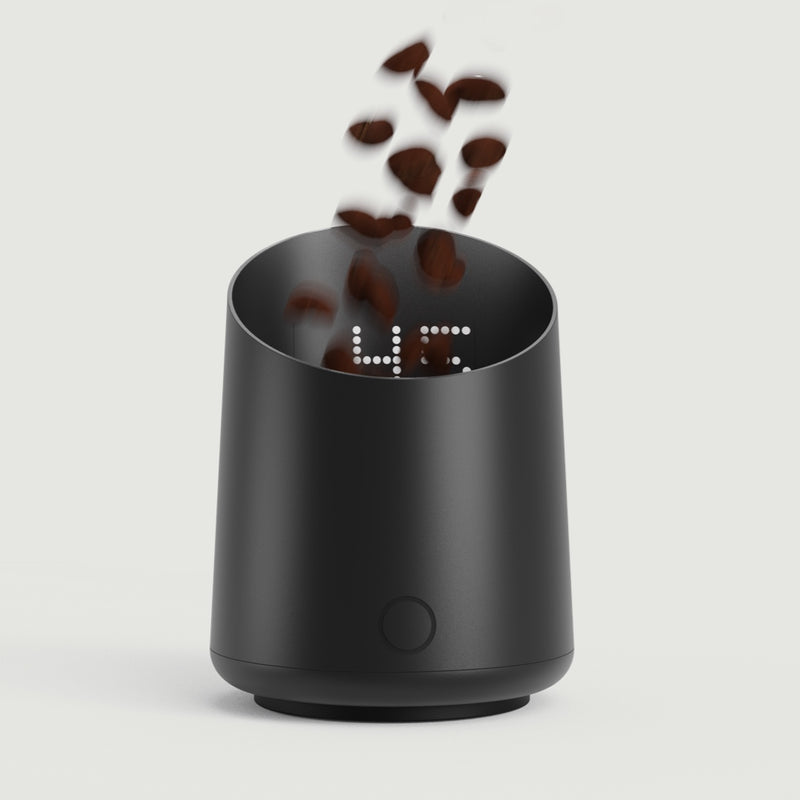
This thing is a game-changer. Do you need a dosing cup and scale in one? No. Does it streamline the brewing process and allow you to enjoy your delicious shot faster, and with less mess? Absolutely. 10/10 would buy again.