Cappuccino vs Latte: Which One Should You Make at Home?
Cappuccino vs latte is a milk and foam choice, not a fight over which coffee is better. A cappuccino splits espresso, steamed milk, and foam into a smaller, stronger cup. A latte, sometimes called a cafe latte, uses more steamed milk and a thin foam cap, so the taste stays mild and smooth.
The same shot can go either way once you change how long you stretch the milk. A milk frother can make the thick cap or the silky pour, if you stop at the right texture. Dry and wet cappuccinos, plus iced versions, sit on that same line. Cup size keeps the balance honest. Home cooks often mix the names because both drinks start with espresso and warm milk.
A home cappuccino or latte starts with Subminimal products.
Make a Cappuccino or a Latte at Home

Subminimal builds milk tools for people who want both drinks from one jug, not a cafe line. The split is texture. A cappuccino wants more air and a spoonable cap. A latte wants milk that still pours like cream, with a thin glossy layer on top.
Start with a fresh espresso or a strong short coffee. Cold milk foams with more control than warm milk from the door of the fridge. Whole dairy milk is the easy first choice. Fat rounds the sip, and protein holds the bubbles. Oat and soy barista milks can work too, if the carton says it is made for steaming.
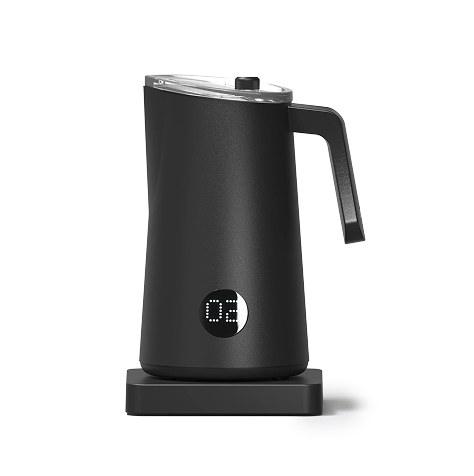
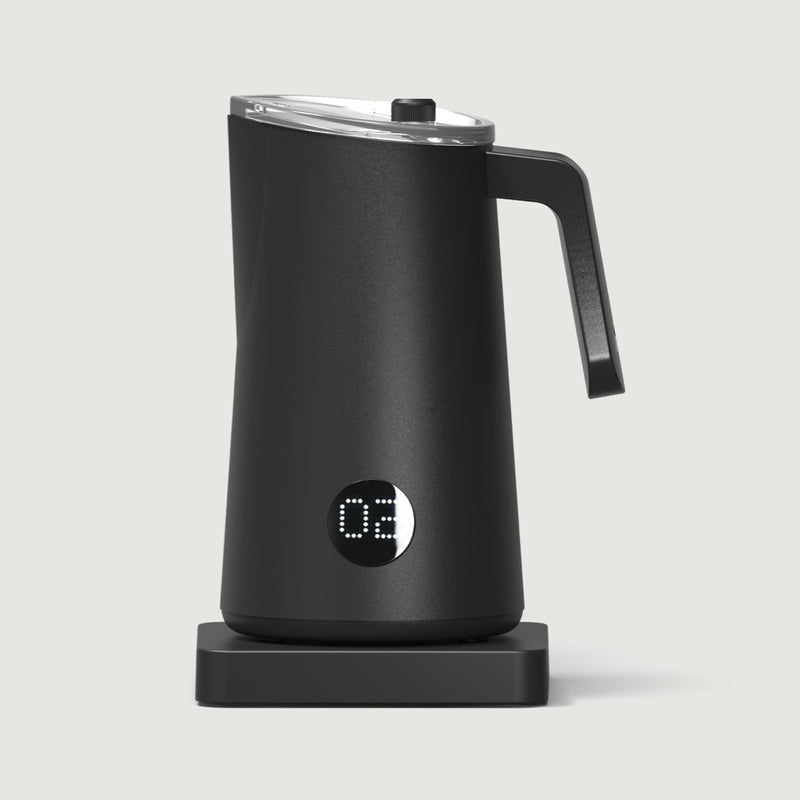
For a single hot cup, a handheld frother in a narrow jug gives you the stretch in your hand. Keep the head near the surface a bit longer for a cappuccino. Shorten that stretch for a latte, then polish the milk in a whirlpool until it looks like wet paint. The NanoFoamer PRO heats and textures in one cycle, with programs that run from fine microfoam to a taller cappuccino-style cap. Pair it with a FlowTip milk jug when you want a steady pour instead of a spooned blob of foam.
A simple home order works every time.
-
Pull the shot into a warm cup.
-
Texture the milk to the drink you want.
-
Tap and swirl so big bubbles disappear.
-
Pour the liquid milk first, then finish with the foam the drink asks for.
Cappuccino vs Latte Ingredients and Ratios
Both drinks start with espresso. The milk split is what changes the cup. A classic home cappuccino follows equal parts: 1 part espresso, 1 part steamed milk, 1 part milk foam. In a small cup that often looks like a short shot, a short pour of liquid milk, and a cap you can see. Many specialty cafes use a single or double shot and fill a 150 to 180 ml cup, so the thirds are a guide, not a lab rule.
A classic latte follows 1 part espresso, about 3 parts steamed milk, and a dollop of foam. The foam is a finish, not a third of the drink. Some bars pour closer to a 1-to-4 milk split in a tall glass. Either way, milk leads.
Italian cafe practice is a bit tighter than the equal-thirds story. The Istituto Espresso Italiano certified cappuccino uses a short espresso, about 25 ml, plus about 100 ml of steam-foamed milk, in a cup around 150 to 160 ml. The milk starts cold and warms a little in the milk frothing pitcher. Specialty Coffee Association competition rules have long asked for a clear foam depth on a cappuccino, about 1 cm, so the cap is real, not a skin of bubbles.
|
Element |
Cappuccino |
Latte |
|
Espresso |
1 part, often 25 to 40 ml |
1 part, espresso or a longer shot |
|
Steamed milk |
About 1 part |
About 3 parts |
|
Foam |
Thick cap, about one third of the cup |
Thin layer on top |
|
Finished size |
Usually 150 to 180 ml |
Usually 240 to 260 ml, sometimes taller |
|
Milk feel |
Airy, then creamy underneath |
Velvety all the way down |
|
Coffee taste |
Up front |
Soft, in the background |
A latte macchiato flips the pour. Milk goes in first, often around 140 ml, then a short espresso, around 40 ml, stains the top. It is still a milky drink. It is not a cappuccino.
Milk Texture: Thick Foam vs a Thin Velvety Layer
Texture is the part you feel before you judge the coffee. Cappuccino milk is steamed and frothed until the foam is thick and light. The first sip is air. The next sip is espresso and warm milk together. Done well, the cap is fine, not a pile of bath bubbles. Done poorly, it is dry, crunchy, and gone in a minute.
Latte milk is mostly liquid. You still add air, but only enough to make the milk glossy. A thin foam layer sits on top and blends in as you drink. That is why a latte feels heavier in the hand than a cappuccino of the same height. More of the cup is milk, less of it is air.
Stretch time is the lever.
-
Short stretch, then a long polish: latte microfoam.
-
Longer stretch near the surface, then a polish: cappuccino cap.
-
Too long with no polish: big bubbles that collapse.
Whole milk holds a wet, round foam. Lower-fat milk can climb higher and taste drier, which some people like on a cappuccino and less so on a latte. Skim milk inflates fast and falls fast. Plant milks vary by brand. Barista oat often gives a stable cap. Almond can taste thin unless the frother is strong. The foamed milk at home guide covers heat, fat, and why cold milk is the better start. If you are picking a tool for both textures, the best milk frother notes match drink style to frother shape.
Dry Cappuccino vs Wet Cappuccino
"Dry" and "wet" are cappuccino styles, not separate drinks from a different country. A dry cappuccino has less steamed milk and more foam. The coffee tastes stronger. The cap looks tall and light. Ask for this when you want espresso to win. A wet cappuccino has more steamed milk and less foam. It is creamier and milder. It moves toward a latte, but the cup is still small and the foam is still a real layer, not a hint.
A latte is wetter than a wet cappuccino. The glass is larger, the foam is thinner, and the espresso is a note under the milk. Ordering a wet cappuccino will not get you a latte in a careful cafe. At home, the same jug can make all three if you watch the volume.
A handy home map:
-
Dry cappuccino: foam leads, milk is the middle layer, cup stays small.
-
Wet cappuccino: milk leads inside a small cup, foam is still obvious.
-
Latte: milk leads in a larger cup, foam is a thin finish.
Travel and desk setups often push people toward one style by accident. A compact milk frother such as the NanoFoamer GO still lets you choose. Less time at the surface keeps the drink wet. More time builds the dry cap.
Taste Profile: Espresso-Forward vs Milk-Forward
A cappuccino tastes like coffee first. Bitterness from the shot, sweetness from steamed milk, and a soft creamy edge from the foam. Light roasts can taste bright under that cap. Darker espresso macchiato tastes rounder and more like cocoa. The foam does not hide a harsh shot. It only softens the edge.
A latte tastes like milk first. The espresso is still there, as depth, not as the main voice. That is why flavored lattes took off. Vanilla, caramel, and hazelnut have room to sit on a milky base. A cappuccino can take a syrup, but the coffee fights back, so a light hand works better.
Heat changes both drinks. Milk sweetens as it warms, then turns flat and cooked if it gets too hot. A useful band for these cups is about 55 to 65°C. Some latte pours creep a little warmer when you want a velvety body for art. Past the point where the jug is painful to hold, the sugar notes drop and the foam gets stiff. If your latte tastes weak, the cup is usually too big or the shot is too short for that much milk. If your cappuccino tastes like hot air, the foam took over and the steamed milk never made it in.
Serving Size and Cup Style
The vessel is part of the recipe. Cappuccinos belong in a smaller cup, usually 150 to 180 ml. A wide bowl lets the foam sit as a cap you can taste on every sip. A tall narrow glass piles the foam in a tower and throws the thirds off.
Lattes belong in a larger glass or cup, usually 240 to 260 ml, and often taller in chain shops. The extra room is for milk, not for a bigger shot. Fill a latte glass with cappuccino ratios and you will run out of foam before the cup looks finished. Fill a cappuccino cup with latte ratios and the coffee vanishes.
Serve both right away. Foam and crema fade. A cappuccino that sits becomes a small milky coffee with a skin on top. A latte that sits separates into thin milk and a dry raft. Cup shape also changes the pour. A bowl with a wide mouth is kinder to a cappuccino cap. A taller latte glass wants a steady stream so the milk mixes instead of floating. Milk frothing pitcher size should match the drink. One cappuccino likes a smaller milk jug. A large latte needs room to spin.
How the Milk Is Prepared and Poured
Preparation is where the two drinks part, even when the shot is identical. For a cappuccino, steam and froth the milk until the volume climbs and the surface can hold a soft dome. Pour the liquid milk over the espresso while you hold the foam back with a spoon. Then spoon or pour the cap on top. Some home bars skip the spoon and pour fast so the foam lands last. Both can work. The goal is three layers you can still taste: coffee, milk, foam.
For a latte, steam the milk without a long stretch. Pour it into the espresso so the two mix. Spoon a small amount of foam on top, or pour through the foam so the cup fills as one drink with a thin white lid. Latte art lives here, because the milk is wet enough to draw. A stiff cappuccino cap will not pull a clean heart.
Home steps that stay out of the way:
-
Heat only the milk you need. Leftover foam from the last cup will not save this one.
-
Stop before the milk simmers. Browned milk on the jug floor means the heat was too high.
-
Swirl, then pour soon. Foam that waits can split into dry froth and thin milk.
-
Pour milk into espresso for a mixed cup. Espresso over milk is the latte macchiato look.
A steam wand, a handheld frother, or a one-touch jug can all get there. The how to use a milk frother steps cover handheld, automatic, and wand habits. The sharp spout on a FlowTip jug helps when the latte pour needs a thin line and the cappuccino pour needs a wider ribbon.
Iced Cappuccino vs Iced Latte
Cold drinks keep the same split. Ice does not erase it. An iced cappuccino is espresso over ice, topped with cold frothed milk. The foam should still be there, light and cool, not a warm cap dumped on ice. Shake or froth the cold milk until it holds, then crown the glass.
An iced latte is espresso over ice plus cold milk. Foam is optional and thin. The drink is lighter and easier to finish on a hot afternoon. It still tastes milky. It just skips the thick cap. A few cold-cup rules save both drinks.
-
Brew the espresso and let it cool a moment, or pour it over ice so it does not melt the glass into a puddle at once.
-
Use cold milk from the fridge. Warm foam on ice collapses.
-
Sweeten the espresso before the ice if you want syrup to mix.
-
Drink it soon. Cold foam falls faster than hot foam.
Flavored iced lattes are the same base with syrup in the glass first. A cappuccino version still wants less milk and more foam, or it becomes an iced latte with a different name. Jar shakes and coil whisks can make cold foam in a pinch. They often leave large bubbles. A milk frother built for microfoam keeps the iced cap finer.
Food Pairings for Cappuccino and Latte
The digital dosing cup changes what tastes good beside it. Stronger coffee and thicker foam can stand up to richer food. A milder, creamier latte fits lighter, sweeter bites.
|
Pairing |
Cappuccino |
Latte |
|
Pastry |
Pain au chocolat, almond croissant |
Butter croissant, fruit Danish |
|
Biscuit |
Almond or chocolate cantuccini |
Vanilla biscuit, lemon shortbread |
|
Chocolate |
Dark chocolate |
Milk or white chocolate |
|
Fruit |
Orange, cherry |
Strawberry, blueberry |
|
Savoury |
Ham and cheese croissant, buttered toast |
Mild cheese, plain toast |
|
Spiced |
Gingerbread, hazelnut cookie |
Cinnamon roll, nutty scone |
A dry cappuccino can handle a dark, bitter chocolate bar. A wet cappuccino is happier with a butter pastry. A latte will take a cinnamon roll without the coffee disappearing, as long as the shot was not tiny. Skip very sweet syrup in the cup if the plate is already sweet. You will taste sugar twice and coffee once.
Which One Should You Make at Home?
Pick by the sip you want, then by the cup you own. Make a cappuccino when you want a shorter drink, a clear espresso taste, and foam you can see. It suits a slow breakfast, a richer pastry, and a smaller mug. It also asks for a little more care with the cap.
Make a latte when you want a longer, softer cup, more milk, and an easy base for vanilla or caramel. It is the kinder drink while you learn to pour. A thin foam layer hides small mistakes that a dry cap will show.
Make a wet cappuccino when you cannot choose. You keep the small cup and the coffee presence, and you add enough milk to soften the edge. Use the same beans for a week and switch only the milk. That is the cleanest test. If the cappuccino tastes harsh, try a slightly sweeter roast or a wetter cap. If the latte tastes empty, use a double shot or a smaller glass before you add syrup.
People who already like a stronger milky coffee may be happier with a flat white on weekdays and a cappuccino when they want the cap. The names overlap in chain menus. At home you control the pour, so the name can match the glass.
Discover Subminimal Products for Home Cappuccino and Latte Foam
NanoFoamer Go

Description (NanoFoamer Go):
The compact handheld milk foamer built for real results. We took the world’s best handheld milk foamer, made it smaller, more powerful, and even more versatile. The NanoFoamer GO delivers silky, latte art quality microfoam that rivals commercial espresso machines.
What it does
-
Creates professional microfoam for coffee
-
Mixes protein shakes and matcha
-
Whisks cream, eggs, sauces, and desserts
Three interchangeable impellers give you Mix, Foam, and Whisk modes. Two speeds let you fine tune texture every time.
Power and performance
-
Up to 5,300 RPM high speed
-
4,200 RPM low speed
-
Patented NanoScreen technology
-
Silky liquid velvet microfoam in seconds
Built for everyday and travel
-
Ultra compact at just 76g
-
USB-C rechargeable
-
IPX-4 water resistant for easy rinsing
-
Matching travel case included
-
Available in 10 colours
Every purchase also unlocks exclusive access to the Subminimal latte art masterclass. Whether you want café style flat whites at home, cold foam for iced drinks, or a versatile tool for mixing and whisking, the NanoFoamer GO is designed to perform without the bulk or complexity of traditional gear.
NanoFoamer PRO

Description (NanoFoamer PRO):
Unlock the secret to velvety-smooth, café-style microfoam—without the espresso machine. The NanoFoamer PRO GEN-2 is the ultimate hands-free microfoam maker, designed for coffee lovers who want professional results at home, fast and effortlessly. Whether you're using dairy or plant-based milk, this precision-engineered device transforms your morning routine into a café-quality experience.
Why You’ll Love It
✅ Automatic & Hands-Free – Heat and foam your milk at the same time you're pulling your shot.
✅ Barista-Level Microfoam – Create rich, silky microfoam perfect for latte art.
✅ Works with All Milks – Dairy, oat, almond, soy—thanks to 3 optimized flow controllers.
✅ 5 Custom Programs – Tailor foam thickness and temperature to your drink of choice.
✅ Whisper-Quiet – Smooth operation with magnetic impeller height adjustment for perfect vortex control.
✅ Easy to Clean – IPX-5 water-resistant. Rinse it under the tap—no fuss.
✅ Portable & Sleek – Compact design that fits any kitchen setup.
What’s Included
- NanoFoamer PRO GEN-2 (EU Plug - 220V)
- 3 Flow Controllers (Black for dairy, Blue/Green for plant-based milks)
- Impeller height adjuster
- Free Latte Art MasterClass
- 30-Day Guarantee
- 1-Year Limited Warranty
Product Specs
- Dimensions: 12 × 12 × 20 cm
- Weight: 800g
- Power: 400W
-
Voltage: 220V (EU Plug)
-
Capacity: 100–220 ml
-
Water Resistance: IPX-5
-
Cord Length: 70 cm
The NanoFoamer PRO Gen-2 is engineered for perfectionists, busy mornings, and passionate home baristas alike. Ditch the noisy steam wands and inconsistent frothers—Subminimal brings you microfoam that rivals your favorite café, right at home.
NanoFoamer

Description (NanoFoamer):
Create silky, café-style microfoam in seconds with the Subminimal NanoFoamer – the world’s best handheld milk foamer designed for serious home baristas. Whether you’re perfecting a cappuccino, crafting a creamy flat white, or elevating your matcha latte, the NanoFoamer delivers superfine microfoam worthy of any coffeehouse.
Why NanoFoamer?
-
True Microfoam Technology – Unlike standard frothers, the NanoFoamer creates invisible microbubbles that result in smooth, velvet-like milk – perfect for latte art.
-
Battery or Rechargeable Options – Choose between the V2 (AA battery-powered) or the upgraded Lithium (USB-C rechargeable) model with dual-speed settings.
-
Compatible with Dairy & Milk Alternatives – Designed to work beautifully with barista-style oat, almond, soy, or dairy milks.
-
Easy to Use, Easier to Clean – Waterproof and intuitive, with upgraded clip-on NanoScreens and a replaceable polycarbonate impeller for durability and performance.
What’s Included:
-
NanoFoamer (V2 or Lithium)
-
2 NanoScreens: Fine & Superfine
-
Protective Hood
-
Wall Mount
-
Free Latte Art Masterclass
Technical Specs:
|
Feature |
V2 |
Lithium |
|
Power |
2 × AA Batteries |
USB-C Rechargeable (1300mAh) |
|
Speed |
3,000 RPM |
Dual Speed: 3,000 & 4,000 RPM |
|
Weight |
104g |
135g |
|
Waterproof |
✅ |
✅ |
|
NanoScreens |
Fine & Superfine |
Fine & Superfine |
|
Impeller |
Replaceable Polycarbonate |
Replaceable Polycarbonate |
Discover Subminimal products and elevate every drink.
Discover Also:
FAQ
Is a latte just a bigger cappuccino?
No. Size is only part of the cappuccino vs latte split. A latte has more steamed milk and a thin foam lid, usually in a 240 to 260 ml glass. A cappuccino keeps a thick foam layer and less liquid milk, usually in a 150 to 180 ml cup. Stretch a latte longer and you can fake a cap, but the ratio is still milky. Cut the milk in a latte glass and you have a weak, large cappuccino. Match the foam and the vessel together. The same idea shows up in a flat white, which stays smaller than a latte and less foamy than a cappuccino.
What milk works best for a cappuccino and a latte?
Whole dairy milk is the steady choice for both a cappuccino and a latte. It foams, it tastes sweet when warm, and it stays creamy under a cappuccino cap. Lower-fat milk can build a taller, drier foam that some people want only on a cappuccino. Barista oat is the plant milk many home cooks use for a latte pour. Almond and coconut need a stronger frother and still taste lighter. Start cold, and skip milk that has already been heated once. Fat, protein, and heat are covered in the foamed milk at home notes, which is why the milk carton matters as much as the shot.
Can you make a cappuccino or a latte without a steam wand?
Yes. A steam wand is the cafe tool, not the only tool. A handheld frother or a one-touch NanoFoamer PRO can texture dairy and plant milk for both drinks. Heat the milk if the frother does not heat it. Stop in the sweet range, swirl out the big bubbles, and pour. The shot can come from an espresso machine, a pod machine, or a moka pot. A short, strong base keeps the cappuccino honest. A latte can take a slightly longer coffee shot if that is what your machine pulls.
Why does cafe foam look different from home foam?
Cafe foam is usually microfoam, a tight set of tiny bubbles, not a dry cloud. The pitcher swirl mixes air into the milk before the pour. Home foam fails when the stretch is too long, the milk is warm before you start, or the jug sits while you pull the shot. A cappuccino can be taller and still fine-bubbled. A latte should look shiny, like paint, not like soap. Tap the jug, swirl, and pour while it is still one texture. Stretch time for a tall cap versus a silky layer is the core of how to froth milk with a frother. A FlowTip milk jug keeps that pour in a steady stream once the milk is glossy.
Does a flavored latte still count as a latte?
Yes. A flavored latte is still espresso, steamed milk, and a thin foam cap, with syrup added. Vanilla, caramel, and hazelnut are the usual picks. Add the syrup to the cup before the milk so it mixes. A cappuccino can take the same syrup, but use less, or the foam and the sugar will cover the shot. Iced versions follow the same idea over ice, with cold milk instead of a hot pour. Cold foam falls faster than hot foam, which is why iced cappuccinos need fridge-cold milk and a fine froth, not a warm cap on ice.
Read Also:
A home cappuccino or latte starts with Subminimal products.
Related to this blog:
The milk is frothed perfectly! This is an ultimate barista, and the temperature is exactly right! Any other devices that we tried cannot warm up the milk to more than 60 degrees, which makes the coffee average, but this one is mixing the foam and it is perfect for busy mornings! Looooove it!